
A watchdog organization reports that Meta is compensating influencers to oppose teen bans globally.
Meta is conducting a worldwide campaign aimed at opposing laws that would prevent teenagers from using social media, as reported by a new investigation from the Tech Transparency Project. This initiative utilizes paid influencers and supported parent groups, according to the watchdog. These strategies were first developed in the United States and have since been implemented in more than a dozen countries contemplating similar regulations. The findings are detailed in a report released on Tuesday.
The group noted that the approach originated in Australia, where Meta took action five months prior to the implementation of a ban on users under 16. In July 2025, the company hosted an “Instagram Safety Camp” for parenting influencers at a scenic venue overlooking Sydney Harbour, providing attendees with branded merchandise and refreshments. They informed the influencers that blanket bans are ineffective and promoted Instagram’s parental supervision tools as a safer alternative for protecting children.
Ravi Sinha, Meta’s head of child safety, conveyed to attendees that such bans do not work, arguing that they could drive teens to riskier online spaces. The influencers subsequently echoed these viewpoints to their audiences, many using vague tags like #instagrampartner instead of explicit advertising labels.
The same strategy has been implemented in various countries, according to the report. Meta organizes branded events, often referred to as Instagram Safety Camp or Screen Smart, and enlists actors, radio personalities, psychologists, and parent influencers to endorse its Teen Accounts as proof that bans are unnecessary.
The report provides examples from multiple markets. For instance, in Indonesia, actor Darius Sinathrya encouraged his 1.8 million followers to utilize safety features. In India, actress Juhi Parmar assured parents their teens are in a “safer space” on Instagram, while in Brazil, actor Douglas Silva shared a similar reassurance with his three million followers. All these promotional posts were paid for, as noted by the group, and disclosed with small tags instead of clear labels.
These disclosures may not align with local regulations. In Australia, the report indicated that the consumer regulator cautions against influencers obscuring advertising labels among numerous hashtags, warning that misleading endorsements could result in penalties. Meta defended its use of tags like #instagrampartner as standard marketing practice and a clear disclosure of the relationship.
The report also highlights that Meta collaborates with funded intermediaries. Organizations such as the Australian youth service ReachOut, the New Zealand group Netsafe, and the Brussels-based nonprofit ThinkYoung have received funding from Meta and echoed the company's anti-ban messages, sometimes without revealing the financial backing. All three organizations stated they determine their own positions independently of Meta’s approval.
The report further outlines a broader network at the European level. Meta has provided financial support for a youth advisory panel and a parents' network operated by ThinkYoung, whose members have opposed bans in Brussels. Meta explained it partners with a variety of organizations to enhance teen safety, without disclosing individual partnership terms.
Meta's argument centers on its Teen Accounts, which it claims offer a safer environment for young users. However, independent evaluations have raised concerns about their effectiveness; The Washington Post reported last year that these accounts “fail spectacularly” to protect minors from harmful content, a finding echoed by the Tech Transparency Project's tests.
Meta countered this framing, stating that it has hosted over 40 global events since 2024 to promote its tools for teen safety. The company asserts that all paid partnerships are clearly disclosed and comply with advertising regulations in each region. Meta collaborates with influencers because they are trusted local voices for parents in their communities.
Edward Patterson, a spokesperson for Meta, rejected claims that the influence effort is misleading, arguing that broad bans lead to teens gravitating towards less safe and unregulated areas of the internet. Meta affirmed it has “never directed a partner to advocate a specific point of view.”
The watchdog expressed a different perspective. Katie Paul, the group’s director, stated that Meta's dependence on paid advocates indicates the company is aware “the brand has become a problem,” a notion that Meta disputes.
The report emerges at a critical time for Meta as the company faces a trial in California, where four states accuse it of crafting features that foster addiction in children. It is also adapting to Australia's under-16 ban, the first of its type, which was implemented in December.
Other governments are pursuing similar actions with varied results. Meta claims it has deactivated approximately 750,000 accounts it believes belong to under-16 users in Australia; however, a regulator found that most impacted teens remain online. In Europe, although France's under-15 ban was initially passed by parliament, it was later overturned by the top court on grounds of free speech. The report indicates that the United Kingdom, Canada, Spain, and several Asian and Middle Eastern nations are at earlier stages of this process, with Meta applying its strategies in each case.
The Tech Transparency Project indicated its findings are not comprehensive, observing similar tactics in countries from Ireland to Turkey. It urged governments to recognize that Meta is attempting to
Other articles
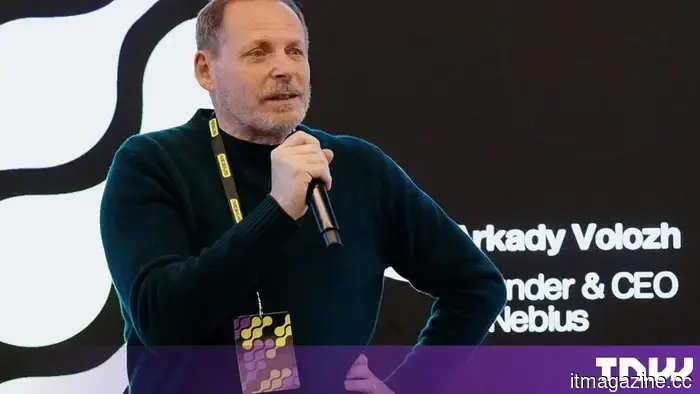 Nebius is seeking to raise $4.5 billion through convertible bonds to construct AI data centers.
Nebius is seeking to raise $4.5 billion through convertible bonds to finance AI data centers, marking its second sale of this kind in 2026. According to Bloomberg, the offering will be priced on Wednesday.
Nebius is seeking to raise $4.5 billion through convertible bonds to construct AI data centers.
Nebius is seeking to raise $4.5 billion through convertible bonds to finance AI data centers, marking its second sale of this kind in 2026. According to Bloomberg, the offering will be priced on Wednesday.
 China successfully lands a rocket booster on the ground for the first time.
China's LandSpace successfully landed the first stage of its Zhuque-3 rocket on solid ground, marking a national milestone that reduces the gap between the US and SpaceX in the realm of reusable rockets.
China successfully lands a rocket booster on the ground for the first time.
China's LandSpace successfully landed the first stage of its Zhuque-3 rocket on solid ground, marking a national milestone that reduces the gap between the US and SpaceX in the realm of reusable rockets.
 Einride erwirbt 500 Tesla Semis, und Amazon hat einen Anteil am Käufer.
Einride wird 500 Tesla Semis für Amazon und weitere Kunden bereitstellen, was die größte Bestellung dieser Art darstellt. SEC-Unterlagen zeigen, dass Amazon etwa 12% der Anteile an Einride über Warrants hält.
Einride erwirbt 500 Tesla Semis, und Amazon hat einen Anteil am Käufer.
Einride wird 500 Tesla Semis für Amazon und weitere Kunden bereitstellen, was die größte Bestellung dieser Art darstellt. SEC-Unterlagen zeigen, dass Amazon etwa 12% der Anteile an Einride über Warrants hält.
 Rivian's spinout has also secured $150 million, and the electric bike is merely the starting point.
The Rivian spinout has secured $150 million at a valuation exceeding $1 billion. While it produces an e-bike, it states that the funds will be allocated for small autonomous delivery vehicles.
Rivian's spinout has also secured $150 million, and the electric bike is merely the starting point.
The Rivian spinout has secured $150 million at a valuation exceeding $1 billion. While it produces an e-bike, it states that the funds will be allocated for small autonomous delivery vehicles.
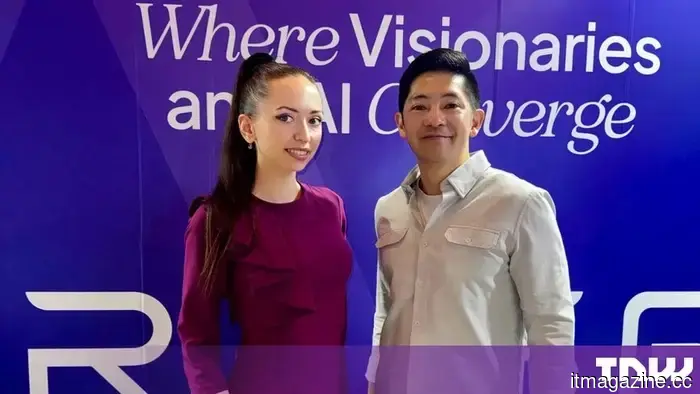 The $2.1 billion "worst idea ever": How Gamma created a successful empire with just 50 employees.
An interview with Gamma's CEO Grant Lee regarding the establishment of a profitable AI company valued at $2.1 billion with only 50 employees, and his perspective on why he thinks Gamma has the potential to surpass traditional slide presentations.
The $2.1 billion "worst idea ever": How Gamma created a successful empire with just 50 employees.
An interview with Gamma's CEO Grant Lee regarding the establishment of a profitable AI company valued at $2.1 billion with only 50 employees, and his perspective on why he thinks Gamma has the potential to surpass traditional slide presentations.
 Anthropic reports that Claude has created functional protein binders and outperformed human experts in certain cases.
Anthropic reports that Claude created protein binders for 14 out of 15 targets and conducted chemical analysis in just a few minutes. The findings are self-reported.
Anthropic reports that Claude has created functional protein binders and outperformed human experts in certain cases.
Anthropic reports that Claude created protein binders for 14 out of 15 targets and conducted chemical analysis in just a few minutes. The findings are self-reported.
A watchdog organization reports that Meta is compensating influencers to oppose teen bans globally.
A report from the Tech Transparency Project indicates that Meta compensates influencers globally to promote the idea that its Teen Accounts render social media restrictions for teenagers unnecessary.