

YouTube view counts are set to increase on August 24, while creator earnings will remain unchanged.
Starting from 24 August, YouTube will count a view as soon as a video begins to play, removing any minimum watch time requirement for long-form videos, Shorts, and live streams. The view count will increase, but viewership and earnings will remain unchanged.
Previously, a view on long-form content typically needed around 30 seconds of watch time, though YouTube never publicly specified this threshold. David Pierce highlighted this ambiguity at The Verge earlier this year, noting that while 30 seconds was widely accepted as the norm, there was no official documentation to confirm it.
The old measurement now exists within Analytics as "Engaged views." Additionally, the terms "valid public watch hours" and "valid public Shorts views" have been rebranded to "qualified watch hours" and "qualified Shorts views."
YouTube implemented the first-frame standard for Shorts in March 2025, completing this transition.
Aisha Malik pointed out in TechCrunch that this changes the relevance of view counts, as public metrics may no longer accurately reflect a video's popularity for creators or advertisers.
YouTube describes this change as a solution to previous confusion. The company stated that it had utilized various view-counting systems for different formats, leading creators to express a desire for clarity in understanding their actual reach. The account team at YouTube emphasized that standardizing views simplifies the process for creators to demonstrate their value to brand partners.
Rene Ritchie, a video creator involved with YouTube, echoed this sentiment, asserting that it will provide creators with a clearer understanding of their audience size.
A specific example from a creator shed light on this issue. Developer Theo shared that he lost a brand deal because his video had 100,000 views while another creator with only 70,000 views (counted differently) was cheaper. His count reflected those who watched for at least 30 seconds, while the other creator's was based on a two-second view on X.
This stricter counting method seems to disadvantage creators. Some argued that the minimum watch time added value to YouTube views compared to those from TikTok or Instagram. Matthew Berman described this as contributing to confidence in the measurement methodology, which enhanced the platform's premium perception for sponsors. Taylor Lorenz bluntly stated that now a view is simply an impression, mirroring other platforms' practices.
Matt Binder discussed the practical implications, noting that videos that viewers click and quickly exit will now count as views, whereas they previously did not.
There is also concern about how removing the watch-time requirement might benefit misleading thumbnails, as CaptainSauce argued that it makes clickbait easier to exploit.
The broader implications of this change have been addressed previously, as there are already channels using AI-generated content manipulating recommendations, and YouTube was testing AI summaries against its creators last year.
In a noteworthy timing coincidence, on 10 August, YouTube also raised the entry standards for its Partner Programme, requiring new creators to accumulate either 8,000 qualified watch hours within a year or achieve 20 million qualified Shorts views in 90 days. Together, these changes suggest that while public view counts might become more attainable, monetization is becoming increasingly difficult.
Kafka clarified this week’s developments are geared towards established creators, while the increased thresholds primarily affect new creators' ability to earn revenue. He also highlighted that this change does not affect revenue sharing or advertiser billing, which will still rely on the stricter view count.
The decision to adopt a rival's measurement approach signifies a form of acknowledgment of competition. YouTube has previously emulated TikTok with its Shorts format and has now aligned its accounting with platforms like TikTok and Instagram, where views are tracked more leniently (after two seconds on X). YouTube is under various pressures, including competition from Netflix's entry into short-form video and shifting brand budgets based on similar metrics.
The industry's response has drawn historical parallels, with some recalling Facebook's shift to video which relied on inflated view counts, adversely affecting publishers who reorganized around them. While the comparison isn't perfect, as YouTube has maintained its strict metric, it has determined which view count the public sees, meaning advertisers can still request engaged views if they wish. However, many may opt for the larger public counts.
The adjustment to creator sponsorship deals based on public counts means managers and agencies were reassessing the situation immediately. Recent incidents, like the Cliff Tan episode, underscored the impact of audience trust on brand partnerships.
To clarify the situation, three key factors will emerge shortly:
1. How significantly the YouTube view count increases after 24 August, with creators estimating a rise between 30% and 40%, although no one outside YouTube knows for sure.
2. Whether advertisers begin to request engaged views as the standard, which would render the change superficial as YouTube claims.
3. Whether YouTube eventually reveals the old threshold, as the maintained strict metrics were never formally documented.
Other articles
 Browsing Tools and Ad Blockers: A Guide to Enhanced Online Experiences
A comparison of five browser-based ad blockers: Open Adblocker, uBlock Origin Lite, AdGuard, Ghostery, and Adblock Plus, with each tailored to different browsing preferences.
Browsing Tools and Ad Blockers: A Guide to Enhanced Online Experiences
A comparison of five browser-based ad blockers: Open Adblocker, uBlock Origin Lite, AdGuard, Ghostery, and Adblock Plus, with each tailored to different browsing preferences.
 Google intends to cease Pixel production in China by the year 2027.
According to a report by Nikkei, pixel production will relocate from China to Vietnam and India in 2027. The strategy for 2026 can be summed up in one word: attack. The goal is to produce 13 million phones.
Google intends to cease Pixel production in China by the year 2027.
According to a report by Nikkei, pixel production will relocate from China to Vietnam and India in 2027. The strategy for 2026 can be summed up in one word: attack. The goal is to produce 13 million phones.
 A source reports that Anthropic's revenue run rate exceeds $65 billion, but it should be noted that a run rate does not equate to actual revenue.
According to an unnamed source, Anthropic has informed investors that its annualized revenue run rate exceeded $65 billion in July. While this figure is impressive, it's important to note that a run rate does not equate to booked revenue, and it comes before an IPO.
A source reports that Anthropic's revenue run rate exceeds $65 billion, but it should be noted that a run rate does not equate to actual revenue.
According to an unnamed source, Anthropic has informed investors that its annualized revenue run rate exceeded $65 billion in July. While this figure is impressive, it's important to note that a run rate does not equate to booked revenue, and it comes before an IPO.
 The financial implications of a voice agent: the actual expense of a minute's dialogue.
The headline price per minute of a voice agent conceals five layers of costs, as well as overhead from failures and increasing context, which ultimately influence whether a use case can be scaled effectively.
The financial implications of a voice agent: the actual expense of a minute's dialogue.
The headline price per minute of a voice agent conceals five layers of costs, as well as overhead from failures and increasing context, which ultimately influence whether a use case can be scaled effectively.
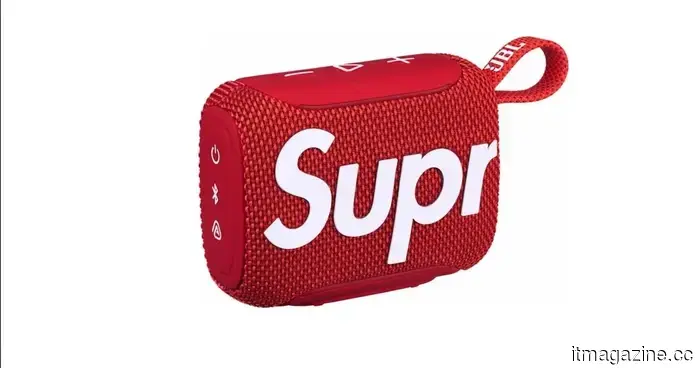 Supreme placed its box logo on JBL's small speakers, as plain red was insufficient.
Supreme has transformed JBL’s compact Go 5 speaker with its iconic red design, featuring white branding and controls, while keeping the internal hardware the same.
Supreme placed its box logo on JBL's small speakers, as plain red was insufficient.
Supreme has transformed JBL’s compact Go 5 speaker with its iconic red design, featuring white branding and controls, while keeping the internal hardware the same.
 OpenAI has introduced ChatGPT for Teens and will automatically enroll users under 18.
OpenAI is launching ChatGPT for Teens to all users under the age of 18 that it can identify. There will be no romantic expressions, no suggested emotions, and Study Mode will be set on a timer.
OpenAI has introduced ChatGPT for Teens and will automatically enroll users under 18.
OpenAI is launching ChatGPT for Teens to all users under the age of 18 that it can identify. There will be no romantic expressions, no suggested emotions, and Study Mode will be set on a timer.
YouTube view counts are set to increase on August 24, while creator earnings will remain unchanged.
Starting from 24 August, the YouTube view count begins with the first frame and has no required minimum watch time. Earnings will continue to be based on the previously established criteria, now called Engaged views.