
OpenAI introduces ChatGPT for teenagers and will automatically enroll users under 18.
OpenAI introduced ChatGPT for Teens on Tuesday, a distinct version of the chatbot where users under 18 are directed automatically. Anyone who indicates they are between 13 and 17 is assigned to this version by default, as is anyone whom the company’s age-prediction system estimates to be under 18. The global rollout commenced on August 18, with Engadget reporting that OpenAI anticipates completing it within two weeks.
“There’s no requirement for a teen to open a new account or modify anything; if we determine you’re under 18, or you’ve informed us of this, it will be your default experience,” stated Lauren Jonas, OpenAI’s head of youth and families, in an interview with Engadget.
The product consists of two sets of modifications. One encourages teenagers to focus on studying rather than simply gathering answers, while the other prevents the chatbot from acting like a person. OpenAI instructs the model not to refer to itself as a friend.
According to OpenAI, its under-18 model specifications go beyond merely prohibiting romantic or sexualized roleplay. The chatbot is not supposed to use romantic language, promote emotional dependency, or suggest that it possesses feelings or consciousness. All three stipulations come from the company's own announcement.
“We’re implementing stricter restrictions on relational boundaries: the model shouldn’t refer to itself as a friend, imply it has personal feelings, or suggest sentience,” Jonas explained. Additionally, break reminders will be triggered more frequently for teenagers. These reminders will emphasize that ChatGPT is an AI and that responses don’t have to be immediate. Both teenagers and parents can set quiet hours when the chatbot will be unavailable.
The app allows teenagers to personalize their experience with wallpapers, accent colors, and voice variations. As Jonas put it, the goal is to avoid “blurring the line” between a helpful tool and a human relationship. Axios reported that these changes are designed to minimize anthropomorphism and emotional dependency.
Study Mode activates at designated times. This feature includes new tools OpenAI has introduced over the past year. Study Mode poses guiding questions and aids students through problems without providing direct answers. A new Study Hours setting can automatically activate Study Mode at selected times, which can be set by either the teenager or a parent with a linked account.
ChatGPT will now detect when a teenager seems to be neglecting an assignment and will guide them back to Study Mode. Along with quizzes, learning visualizations are included. The visualization feature originally covered over 70 topics at its launch in March and has since expanded to over 300, including integrals, mitosis, and moon phases.
“We’ve implemented Study Mode in various randomized controlled trials and are observing positive improvements in performance,” Jonas noted, though she refrained from providing specific figures. This assertion is part of an ongoing debate regarding AI in educational settings. Fei-Fei Li has cautioned about the potential risk of students losing their desire to learn.
OpenAI also included a teacher endorsement in its announcement. Racquel Gibson, who teaches high school math in Miami, highlighted that not all students have someone at home to assist with homework. With appropriate safeguards in place, she argued, AI can help fill this gap.
Parents with linked accounts already have the ability to set quiet hours and manage some settings. They also receive safety notifications, and OpenAI is adding alerts for discussions that may indicate an eating disorder. Last month, it introduced another alert for teenagers breaching rules regarding violent threats.
“We inform parents via text, in-app notifications, and email. All flagged content is reviewed by full-time OpenAI staff before a parent is notified, and we aim to do so within an hour of the prompt,” Jonas explained. Meta introduced a similar feature in July, committing to notify parents about self-harm discussions involving its own AI.
The launch comes after a year marked by legal challenges for OpenAI related to how ChatGPT interacts with young users, including a wrongful death claim from a 16-year-old’s family. Additionally, prosecutors in Massachusetts have charged a teenager in relation to the deaths of his mother and brother, referencing ChatGPT in this case.
Teenagers were already significant users of the platform even before this release. A study by Common Sense Media last year found that nearly 75% of American teenagers utilize AI for companionship, with more than half doing so at least a few times each month. UNICEF reports that children are adopting AI technology more quickly than adults.
Common Sense Media contends that this category should not exist for younger users. “Social AI companions are unsafe for kids,” remarked its founder and CEO Jim Steyer in a statement last year. “They are designed to foster emotional attachment and dependency, which is particularly troubling for adolescent brains in development.”
Jonas defended the decision to create the product, stating that teenagers will engage with AI regardless and that the safer alternative is necessary. “We believe that if you are going to use these tools, they must be inherently
Otros artículos
 YouTube view counts are set to increase on August 24, while creator earnings will remain unchanged.
Starting from 24 August, the YouTube view count begins with the first frame and has no required minimum watch time. Earnings will continue to be based on the previously established criteria, now called Engaged views.
YouTube view counts are set to increase on August 24, while creator earnings will remain unchanged.
Starting from 24 August, the YouTube view count begins with the first frame and has no required minimum watch time. Earnings will continue to be based on the previously established criteria, now called Engaged views.
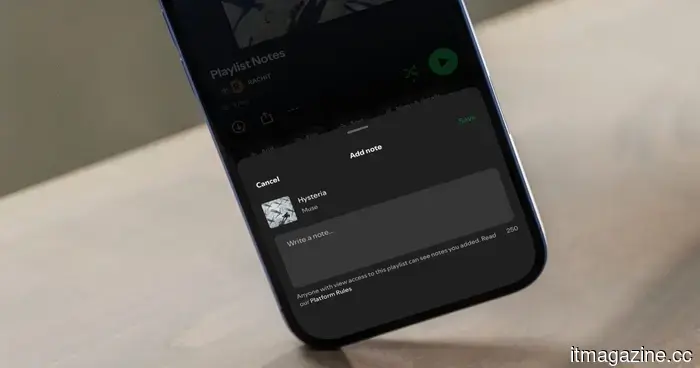 Spotify's Playlist Notes allows for easier addition of context to your favorite selections.
Spotify's latest feature, Playlist Notes, allows both editors and users to share the background of each track directly within the playlist.
Spotify's Playlist Notes allows for easier addition of context to your favorite selections.
Spotify's latest feature, Playlist Notes, allows both editors and users to share the background of each track directly within the playlist.
 The financial aspects of a voice assistant: the true cost of one minute of dialogue.
The headline price per minute for a voice agent conceals five layers of costs, including failure overhead and context expansion, which are crucial in assessing whether a use case can truly scale.
The financial aspects of a voice assistant: the true cost of one minute of dialogue.
The headline price per minute for a voice agent conceals five layers of costs, including failure overhead and context expansion, which are crucial in assessing whether a use case can truly scale.
 On 24 August, YouTube view counts are expected to increase, but creator earnings will remain unchanged.
Starting from 24 August, the YouTube view count will begin from the very first frame, without requiring any minimum watch time. Earnings will continue to be based on a stringent criterion, now referred to as Engaged views.
On 24 August, YouTube view counts are expected to increase, but creator earnings will remain unchanged.
Starting from 24 August, the YouTube view count will begin from the very first frame, without requiring any minimum watch time. Earnings will continue to be based on a stringent criterion, now referred to as Engaged views.
 Alina Kukarina discusses how the AI transformation process starts even before selecting the technology.
Alina Kukarina contends that AI projects are likely to fail when organizations overlook the critical thought process that bridges ambition and implementation, beginning with technology rather than focusing on purpose.
Alina Kukarina discusses how the AI transformation process starts even before selecting the technology.
Alina Kukarina contends that AI projects are likely to fail when organizations overlook the critical thought process that bridges ambition and implementation, beginning with technology rather than focusing on purpose.
 Viture Pro 2 review: Budget-friendly glasses that I enjoyed using more for work than for leisure.
Viture Pro 2 offers an excellent combination of affordability, impressive visuals, comfort, and productivity features. If you're looking to truly experience smart glasses, this is an excellent choice.
Viture Pro 2 review: Budget-friendly glasses that I enjoyed using more for work than for leisure.
Viture Pro 2 offers an excellent combination of affordability, impressive visuals, comfort, and productivity features. If you're looking to truly experience smart glasses, this is an excellent choice.
OpenAI introduces ChatGPT for teenagers and will automatically enroll users under 18.
OpenAI is launching ChatGPT for Teens to all users under 18 that it can identify. The platform will not allow romantic language, avoid implied emotions, and will have a Study Mode with a timer.