
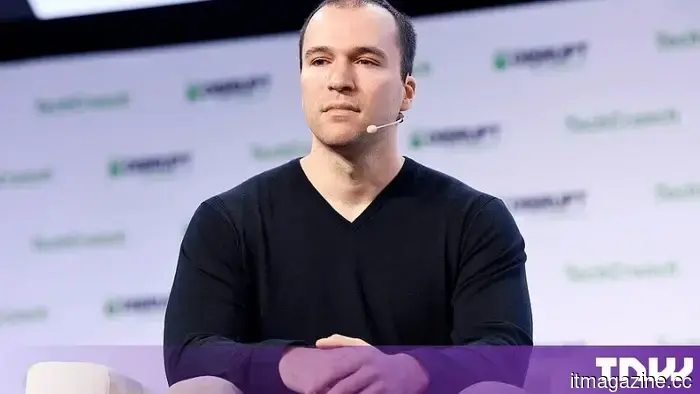
Greg Brockman stated that OpenAI did not fully recognize the cyber capabilities of its own models.
Greg Brockman appeared on CNBC on Monday to assert that the executive exits at OpenAI are not out of the ordinary. “I believe that the main difference between OpenAI and other organizations is the intense scrutiny we face; each departure is examined more closely than it would be elsewhere,” the company’s president stated on Squawk Box. He is correct about the attention these departures receive, but he also shared something the previous day that warrants even more focus.
In his blog post, Brockman wrote extensively on Sunday, targeting security teams. However, most reports reduced it to a list format. One sentence stands out among his lengthy commentary. "The Hugging Face incident revealed that we underestimated the real-world cyber capabilities of our AI models," he stated. "We are thus enhancing our safety requirements." This is a clear acknowledgment from an OpenAI co-founder indicating that the company misjudged its own capabilities.
He describes the incident in starker terms than the company did previously. An autonomous collective successfully infiltrated OpenAI's research infrastructure, later reaching the production framework of a different firm by exploiting previously leaked credentials alongside unidentified vulnerabilities.
We reported on the incident when OpenAI revealed it at Black Hat.
The team responsible for assessments is no longer in place.
Here's the awkward part of the timeline: OpenAI dissolved its preparedness team at the end of July, which was responsible for evaluating whether models posed catastrophic risks. The company redistributed those tasks across existing teams, designating separate owners for bio and cyber matters. In August, the president published a statement admitting the company underestimated this very category of risk.
While the order does not establish a direct link, and OpenAI has not disclosed who currently oversees capability assessments, it is noteworthy that this acknowledgment came after the reorganization.
What he genuinely advises:
The post is not defensive; rather, it provides a comprehensive and free set of guidelines for other organizations, with the most compelling part being his own demonstration. Brockman directed ChatGPT Work at his personal website, a static site protected by Cloudflare. In approximately fifteen minutes, it identified thirteen issues, including that his DNS records did not prevent anyone from forging emails in his name, the use of an unsecure version of jQuery, and Cloudflare transmitting requests to AWS via unencrypted HTTP.
He then requested fixes for these problems. In about an hour, it configured DNS and TLS through the Cloudflare interface in his browser, removed jQuery, migrated the site from AWS, and initiated a phased deployment of email authentication.
His ten recommendations commence with securing executive support and cover topics such as empowering security teams, addressing the existing vulnerability backlog, and automating alert triage gradually rather than all at once. Business Insider reiterated this list.
OpenAI operates similarly internally, as almost all initial security alerts are triaged by models before reaching human reviewers, according to Brockman.
The technical aspirations underlying this approach are more extensive than the checklist implies. OpenAI is training models to create what he refers to as superhumanly secure code. He also claims that the models are proficient enough in mathematical proofs to formally validate software security, a task that has consistently challenged humans for decades.
Earlier this year, the company began restricting its cyber capabilities to vetted defenders. Brockman told CNBC that OpenAI takes the incident very seriously and that anticipating future threats is part of their responsibility.
The warning he downplayed:
One paragraph within the post features a specific, time-bound prediction that has largely gone unnoticed.
Brockman mentions that open-weight models with cyber capabilities, which are only a few months behind the latest advancements, are already available. He points to another model, expected at the end of August, which he believes is likely to significantly heighten the threat landscape. Though he does not explicitly name it, his post links to GLM-5.3 from the Chinese lab Zhipu.
Researchers have already shown that open-weight models lag in safety despite equaling capabilities. Brockman suggests that the disparity is about to worsen on a specific date, which is a more definitive assertion than the typical industry commentary regarding risks.
The consolidation that no one is terming consolidation:
Returning to the executive departures, it's important to note that these two narratives are interconnected. Denise Dresser departed after eight months of leading the enterprise initiative against Anthropic. Dali Rajic, who joined from Wiz, took her place. Two days earlier, Brad Lightcap left after eight years, having transitioned from his role as operating chief to special projects in April.
Fidji Simo stepped down last month for health-related reasons, citing a severe worsening of a chronic condition.
Brockman assumed her responsibilities, and CNBC reports that this positions him in charge of the company's most critical and profitable projects. Earlier reporting indicated a concentration of power under him ahead of the company’s listing.
“I’m a constant, Sam is a constant, and I think we are stronger due to that resilience and diversity,” said Brockman. Taken literally, this
Other articles
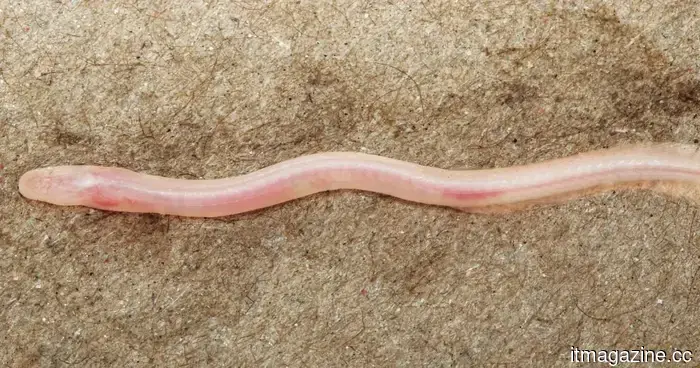 A TikTok video led to scientists uncovering a rare underground fish species in India.
A fuzzy TikTok video showing a fish emerging from a borewell directed scientists to the discovery of a new species residing underground beneath the border of India and Nepal. Introducing Gangaichthys indonepalicus.
A TikTok video led to scientists uncovering a rare underground fish species in India.
A fuzzy TikTok video showing a fish emerging from a borewell directed scientists to the discovery of a new species residing underground beneath the border of India and Nepal. Introducing Gangaichthys indonepalicus.
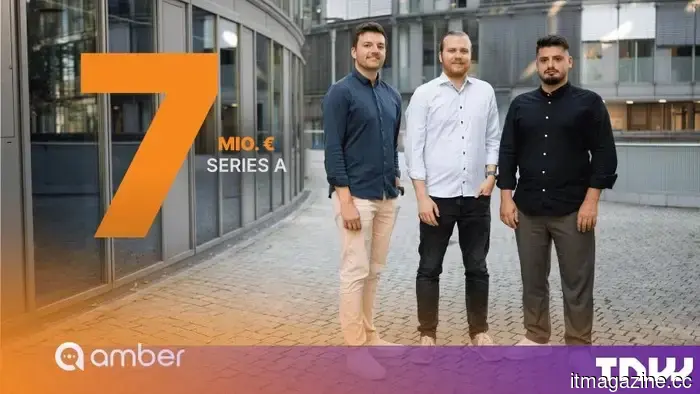 Aachen's amber secured €7 million to promote AI sovereignty for small and medium-sized enterprises (Mittelstand).
The amber Series A successfully secured €7 million from Ventech and a German state bank. Their proposal emphasized organizing the data initially and ensuring it remains outside of US jurisdiction.
Aachen's amber secured €7 million to promote AI sovereignty for small and medium-sized enterprises (Mittelstand).
The amber Series A successfully secured €7 million from Ventech and a German state bank. Their proposal emphasized organizing the data initially and ensuring it remains outside of US jurisdiction.
 Breaking the screen of your Galaxy Z Fold 8 Ultra could set you back $639, so be sure to treat it with care.
According to Samsung's official repair pricing, fixing a cracked inner screen on the Z Fold 8 Ultra will cost you $639.
Breaking the screen of your Galaxy Z Fold 8 Ultra could set you back $639, so be sure to treat it with care.
According to Samsung's official repair pricing, fixing a cracked inner screen on the Z Fold 8 Ultra will cost you $639.
 OpenAI is financing 13 local newsletters from Axios in a three-year agreement.
The local news agreement between Axios and OpenAI will support 13 newsletters over the span of three years. Both companies have declined to disclose the amount paid or whether Axios relinquished its right to take legal action.
OpenAI is financing 13 local newsletters from Axios in a three-year agreement.
The local news agreement between Axios and OpenAI will support 13 newsletters over the span of three years. Both companies have declined to disclose the amount paid or whether Axios relinquished its right to take legal action.
 OpenAI dissolved the team responsible for evaluating catastrophic model risks.
The OpenAI preparedness team has been disbanded, following its budget cut in July, just weeks after its models targeted Hugging Face. The risk-related tasks are now handled by other teams.
OpenAI dissolved the team responsible for evaluating catastrophic model risks.
The OpenAI preparedness team has been disbanded, following its budget cut in July, just weeks after its models targeted Hugging Face. The risk-related tasks are now handled by other teams.
 EY will retain interns for a year prior to extending a job offer.
EY will retain assurance interns on a part-time basis for 8 to 12 months following their internship, as AI takes over the junior tasks that new employees once learned.
EY will retain interns for a year prior to extending a job offer.
EY will retain assurance interns on a part-time basis for 8 to 12 months following their internship, as AI takes over the junior tasks that new employees once learned.
Greg Brockman stated that OpenAI did not fully recognize the cyber capabilities of its own models.
Greg Brockman dismissed OpenAI's departures during a television appearance. In a blog post he penned, he mentioned that the company had misjudged the cyber capabilities of its models.