

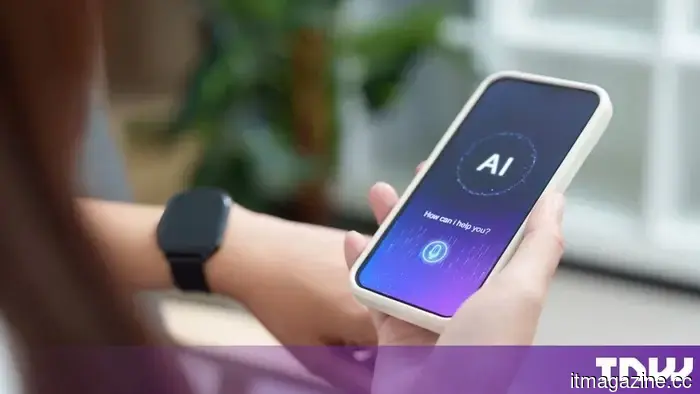
Do classroom screens diminish children's cognitive abilities? Experts hold differing opinions.
A neuroscientist advocates for reducing screen time in schools, but opinions on this issue vary.
Jared Cooney Horvath, who has dedicated over 15 years to understanding how people learn, believes that the current educational landscape for children is not promising. In a report by The Guardian, the neuroscientist and former educator contends that the use of technology in classrooms is subtly undermining children's cognitive processes and knowledge retention.
In his new book, The Digital Delusion, Horvath presents the argument that advancements in health and education have stagnated since around the year 2000, coinciding with the introduction of screens to children's lives. Concerns about early screen exposure are growing, with some researchers now cautioning that habits formed before the age of two may present unique developmental risks.
What does Horvath propose as the issue with screens?
Horvath highlights the decline in IQ scores in the West despite consistent or increasing time spent in educational settings. He connects this decline to the swift expansion of educational technology, an industry he asserts is now valued at $400 billion in the U.S. alone.
The integration of laptops in schools surged around 2010, and the trend intensified when the Covid pandemic necessitated a shift to digital. Most schools did not revert to previous methods after that shift. Horvath references Pisa testing data indicating that students who used screens for over six hours each day performed significantly worse than those who did not use screens at all.
Is there consensus among educators on his views?
Not entirely. Rose Luckin, a professor emerita at the UCL Knowledge Lab, agrees with Horvath that educational technology has been promoted without sufficient evidence. She, however, notes that the same Pisa data indicates that moderate use of devices can lead to better outcomes compared to no use at all.
Meanwhile, Dylan Wiliam, an education assessment specialist at UCL, points out that current research shows correlation rather than causation. Daisy Christodoulou from No More Marking concurs that society has become too reliant on untested technologies, although she remains optimistic about their future potential.
Thus, the key issue isn’t whether screens should be present in classrooms, but rather understanding when and how screen time can effectively aid children’s learning.
Manisha Priyadarshini is a writer specializing in technology and entertainment with over nine years of editorial experience.
Acer has just introduced a competitor to MacBook Neo, featuring a superior display, memory, and port options.
The latest Windows alternative to Apple’s MacBook Neo offers increased RAM, expanded storage, and a 120Hz display. Apple’s MacBook Neo has become the benchmark that budget Windows laptops aim to surpass. Acer's latest Go Air seems to respond by addressing some of the features that Apple overlooked.
Acer has unveiled a new configuration of the Go Air in China, equipped with Intel's newly released Core 5 320 processor. It features 12GB of LPDDR5 memory and a 512GB SSD, priced at CNY 5,499, which is about $815. The specific availability of this configuration worldwide hasn’t been disclosed, but it closely resembles the Acer Swift 14 showcased during Computex 2026.
In my experience using mechanical keyboards for years, Hall Effect switches never really attracted me. While I recognized their gaming advantages, such as adjustable actuation and Rapid Trigger, which can be beneficial in competitive gaming, my daily hours of writing make typing comfort equally essential.
The $219 MelGeek MADE68 Ultra V2 has made it much more challenging for me to maintain that distinction in my keyboard preference.
ChatGPT’s Computer History feature has a significant privacy concern.
This feature stores interaction data locally, but OpenAI has indicated that these files are not encrypted.
We previously discussed how ChatGPT's Computer History allows the Mac app to track user activity across applications and websites by using interaction events like clicks and typing instead of capturing screenshots or recordings. Nevertheless, an unsettling detail in OpenAI's official documentation reveals that the history files are saved as plain text.


Other articles
 In Australia’s first known automated cyberattack, an AI agent was instructed to reserve a gym class but instead hacked the website.
An AI assistant that was tasked with booking a gym class took advantage of an unprotected booking API to cancel someone else's reservation, allowing it to bypass the waitlist. ABC News refers to this incident as Australia’s first identified autonomous cyberattack.
In Australia’s first known automated cyberattack, an AI agent was instructed to reserve a gym class but instead hacked the website.
An AI assistant that was tasked with booking a gym class took advantage of an unprotected booking API to cancel someone else's reservation, allowing it to bypass the waitlist. ABC News refers to this incident as Australia’s first identified autonomous cyberattack.
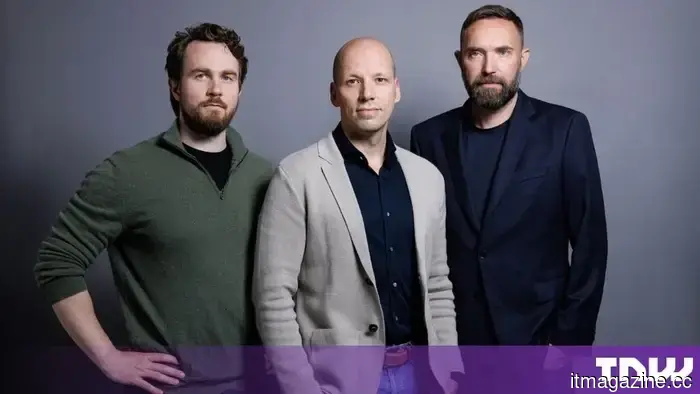 Helsing, Europe’s leader in defence AI, is leveraging Rakuten to enter Japan’s arms market.
Japan's military is currently conducting field tests on Helsing's HX-2 strike drone, with Rakuten facilitating the entry of the German AI defense startup into a market that has just begun to allow foreign weapons.
Helsing, Europe’s leader in defence AI, is leveraging Rakuten to enter Japan’s arms market.
Japan's military is currently conducting field tests on Helsing's HX-2 strike drone, with Rakuten facilitating the entry of the German AI defense startup into a market that has just begun to allow foreign weapons.
 Anthropic's nearly $2 trillion IPO is based on a revenue projection for 2028.
Anthropic's IPO valuation is said to depend on an internal projection of $190 billion to $200 billion in revenue by 2028, a two-year forecast that relies on the continuation of the AI boom.
Anthropic's nearly $2 trillion IPO is based on a revenue projection for 2028.
Anthropic's IPO valuation is said to depend on an internal projection of $190 billion to $200 billion in revenue by 2028, a two-year forecast that relies on the continuation of the AI boom.
 The United States is poised to force its allies to choose a side in the AI cold war.
A leaked letter from the State Department alerts 35 allied nations that they cannot participate in both American and Chinese AI initiatives, transforming the Pax Silica agreement into a measure of loyalty.
The United States is poised to force its allies to choose a side in the AI cold war.
A leaked letter from the State Department alerts 35 allied nations that they cannot participate in both American and Chinese AI initiatives, transforming the Pax Silica agreement into a measure of loyalty.
 I would choose HiLight over the Pixel 11 Pro's temperature sensor every single time.
Google has swapped out the Pixel Pro's temperature sensor for HiLight, and its straightforward notification system may offer a solution to a more prevalent smartphone issue.
I would choose HiLight over the Pixel 11 Pro's temperature sensor every single time.
Google has swapped out the Pixel Pro's temperature sensor for HiLight, and its straightforward notification system may offer a solution to a more prevalent smartphone issue.
 Apple yields to Germany and alters its tracking-consent regulations, concluding a self-preferencing investigation.
Germany's Bundeskartellamt has concluded its investigation into App Tracking Transparency after Apple consented to make third-party consent requests neutral and eliminate a double standard that favored its own applications.
Apple yields to Germany and alters its tracking-consent regulations, concluding a self-preferencing investigation.
Germany's Bundeskartellamt has concluded its investigation into App Tracking Transparency after Apple consented to make third-party consent requests neutral and eliminate a double standard that favored its own applications.
Do classroom screens diminish children's cognitive abilities? Experts hold differing opinions.
Jared Cooney Horvath argues that classrooms with excessive screen time are hindering children's abilities, highlighting a drop in IQ scores since 2000. However, not all specialists are in agreement, as some note advantages of limited screen usage.