

AI companies might be acquiring old books, and I sincerely hope they aren't damaging them.
Booksellers have been noticing an unusual trend recently, with large orders of older books being placed, often without clear subject matter, author, or genre, leading sellers to question the identity and motives of the buyers.
As reported by The Guardian, booksellers in the U.K. and Ireland are receiving bulk orders ranging from agricultural texts to racing biographies. Some purchasers reportedly utilize ambiguous aliases, direct their orders to the same shipping facilities, and pay full price without seeking bulk discounts. Similar behavior has also been observed in the U.S., Australia, and Europe.
Although there is no definitive evidence linking these purchases to AI companies, observing related developments elsewhere lends some credibility to this speculation.
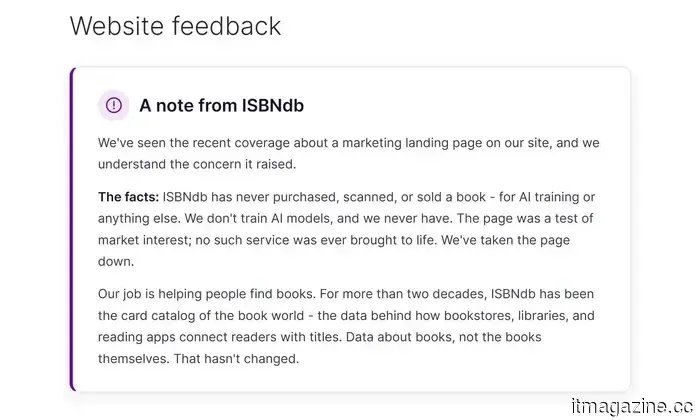
Reports indicate that AI companies are indeed interested in acquiring old books. For instance, 404 Media highlighted a landing page on ISBNdb promoting "Printed Books Sourcing for Your AI LLMs Dataset Needs." ISBNdb took down this page on July 28, stating it was part of an exploration of market demand and that they had chosen to abandon the initiative.
Two days later, ISBNdb provided further clarification, asserting they have never purchased, scanned, or sold books for AI training, nor have they trained AI models; the proposed service was never fully developed.
Additional evidence suggests a connection. The Atlantic reports that the Singapore-based AI data firm 2077AI has been associated with requests for thousands of specific books, though this does not substantiate the broader buying patterns.
One theory posits that older books published prior to the boom in generative AI provide model developers with a valuable resource: a wealth of human-written content with minimal risk of including AI-generated text. The withdrawn ISBNdb page also highlighted older printed books as beneficial training material for this reason.
There are concerns about the potential destruction of these books.
Sadly, destructive scanning practices are already known to occur.
Court documents have previously disclosed that the AI company Anthropic invested millions in acquiring physical books, removing their spines, scanning the contents, and then recycling the books while developing its training library. Anthropic asserts its acquisition programs do not purchase and destroy rare or antiquarian volumes.
As someone who spends considerable time searching for old and out-of-print books, the thought of such destruction is troubling. Some books have limited print runs, and finding replacements can be challenging. The idea that a remaining copy could be destroyed merely to extract its text for AI training is disconcerting. If AI companies are indeed responsible for these enigmatic orders, I hope there is careful consideration before any books are cut apart.
In other news, a neuroscientist has expressed concerns about the impact of classroom screens on children's cognitive development. Jared Cooney Horvath, who has dedicated over 15 years to researching learning, claims that the current state of children's learning is concerning. His new book, The Digital Delusion, argues that advancements in health and education have stagnated since around 2000, coinciding with increased screen access for children. Some researchers also caution that screen habits developed before the age of two pose developmental risks.
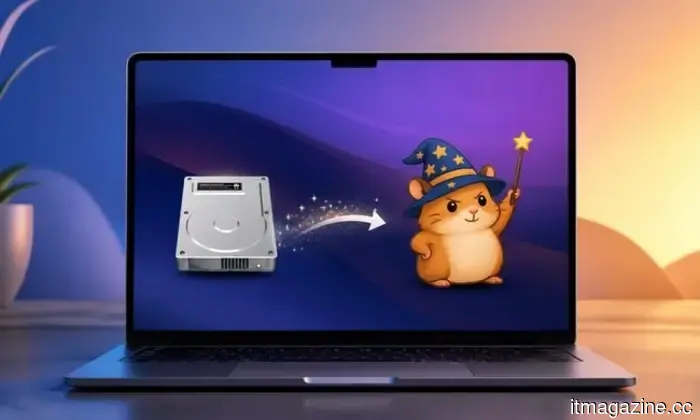
Additionally, Mac users now have a simplified way to install apps from DMG files thanks to EasyDMG, eliminating the need for the time-consuming process traditionally associated with it.
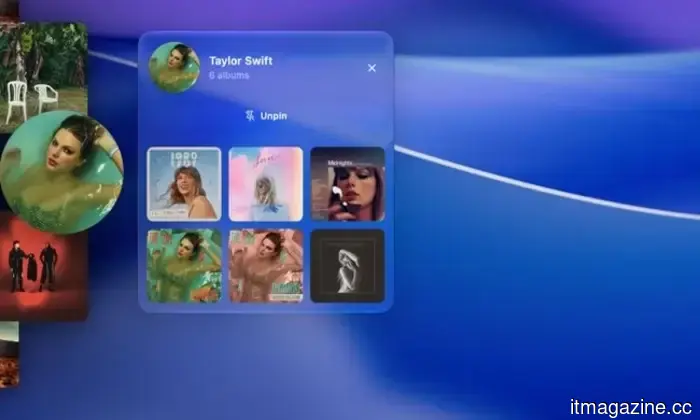
Finally, I discovered a Mac music application that has seamlessly integrated into my work routine. While exploring for interesting Mac apps on Reddit, I found one that enhances my focus while working. This app, Gramola, greatly improves my experience listening to music as I work, making it an invaluable addition to my workflow.




Other articles
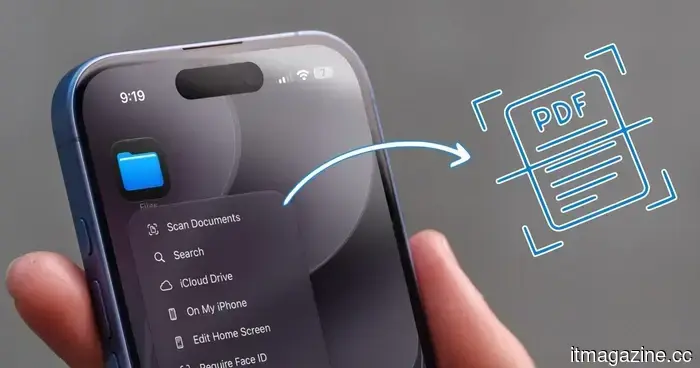 You don’t require a document scanning app; your iPhone already has that capability.
Your iPhone is already capable of scanning documents effectively. There's no requirement for additional apps; just the Notes and Files apps handle everything.
You don’t require a document scanning app; your iPhone already has that capability.
Your iPhone is already capable of scanning documents effectively. There's no requirement for additional apps; just the Notes and Files apps handle everything.
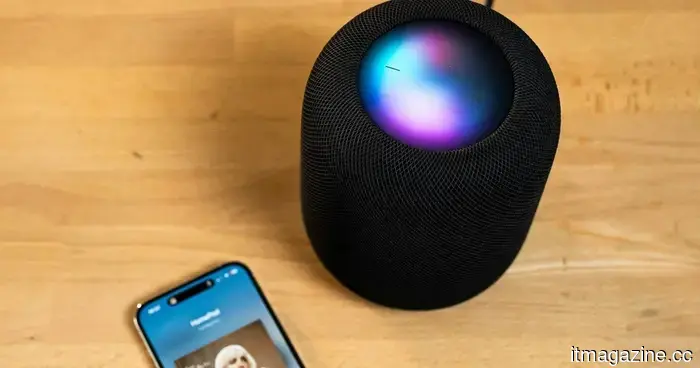 Apple is said to be planning to broaden its smart home range with new smart displays, cameras, and refreshed HomePods.
Apple seems to be gearing up for a more extensive entry into the smart-home hardware market, as multiple new products are in the works, aiming to extend beyond the HomePod mini and Apple TV, as reported by 9To5Mac. The planned developments include updated versions of the existing products, a new smart-home hub featuring a display, and a larger HomePod.
Apple is said to be planning to broaden its smart home range with new smart displays, cameras, and refreshed HomePods.
Apple seems to be gearing up for a more extensive entry into the smart-home hardware market, as multiple new products are in the works, aiming to extend beyond the HomePod mini and Apple TV, as reported by 9To5Mac. The planned developments include updated versions of the existing products, a new smart-home hub featuring a display, and a larger HomePod.
 Dario Amodei acknowledges that AI companies have failed to fulfill their commitments.
Dario Amodei states that the most valid criticism of AI companies, including his own, is that they have failed to deliver, just weeks ahead of Anthropic's anticipated listing.
Dario Amodei acknowledges that AI companies have failed to fulfill their commitments.
Dario Amodei states that the most valid criticism of AI companies, including his own, is that they have failed to deliver, just weeks ahead of Anthropic's anticipated listing.
 Google might have unintentionally revealed a new fitness tracker that includes a display.
Google's Pixel 11 commercials seem to reveal an unannounced fitness tracker that falls between the Fitbit Air and the Pixel Watch.
Google might have unintentionally revealed a new fitness tracker that includes a display.
Google's Pixel 11 commercials seem to reveal an unannounced fitness tracker that falls between the Fitbit Air and the Pixel Watch.
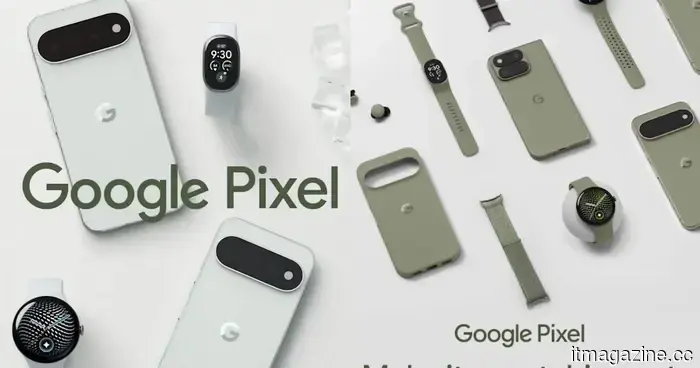 Google might have unintentionally revealed a new fitness tracker that features a display.
Google's Pixel 11 ads seem to reveal a yet-to-be-announced fitness tracker that falls in between the Fitbit Air and Pixel Watch.
Google might have unintentionally revealed a new fitness tracker that features a display.
Google's Pixel 11 ads seem to reveal a yet-to-be-announced fitness tracker that falls in between the Fitbit Air and Pixel Watch.
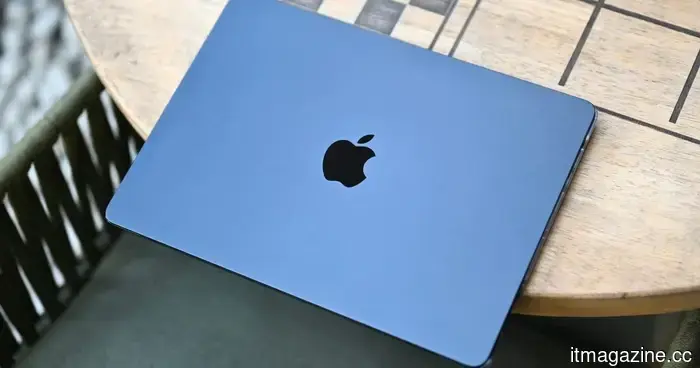 Apple's most recent refurbished product release features discounted MacBooks, the iPhone 16 Plus, and Apple Watches.
Apple has introduced various new M5 MacBook Air and MacBook Pro configurations to its refurbished store, in addition to offering the iPhone 16 Plus and Apple Watch models at reduced prices.
Apple's most recent refurbished product release features discounted MacBooks, the iPhone 16 Plus, and Apple Watches.
Apple has introduced various new M5 MacBook Air and MacBook Pro configurations to its refurbished store, in addition to offering the iPhone 16 Plus and Apple Watch models at reduced prices.
AI companies might be acquiring old books, and I sincerely hope they aren't damaging them.
Booksellers in various countries are experiencing unexpected bulk orders for rare and out-of-print books, leading some to believe that AI companies may be responsible for the surge in purchases.