
In 2010, Microsoft informed Google that it was exaggerating. The company has been gradually withdrawing from China for the past five years.
Corporate filings indicate the closures, according to an exclusive report by Reuters. The revenue statistic clarifies the situation; as of 2024, China represented only 1.5% of global revenue. Microsoft currently has no intention to exit the market; it has merely ceased its growth there. When placed against the scale of the company, the 1.5% becomes nearly insignificant, as Microsoft’s cloud business alone surpassed $100 billion in annual revenue in its most recent quarter. China is now a minor detail associated with significant geopolitical risk, which informs every subsequent statement.
The company that suggested Google was overreacting illustrates a contrasting history. In 2010, Google withdrew from China due to concerns over censorship and cyberattacks, while Bill Gates and then CEO Steve Ballmer claimed Google was overreacting. Microsoft chose to remain, and democracy advocates commended Google for its decision. Now, sixteen years later, Microsoft is gradually reaching the same conclusion without formally announcing it.
This distinction is notable: Google made a clear decision, whereas Microsoft has silently made a series of decisions, which are documented in the filings. In 2023, internal discussions reached the topic of exiting China. Reuters reported that Microsoft considered leaving due to excessive geopolitical risk with minimal economic reward, a point that is hard to dispute when placed alongside the 1.5%.
Then the staffing dilemma emerged. In 2024, Microsoft offered relocation to the US and three other Western nations to 1,000 of its top engineers, with about a third accepting the offer. The fact that two-thirds chose to stay is telling regarding the reception of such proposals.
The economic strain is well-documented. Since 2017, China has been promoting domestic software. By May 2026, five out of six reviewed Chinese government procurement guidelines no longer recommended Microsoft products, with the sixth only listing Windows 10 China Government Edition but with additional management requirements. While a procurement guide isn’t a prohibition, it is often more effective because it does not require justification.
The pressure is reciprocal; China has launched a cybersecurity review of Palo Alto Networks, while Washington has taken steps to exclude Chinese optics from American data centers, a measure for which Microsoft bears the cost.
What keeps the connection alive is that Microsoft’s remaining business in China largely revolves around Chinese companies operating abroad. Azure services clients like ByteDance and Shein, which rely on Western technology for international operations. Therefore, the customer is Chinese, but the workload is not.
This creates a paradoxical but sustainable position for Microsoft. Its strategy in China hinges on the growth of Chinese companies overseas rather than direct sales within China. The case of Shein highlights this vulnerability; its advisers are now proposing a Hong Kong IPO with a valuation below $30 billion, a sharp decline from its peak.
The tale of Microsoft Research Asia mirrors this situation on a smaller scale, as its labs have shifted to Vancouver, Singapore, and Tokyo. The current AI boom underlines the necessity of maintaining this position, as companies catering to foreign markets require Western models, tools, and a cloud service trusted by their international clientele. Absent this demand, justification for remaining in China would rest solely on the 1.5% figure and a lengthy history—neither of which would win an internal debate.
Examining the flow of capital suggests that Microsoft's retreat appears more like a redirection. The company has launched its fourth cloud region in India this month, backed by a $17.5 billion commitment. This represents a significant dedication to one country, surpassing the total revenue contribution from China, which only sees a sustained presence.
Microsoft's official stance remains diplomatic. A spokesperson noted that the company operates within regulatory frameworks applicable to all international suppliers and remains committed to the Chinese market. While both parts of this statement are valid, it also resembles a statement made once the financial figures have already revealed the reality.
The dynamics of technology flow indicate that the relationship has evolved rather than dissolved. Reports suggest Microsoft is considering integrating China’s DeepSeek into Copilot to manage its AI expenses, indicating that a company reducing its exposure to the Chinese market is contemplating utilizing Chinese models in its principal product.
This situation is not contradictory; it exemplifies what decoupling looks like from within a business where financial realities and political considerations diverge.
For stakeholders outside China, this case should be regarded as a precedent rather than a mere curiosity. A government seeking to foster domestic software can accomplish this through procurement guidance alone, achieving results in less than a decade without enacting any outright bans.
This mechanism is accessible to any nation. The EU has long deliberated on digital sovereignty concerning rules and funding, whereas China executed this through purchasing choices, culminating in a mere 1.5% revenue contribution from the world’s largest software entity.
It’s important to voice the counterargument: China’s strategy involves censorship, enforced localization, and an industrial policy that European nations might reject, ultimately resulting in a market increasingly inaccessible to Western firms.
Two ver
Other articles
 AI agents are attending students' online courses, and universities are finding it difficult to prevent this.
AI agents are elevating AI-assisted cheating by successfully completing entire online college courses, which includes watching lectures, taking quizzes, writing papers, and participating in discussions.
AI agents are attending students' online courses, and universities are finding it difficult to prevent this.
AI agents are elevating AI-assisted cheating by successfully completing entire online college courses, which includes watching lectures, taking quizzes, writing papers, and participating in discussions.
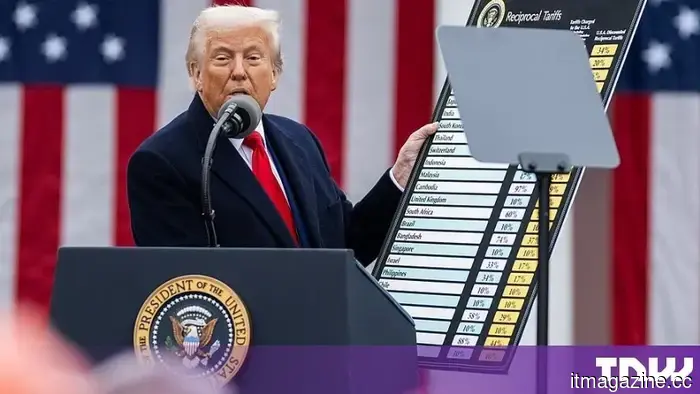 Private companies in the US are now permitted to conduct cyber operations internationally, while state-sponsored hackers are not included.
A memo from the White House permits approved US companies to conduct offensive cyber operations against overseas criminal organizations. Hackers operating under state direction are not included in this authorization.
Private companies in the US are now permitted to conduct cyber operations internationally, while state-sponsored hackers are not included.
A memo from the White House permits approved US companies to conduct offensive cyber operations against overseas criminal organizations. Hackers operating under state direction are not included in this authorization.
 Apple aims to compensate publishers based on usage rather than on an annual basis for providing news to Siri.
According to the Wall Street Journal, Apple’s agreements with publishers for Siri would compensate news organizations every time their articles are utilized, with a potential budget reaching nine figures.
Apple aims to compensate publishers based on usage rather than on an annual basis for providing news to Siri.
According to the Wall Street Journal, Apple’s agreements with publishers for Siri would compensate news organizations every time their articles are utilized, with a potential budget reaching nine figures.
 Private US companies are now permitted to conduct cyber operations outside the country. However, state-sponsored hackers are not included in this allowance.
A memo from the White House permits approved US companies to conduct offensive cyber operations targeting foreign criminal organizations. However, state-sponsored hackers are not included.
Private US companies are now permitted to conduct cyber operations outside the country. However, state-sponsored hackers are not included in this allowance.
A memo from the White House permits approved US companies to conduct offensive cyber operations targeting foreign criminal organizations. However, state-sponsored hackers are not included.
 Apple aims to compensate publishers based on usage rather than an annual fee for providing news through Siri.
According to the Wall Street Journal, Apple’s Siri agreements would compensate news organizations each time their articles are utilized, with a potential budget in the nine-figure range.
Apple aims to compensate publishers based on usage rather than an annual fee for providing news through Siri.
According to the Wall Street Journal, Apple’s Siri agreements would compensate news organizations each time their articles are utilized, with a potential budget in the nine-figure range.
 Scientists developed a small wearable patch that detects cholesterol levels through sweat.
Researchers at Caltech have developed a wearable patch that continuously monitors cholesterol and triglyceride levels through sweat, eliminating the need for needles or laboratory appointments.
Scientists developed a small wearable patch that detects cholesterol levels through sweat.
Researchers at Caltech have developed a wearable patch that continuously monitors cholesterol and triglyceride levels through sweat, eliminating the need for needles or laboratory appointments.
In 2010, Microsoft informed Google that it was exaggerating. The company has been gradually withdrawing from China for the past five years.
Microsoft China represents 1.5% of its revenue, and over 15 offices have closed in the past five years. The company considered exiting the market in 2023. Its continued presence is maintained by Azure exports.