
ClickHouse and Hud create a runtime feedback loop for software generated by AI.
TL;DR: According to Hud, AI contributes to generating or assisting 42% of shipped code, which is expected to increase to 65% by 2027. Their new integration with ClickHouse's ClickStack merges function-level runtime intelligence with infrastructure-wide observability, establishing a feedback loop where AI-generated changes are evaluated before deployment, confirmed post-release, and automatically investigated or reverted if behavior diverges. Monday.com is an early user of this combined stack.
The increase of AI in software development is transforming the challenges faced by engineering teams. While code generation is speeding up, reviewing its potential impacts, validating releases, and addressing unforeseen behaviors still necessitate context from production.
Hud reports that AI currently generates or assists with 42% of the code that developers ship, with that percentage likely to climb to 65% by 2027. The company's new integration with ClickHouse is aligned with this trend, integrating runtime information into processes that evaluate and manage AI-generated modifications.
This integration connects ClickStack, the open-source observability stack from ClickHouse, with Hud's Runtime Code Sensor. The goal of this partnership is to aid engineering teams in assessing changes before deployment, confirming them post-release, and examining issues when production behavior alters.
“AI is speeding up how quickly teams can generate code, but ensuring safe deployment with high confidence relies on production context,” said May Walter, CTO of Hud. “Hud and ClickHouse provide real production behavior with unmatched depth and breadth, enabling teams to create a production-aware AI SDLC: controlling changes pre-deployment, proactively validating them post-deployment, and addressing issues as they occur – all based on real runtime truths. Together with ClickHouse, we are infusing intelligence throughout the entire AI SDLC.”
An Expansive Perspective on Production Events
The integration combines two unique approaches to application behavior. ClickStack delivers visibility across applications and infrastructure, assisting teams in pinpointing the service, deployment, or endpoint linked to a problem.
Hud focuses on function-level behavior, linking production activities to the relevant functions and code modifications. A coding agent can establish a connection using shared trace IDs, allowing teams to transition from an issue in ClickStack to pertinent code-level insights in Hud.
“Our users currently rely on ClickHouse for large-scale storage and querying of their OpenTelemetry data,” stated Mike Shi, Head of Observability at ClickHouse. “The ongoing shift is from merely monitoring systems or examining problems to using that data for everyday engineering decisions. Hud links observability data to the code and changes, enhancing the utility of the entire stack for teams engaged in AI-assisted software development.”
This association allows production data to play a role earlier in the engineering workflow. Instead of depending mainly on runtime information for troubleshooting, teams can utilize it to determine how AI-generated changes progress through development and deployment.
Leveraging Runtime Behavior for Release Guidance
The Hud+ClickStack integration offers pre-deployment risk evaluation for code modifications. Teams can assess changes against real-time data regarding how the impacted code performs in production, enabling them to halt higher-risk modifications for further review while allowing safer ones to proceed more rapidly or be merged automatically.
The workflow also extends into deployment, as the integration aids in release verification, automatic rollback on regression, automated detection and investigation, and agentic workflows that can initiate pull requests to address underlying code issues.
This creates a feedback loop surrounding AI-generated changes. A modification can be evaluated before it is deployed, monitored after the release, and investigated or corrected if its performance varies from expectations.
The companies assert that this strategy can also help tackle smaller production adjustments before they escalate into larger issues. For instance, a query may slow down, a function may behave unexpectedly under specific loads, or a code path may utilize more resources.
From Production Problem to Code-Level Solution
Hud is intended to identify these issues at the function level and offer forensic insights into their origins. ClickStack adds the broader operational context, assisting teams in comprehending where the problem is manifesting throughout the application.
“Like every modern tech organization, an increasing portion of our code is now developed with AI,” shared Rom Kadria, Senior Software Engineer at monday.com. “We can write code significantly faster, but the challenge has evolved to swiftly deploying new code while maintaining confidence that it won’t cause harm. ClickHouse provides us with a comprehensive operational overview at scale, while Hud delivers the runtime intelligence and enhanced introspection necessary for confidently evaluating and deploying AI-generated code. When problems arise, the combination of ClickHouse and Hud enables us to address and resolve them efficiently. For a company working with AI, this integration is the clear choice.”
The integration facilitates rollback and remediation processes, alongside automated investigation and code-level solutions. For engineering teams, the objective is to reduce the time between identifying unexpected behavior and understanding the change that led to it.
Teams can begin by installing the Hud SDK and linking it to their ClickStack service. Hud's runtime intelligence then operates alongside the OpenTelemetry data already collected by the teams.
As
Other articles
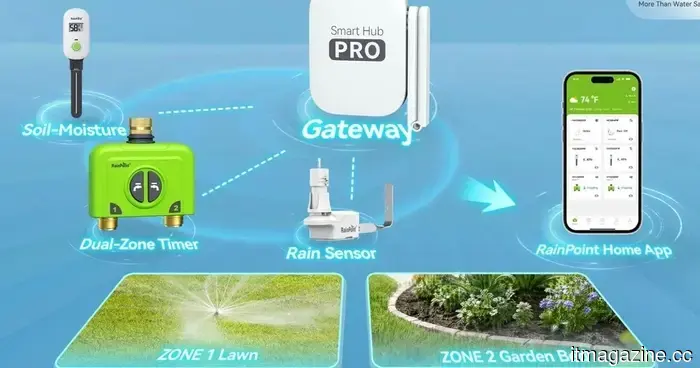 From Timers to Networks: Insights on Outdoor Automation from Connected Irrigation
Watering a lawn or garden has historically depended on established schedules that may not accurately represent the existing conditions. Connected irrigation systems aim to overcome this drawback by integrating timers with environmental sensors and centralized software. A prime example of this is RainPoint’s smart garden system, which illustrates how manufacturers are linking timers and environmental...
From Timers to Networks: Insights on Outdoor Automation from Connected Irrigation
Watering a lawn or garden has historically depended on established schedules that may not accurately represent the existing conditions. Connected irrigation systems aim to overcome this drawback by integrating timers with environmental sensors and centralized software. A prime example of this is RainPoint’s smart garden system, which illustrates how manufacturers are linking timers and environmental...
 I have a weakness for vibrant phones, and Google is well aware of this.
The colors of Google’s Pixel 11 are vibrant, striking, and delightfully playful, and the accessories are also joining in on the excitement.
I have a weakness for vibrant phones, and Google is well aware of this.
The colors of Google’s Pixel 11 are vibrant, striking, and delightfully playful, and the accessories are also joining in on the excitement.
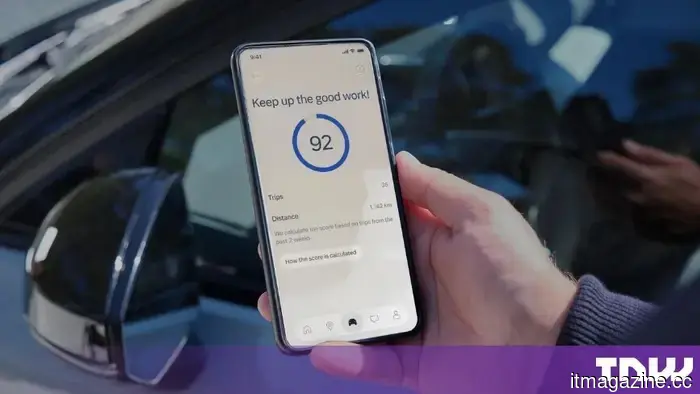 Volvo's latest app evaluates your driving and shares the score with your insurance provider.
Volvo's Safety Coach app evaluates braking, acceleration, and cornering, and drivers who share their data can obtain lower insurance rates. It is set to launch this month.
Volvo's latest app evaluates your driving and shares the score with your insurance provider.
Volvo's Safety Coach app evaluates braking, acceleration, and cornering, and drivers who share their data can obtain lower insurance rates. It is set to launch this month.
 The foldable iPhone Ultra may let down numerous enthusiastic customers.
Apple is facing supply issues that may restrict its foldable iPhone to an initial launch in the U.S., with other regions potentially experiencing months of delays.
The foldable iPhone Ultra may let down numerous enthusiastic customers.
Apple is facing supply issues that may restrict its foldable iPhone to an initial launch in the U.S., with other regions potentially experiencing months of delays.
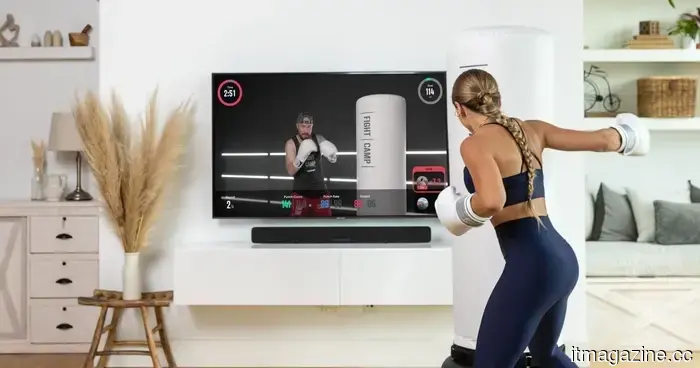 The top smart home gym equipment
From AI-enhanced strength trainers to linked bikes and intelligent treadmills, these top selections of smart home gym equipment offer personalized coaching, adaptive workout plans, and ongoing fitness monitoring for your home.
The top smart home gym equipment
From AI-enhanced strength trainers to linked bikes and intelligent treadmills, these top selections of smart home gym equipment offer personalized coaching, adaptive workout plans, and ongoing fitness monitoring for your home.
 Rivian updates its 2027 R1 series with new trim options and a significant enhancement in seating.
The 2027 Rivian R1S now includes optional captain's chairs, and the entire R1 series features streamlined trims along with a new Esker Silver paint choice.
Rivian updates its 2027 R1 series with new trim options and a significant enhancement in seating.
The 2027 Rivian R1S now includes optional captain's chairs, and the entire R1 series features streamlined trims along with a new Esker Silver paint choice.
ClickHouse and Hud create a runtime feedback loop for software generated by AI.
As AI currently produces 42% of the code that is shipped, ClickHouse and Hud are combining observability with runtime code intelligence to enable teams to control, assess, and address AI-generated modifications based on their performance in production.