
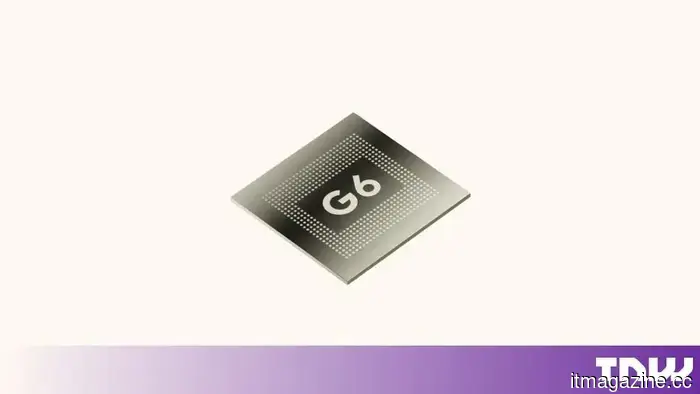
Google's latest Tensor G6 enhances performance, efficiency, and post-quantum security in the Pixel 11 series.
All four Pixel 11 models feature Google’s Tensor G6 processor along with a new Titan M3 security coprocessor that incorporates NIST’s post-quantum cryptography standards, marking a first for a Google smartphone. The chip promises a 25% improvement in browsing speed and 20% enhanced power efficiency, with a TPU that offers 50% more computational power.
Each Pixel 11 model comes equipped with Google's latest Tensor G6, but the notable addition is the Titan M3 security coprocessor, which implements the post-quantum cryptography standards set by the US National Institute of Standards and Technology. Google states that the Pixel 11 is its inaugural phone to comply with these standards.
This chip enables a quantum-safe secure boot and operates Trusty, Google’s trusted execution environment, across all four models. Google claims this protection is against "emerging, highly advanced digital attacks," and notes that Titan M3 holds Common Criteria certification at a level similar to those used for SIM cards and bank cards.
Currently, no quantum computer can compromise existing encryption. The rationale for immediate implementation is that data stolen today can be stored until it is decryptable, a concern identified by the industry as "harvest now, decrypt later." TNW has previously discussed why this threat is more pressing than it may seem.
Governments are accelerating their timelines as well. The White House has issued directives aiming for a functional quantum computer by 2028, establishing a deadline for progress that vendors had previously viewed as indefinite.
On the performance front, Google asserts that the Tensor G6 provides a 25% increase in browsing speed and a 15% boost in app loading times compared to the Tensor G5, along with up to 20% improved power efficiency, a persistent issue for earlier Tensor models.
The TPU boasts 50% greater computational power and increased memory bandwidth. It runs Gemini Nano on the device, which Google claims now performs background tasks up to 3.5 times faster while consuming 3.5 times less energy. The same chip powers a 120x Pro Zoom feature on the Pro models, facilitates 4K portrait video, and enables an Instant Night Sight that captures images up to 4.5 times more quickly.
Google has yet to disclose the manufacturing process or core configuration details. Benchmark comparisons with Qualcomm and Apple’s chips still remain as a weak point, and nothing announced indicates that this will change this year.
As for pricing, the Pixel 11 starts at $899, the Pro at $1,099, the Pro XL at $1,299, and the Pro Fold at $1,899, with the removal of the 128GB option confirming the price increase Google hinted at in July due to rising memory costs.
Other articles
 YouTube personality Cliff Tan has expressed his apologies to his 2.4 million followers after endorsing an AI design tool.
Cliff Tan issued an apology to his 2.4 million subscribers for a paid Dreamina advertisement, becoming the second YouTube creator in a week to distance themselves from an AI connection.
YouTube personality Cliff Tan has expressed his apologies to his 2.4 million followers after endorsing an AI design tool.
Cliff Tan issued an apology to his 2.4 million subscribers for a paid Dreamina advertisement, becoming the second YouTube creator in a week to distance themselves from an AI connection.
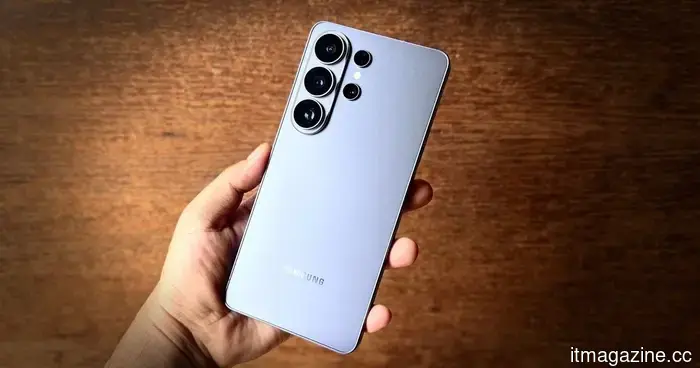 Samsung may have just put an end to a much-anticipated camera upgrade for the Galaxy S27.
Samsung might have abandoned its plans to bring back variable aperture in the Galaxy S27 series, while Apple is anticipated to introduce this feature in the iPhone 18 Pro.
Samsung may have just put an end to a much-anticipated camera upgrade for the Galaxy S27.
Samsung might have abandoned its plans to bring back variable aperture in the Galaxy S27 series, while Apple is anticipated to introduce this feature in the iPhone 18 Pro.
 Insta360 has made its top-of-the-line 360 camera extremely attention-grabbing.
Insta360 has recently introduced the X6, featuring a larger sensor, enhanced tracking capabilities, and a battery that can finally keep up with demand. Just try not to focus too much on the price.
Insta360 has made its top-of-the-line 360 camera extremely attention-grabbing.
Insta360 has recently introduced the X6, featuring a larger sensor, enhanced tracking capabilities, and a battery that can finally keep up with demand. Just try not to focus too much on the price.
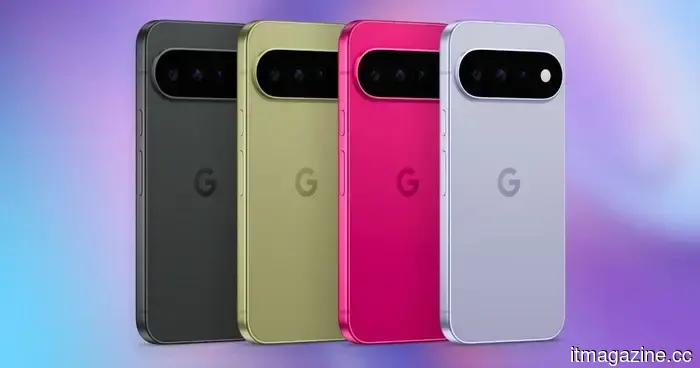 Google's latest Pixel 11 takes a cautious approach with some clever enhancements.
Google's Pixel 11 features a quicker Tensor G6 chip, double the standard storage, and a lighter design, while most other aspects remain similar. Here’s what’s new in Google's latest budget-friendly flagship.
Google's latest Pixel 11 takes a cautious approach with some clever enhancements.
Google's Pixel 11 features a quicker Tensor G6 chip, double the standard storage, and a lighter design, while most other aspects remain similar. Here’s what’s new in Google's latest budget-friendly flagship.
 Google's latest Pixel Tag is more compact than an AirTag and more effective at locating your belongings.
Google's response to the AirTag is slimmer than both leading competitors and includes a Bluetooth enhancement that offers accurate tracking for Android devices.
Google's latest Pixel Tag is more compact than an AirTag and more effective at locating your belongings.
Google's response to the AirTag is slimmer than both leading competitors and includes a Bluetooth enhancement that offers accurate tracking for Android devices.
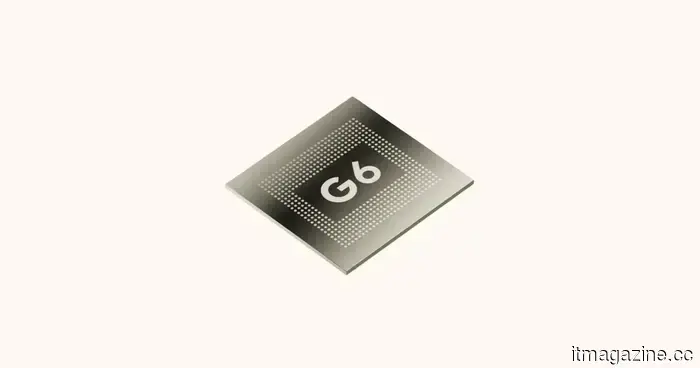 Google's latest Tensor G6 introduces significant enhancements in performance, efficiency, and security for the Pixel 11 series.
Google's Tensor G6 introduces quicker camera processing, enhanced on-device AI, and new security features for the Pixel 11 series, along with upgrades in performance and efficiency.
Google's latest Tensor G6 introduces significant enhancements in performance, efficiency, and security for the Pixel 11 series.
Google's Tensor G6 introduces quicker camera processing, enhanced on-device AI, and new security features for the Pixel 11 series, along with upgrades in performance and efficiency.
Google's latest Tensor G6 enhances performance, efficiency, and post-quantum security in the Pixel 11 series.
Google's Titan M3 incorporates NIST's post-quantum standards, positioning the Pixel 11 as the first Google phone designed for a future threat that has not yet emerged.