
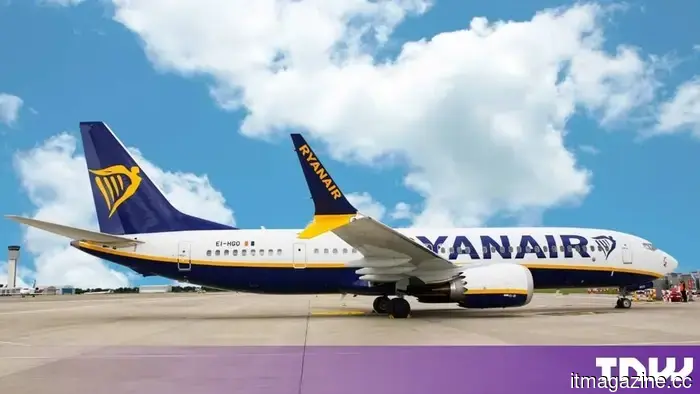
Ryanair has entered into a five-year agreement with Google Cloud for AI services, along with securing a second cloud option as a backup.
Ryanair has established a five-year partnership with Google Cloud focused on data and AI, implementing Google Workspace and Google Cloud services for 35,000 employees while making Gemini Enterprise, Google’s agentic AI platform, the core of its operations. This agreement is directly linked to the airline's goal of reaching 300 million passengers annually by 2034, a marked increase of approximately 44% from the 208.4 million it transported in the fiscal year ending in March.
Gemini Enterprise is set to facilitate automated decision-making, enhance flight crew logistics, and generally boost corporate productivity, as outlined by the companies. Ryanair intends to utilize Google DeepMind models, specifically AlphaEvolve and WeatherNext, to aid in fleet operations and maintenance planning. WeatherNext, DeepMind's forecasting suite, is particularly significant for an airline operating around 3,900 flights daily from 95 bases. Additionally, Ryanair plans to fully replace its current collaboration systems with Workspace and Gemini.
Central to this initiative is the resilience strategy that Ryanair emphasizes over AI itself. The airline refers to this arrangement as a “dual-cloud strategy,” enabling the development of a system robust enough to ensure that critical services continue functioning even if one provider faces challenges. Eddie Wilson, Ryanair’s CEO, stated, “Ryanair is on an incredible growth journey to 300 million passengers by 2034. To support this growth, we need to ensure we have excellent infrastructure resilience, and our new dual-cloud strategy provides this, alongside technology partners that align with our speed and unwavering focus on efficiency.”
Maureen Costello, Google Cloud’s vice-president for the UK, Ireland, and sub-Saharan Africa, articulated the case within industry context, stating, “Aviation is an industry defined by precision, and Ryanair is a pioneer in operational execution. This agreement demonstrates how deploying generative AI at scale, paired with modern collaboration tools for frontline workers, can enable industry leaders to scale securely, lower operational costs, and transform the travel experience.”
The scale of Ryanair’s investment is significant. It concluded the last financial year with 647 aircraft, having received all 210 Boeing 737-8200 Gamechangers and holds an order for 300 737 MAX-10s, divided equally between firm orders and options. Boeing anticipates certifying this aircraft by late summer, with the first fifteen scheduled for delivery to Ryanair in spring 2027. The airline reported a pre-exceptional profit after tax of €2.26 billion, reflecting a 40% increase.
Notably absent from the announcement are specific details regarding the migration of particular workloads, commitments to BigQuery or Vertex AI, the disclosed contract value, and any timeline for deploying the AI applications. While airlines have been announcing operational AI efforts for nearly a decade, what sets this apart is the scale of passenger capacity and its explicit connection to a passenger target set eight years into the future.
Despite its reputation for frugality, Ryanair is experienced in software development. It operates Ryanair Labs, an internal technology division with branches in Dublin, Madrid, and Wrocław, and has actively encouraged passengers to book directly—a strategy that resulted in a €255 million fine from Italian antitrust authorities in December 2025 regarding its treatment of online travel agents, as well as a settlement with Booking Holdings in the previous August.
Conversely, Ryanair is moving against a trend where Airbus is transitioning its key applications from AWS to a sovereign French cloud, emphasizing the importance of European control over infrastructure. In contrast, Ryanair has opted for the American system, acquiring it extensively.
Other articles
 Brad Lightcap is departing from OpenAI after eight years to pursue a new opportunity.
OpenAI's COO and head of special projects, who has been with the company for eight years, is departing, marking the ninth senior exit since April.
Brad Lightcap is departing from OpenAI after eight years to pursue a new opportunity.
OpenAI's COO and head of special projects, who has been with the company for eight years, is departing, marking the ninth senior exit since April.
 TripleDart surpasses $7 million in Annual Recurring Revenue with growth driven by AI, reporting a 50 percent EBIT margin.
TripleDart reports that it has surpassed $7 million in annual recurring revenue (ARR) while maintaining a 50% EBIT margin, having bootstrapped its growth with its proprietary AI-agent platform, Slate.
TripleDart surpasses $7 million in Annual Recurring Revenue with growth driven by AI, reporting a 50 percent EBIT margin.
TripleDart reports that it has surpassed $7 million in annual recurring revenue (ARR) while maintaining a 50% EBIT margin, having bootstrapped its growth with its proprietary AI-agent platform, Slate.
 Brad Lightcap is departing from OpenAI after eight years to embark on a new venture.
After eight years, OpenAI's longtime COO and head of special projects is departing, marking the ninth senior exit since April.
Brad Lightcap is departing from OpenAI after eight years to embark on a new venture.
After eight years, OpenAI's longtime COO and head of special projects is departing, marking the ninth senior exit since April.
 More than 500,000 Toyota Camrys have been recalled due to an issue with a blank digital dashboard.
Toyota is recalling 508,354 Camry Hybrids from the 2025-2026 model years due to an issue with the digital instrument cluster that may result in a blank display, obscuring important safety information.
More than 500,000 Toyota Camrys have been recalled due to an issue with a blank digital dashboard.
Toyota is recalling 508,354 Camry Hybrids from the 2025-2026 model years due to an issue with the digital instrument cluster that may result in a blank display, obscuring important safety information.
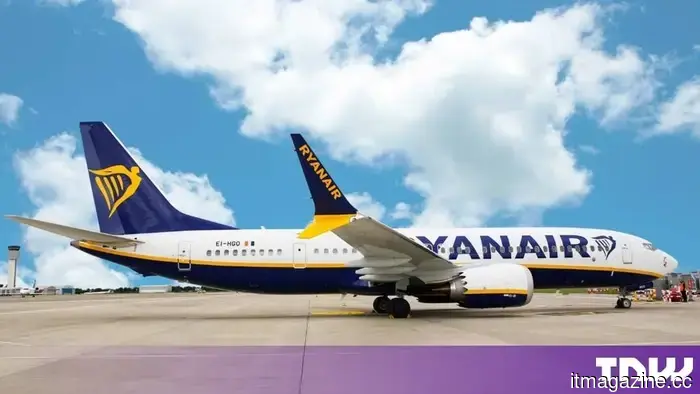 Ryanair has entered into a five-year agreement for AI services with Google Cloud, along with securing a secondary cloud option for backup.
The largest airline in Europe is introducing Gemini Enterprise and Google Workspace to 35,000 employees and is developing a dual-cloud infrastructure.
Ryanair has entered into a five-year agreement for AI services with Google Cloud, along with securing a secondary cloud option for backup.
The largest airline in Europe is introducing Gemini Enterprise and Google Workspace to 35,000 employees and is developing a dual-cloud infrastructure.
 Top HR software featuring predictive turnover analytics for 2026.
Nine HR platforms were evaluated based on their effectiveness in predicting employee turnover. The platforms assessed include HiBob, Visier, Workday, isolved, Paycor, Crunchr, Lattice, BambooHR, and Deel, with ratings given for signal depth, data foundation, and time to value.
Top HR software featuring predictive turnover analytics for 2026.
Nine HR platforms were evaluated based on their effectiveness in predicting employee turnover. The platforms assessed include HiBob, Visier, Workday, isolved, Paycor, Crunchr, Lattice, BambooHR, and Deel, with ratings given for signal depth, data foundation, and time to value.
Ryanair has entered into a five-year agreement with Google Cloud for AI services, along with securing a second cloud option as a backup.
The largest airline in Europe is introducing Gemini Enterprise and Google Workspace to 35,000 employees while establishing a dual-cloud infrastructure.