
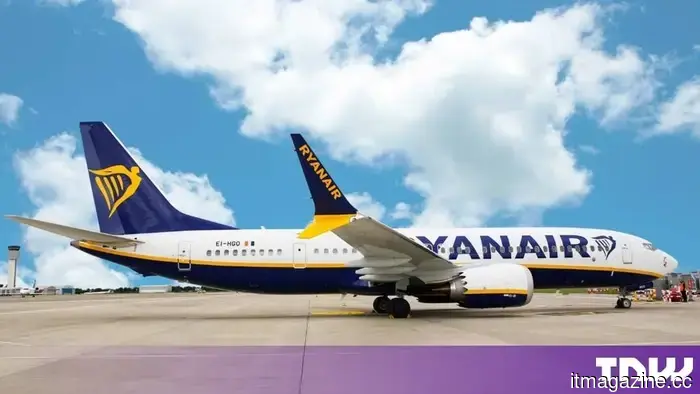
Ryanair has entered into a five-year agreement for AI services with Google Cloud, along with securing a secondary cloud option for backup.
Ryanair has entered into a five-year partnership focused on data and AI with Google Cloud, implementing Google Workspace and Google Cloud services for 35,000 employees while making Gemini Enterprise, Google's agentic AI platform, central to its operational strategy. The airline has positioned this agreement in line with its goal to serve 300 million passengers annually by 2034, marking an approximate 44% increase from the 208.4 million flown in the fiscal year ending in March.
The airline plans to leverage Gemini Enterprise to automate decision-making, enhance flight crew logistics, and improve overall corporate productivity. Additionally, Ryanair intends to utilize Google DeepMind models, AlphaEvolve and WeatherNext, to support fleet operations and maintenance scheduling. WeatherNext, part of DeepMind’s forecasting suite, is particularly relevant for an airline running around 3,900 flights daily from 95 locations. Ryanair also aims to fully replace its existing collaboration systems with Workspace and Gemini.
Central to this initiative is a resilience strategy emphasized by Ryanair, branding it as a “dual-cloud strategy.” This approach ensures operational continuity even if one provider faces challenges. "Ryanair is embarking on an extraordinary growth journey to reach 300 million passengers by 2034," stated Eddie Wilson, Ryanair’s CEO. "To facilitate this growth, we must maintain strong infrastructure resilience, and our new dual-cloud strategy provides that, along with technology partners who align with our speed and unwavering focus on efficiency."
Maureen Costello, Google Cloud’s vice-president for the UK, Ireland, and sub-Saharan Africa, contextualized the agreement within the industry. "Aviation is an industry characterized by precision, and Ryanair excels in operational execution," she remarked. "This agreement illustrates how the large-scale deployment of generative AI, combined with modern collaboration tools for frontline workers, can aid industry leaders in securely scaling, lowering operational costs, and transforming the travel experience."
The magnitude of Ryanair's expansion is substantial. The airline concluded the last financial year with 647 aircraft after receiving all 210 Boeing 737-8200 Gamechangers and has 300 737 MAX-10s on order, evenly split between firm orders and options. Boeing anticipates certifying the 737 MAX-10 by late summer, with the first fifteen units expected to be delivered to Ryanair in spring 2027. The pre-exceptional profit after tax for the year was €2.26 billion, reflecting a 40% increase.
Notably, the announcement lacks details regarding specific workloads migrating, any commitments to BigQuery or Vertex AI, the disclosed contract value, or a timeline for when AI applications will go live. The airline industry has been discussing operational AI for nearly a decade, but Ryanair's emphasis on its substantial seat count and direct connection to a future passenger target sets it apart.
Ryanair is not unfamiliar with software development, regardless of its reputation for cost-cutting. The airline operates Ryanair Labs, an internal tech division with bases in Dublin, Madrid, and Wrocław, and has long promoted direct booking by passengers. This initiative has led to a €255 million antitrust fine in Italy in December 2025 due to issues with online travel agents and a settlement with Booking Holdings the previous August.
In contrast to this, Airbus is transitioning its crucial applications from AWS to a French sovereign cloud, emphasizing European ownership of infrastructure. Ryanair, in a typical move, has opted for the American technology stack instead, committing to it on multiple occasions.
Другие статьи
 Anthropic начинает маркировать все результаты работы Клода по всему миру в связи с вступлением в силу правил прозрачности ЕС
Anthropic подписала кодекс статьи 50(2) Закона ЕС о ИИ и начала маркировать вывод Claude по всему миру. Объяснение требований к прозрачности.
Anthropic начинает маркировать все результаты работы Клода по всему миру в связи с вступлением в силу правил прозрачности ЕС
Anthropic подписала кодекс статьи 50(2) Закона ЕС о ИИ и начала маркировать вывод Claude по всему миру. Объяснение требований к прозрачности.
 Joby покупает компанию по производству технологий стелс за 500 миллионов долларов и перестраивает свою оборонную часть вокруг нее.
Joby Aviation заплатит 450 миллионов долларов наличными и 50 миллионов долларов акциями за Resonant Sciences, специалиста по радарам и низкой заметности из Дейтона.
Joby покупает компанию по производству технологий стелс за 500 миллионов долларов и перестраивает свою оборонную часть вокруг нее.
Joby Aviation заплатит 450 миллионов долларов наличными и 50 миллионов долларов акциями за Resonant Sciences, специалиста по радарам и низкой заметности из Дейтона.
 Французские СМИ просят антимонопольный орган заставить Google платить за его ответы на основе ИИ
Ассоциация производителей френч-пресса обратилась в Autorite de la concurrence с просьбой заставить Google платить издателям за AI Overviews, что отразило решение, принятое в июле против Meta.
Французские СМИ просят антимонопольный орган заставить Google платить за его ответы на основе ИИ
Ассоциация производителей френч-пресса обратилась в Autorite de la concurrence с просьбой заставить Google платить издателям за AI Overviews, что отразило решение, принятое в июле против Meta.
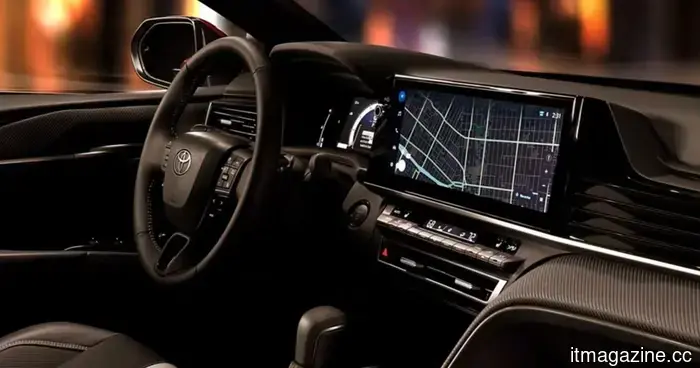 Более 500 000 автомобилей Toyota Camry отозваны из-за пустой цифровой панели приборов
Toyota отзывает 508,354 гибридов Camry 2025-2026 после того, как ошибка цифровой приборной панели может оставить дисплей пустым и скрыть критически важную информацию о безопасности.
Более 500 000 автомобилей Toyota Camry отозваны из-за пустой цифровой панели приборов
Toyota отзывает 508,354 гибридов Camry 2025-2026 после того, как ошибка цифровой приборной панели может оставить дисплей пустым и скрыть критически важную информацию о безопасности.
 Oracle помещает квантовый компьютер Quantinuum в свой собственный дата-центр.
Машина Helios компании Quantinuum будет физически развернута в центре обработки данных Oracle Cloud в США, а предварительный сервис ожидается в ближайшие месяцы.
Oracle помещает квантовый компьютер Quantinuum в свой собственный дата-центр.
Машина Helios компании Quantinuum будет физически развернута в центре обработки данных Oracle Cloud в США, а предварительный сервис ожидается в ближайшие месяцы.
 Sonos может сделать свои следующие наушники умнее с встроенными голосовыми управлениями
Sonos готовит свои наушники Ace Ultra к ожидаемому запуску в сентябре, при этом документы FCC указывают на голосовые команды, новые цвета и более широкое внедрение ИИ.
Sonos может сделать свои следующие наушники умнее с встроенными голосовыми управлениями
Sonos готовит свои наушники Ace Ultra к ожидаемому запуску в сентябре, при этом документы FCC указывают на голосовые команды, новые цвета и более широкое внедрение ИИ.
Ryanair has entered into a five-year agreement for AI services with Google Cloud, along with securing a secondary cloud option for backup.
The largest airline in Europe is introducing Gemini Enterprise and Google Workspace to 35,000 employees and is developing a dual-cloud infrastructure.