
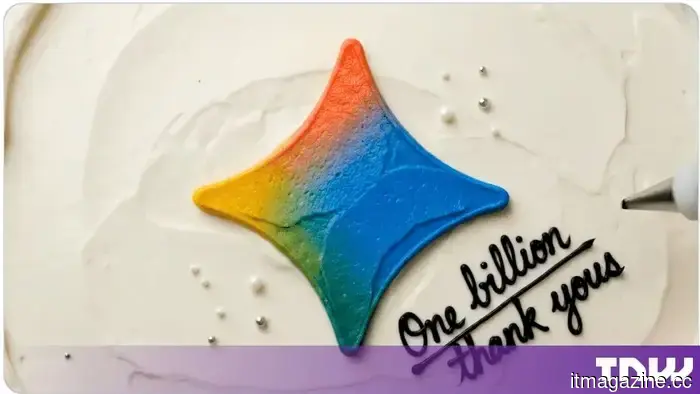
Gemini boasts a billion monthly users, while ChatGPT achieved that milestone in June and subsequently changed the targets.
Sundar Pichai announced on Tuesday that the Gemini app has surpassed a billion monthly users. He referred to it as "our fastest growing product ever" and noted that it is the 14th Google product to reach this milestone, joining the ranks of Search, Gmail, Android, Maps, Chrome, Play, and YouTube. His post has garnered over 1.5 million views.
On the same day, Google shared engagement metrics on its blog. Much of the coverage presented this milestone as Gemini closing the gap with ChatGPT, but a closer look at the data suggests otherwise.
A billion monthly users and a billion weekly users represent different challenges. ChatGPT achieved a billion monthly users on June 3, which we reported as the fastest an app has reached that milestone. Gemini hit the same figure on August 11, ten weeks later, using the same metric. OpenAI confirmed this through spokesperson Lindsay McCallum, who informed The Verge that ChatGPT “crossed 1 billion monthly users some time ago, and reached a billion weekly users in July.” She did not disclose the current number of monthly users.
We reported that OpenAI surpassed a billion weekly users in late July, a goal it had missed by approximately seven months. Weekly active users present a tougher challenge than monthly users, as they reflect regular usage rather than mere curiosity. In August, Gemini achieved what ChatGPT accomplished in June, while ChatGPT progressed to a more strenuous metric in between.
However, it's important to note that ChatGPT's growth has slowed. According to The Verge, ChatGPT had 900 million weekly users in February, and it took five months to reach an additional hundred million. Google appears to be approaching the same barrier that OpenAI has already encountered.
The relative growth rates matter more than the individual milestones. Gemini added 50 million users in just two weeks, while ChatGPT took five months to gain one hundred million. Though the metrics aren't directly comparable, the trend is clear.
What the billion users represent is more limited than it may seem. The count includes those who opened the Gemini app or website, without considering any other interactions. Ars Technica pointed out that even users who accessed Gemini just once in the past month are included in this total. Additionally, the total doesn't factor in its integration into popular products like Google Search, which has separately surpassed a billion monthly users, as reported by TechCrunch. The numbers released on Tuesday pertain only to the standalone app.
Despite this, the growth is genuine and notable. Gemini had 400 million monthly users in May 2025, as noted by 9to5Google, and Google reported 750 million in February and over 950 million during its Q2 earnings call two weeks ago. Daily active users have tripled over the year.
One consideration is the source of this user growth. Gemini leverages existing platforms—Android, Search, Chrome, and Workspace—each of which already boasts over a billion users. In contrast, ChatGPT had to be actively sought out. Comparing the two as if they began on equal footing favors Google.
However, one significant figure counters that: Gemini has over 100 million active users on iOS, where Google has no established distribution channels. These users took the initiative to download the app. Google also mentions that macOS users engage with the app about twice as often as those on other platforms.
What these billion users are actually doing shows that Gemini generates over 150 million images daily, each marked with SynthID. Approximately 63% of users communicate through voice rather than typing. Google reports that parents are 43% more likely to use voice for daily tasks.
Currently, one in five Gemini Live interactions incorporates a live camera feed or shared screen. About 38% of school-related inquiries include an attachment. On Android, the app automates tasks across more than 40 applications, positioning it more as a personal assistant than merely a chat interface, which distinguishes it from the product developed by OpenAI.
Regarding the number omitted from Google’s announcement, a billion monthly users for a general assistant implies a billion individuals receiving answers that would typically be sourced from links. Google has spent a year defending AI Overviews against accusations from publishers, and our own reporting monitored the impact on publication traffic.
Gemini shares this model on a larger scale, presenting responses without traditional links. Google has not disclosed how many responses lead to further actions, and this omission is likely intentional.
The underlying product remains in flux. User count and model quality are distinct challenges, and Google seems to be succeeding with one aspect. In July, we noted that the release of the next iteration, Gemini Pro, had been delayed for months due to unmet internal standards. It was originally expected in June but has yet to be launched, with Google stating it is still in testing.
The company has also begun training Gemini 4, with a new leader having been appointed the same week two of Gemini’s co-leads departed. Demis
Other articles
 The Pixel 11 finally includes the video enhancements I've been looking forward to, but not all Pixels receive these updates.
This year, Google equipped the Pixel 11 lineup with authentic video enhancements, including 8K recording and an integrated teleprompter.
The Pixel 11 finally includes the video enhancements I've been looking forward to, but not all Pixels receive these updates.
This year, Google equipped the Pixel 11 lineup with authentic video enhancements, including 8K recording and an integrated teleprompter.
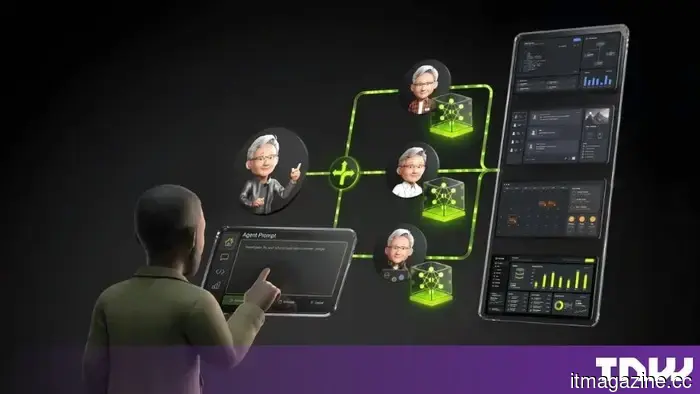 Nvidia is developing an open model with a trillion parameters, which would still be smaller than China's model.
Nvidia's Nemotron 3.5 Lightning is both free and quick. However, the upcoming trillion-parameter Nemotron 4 would still fall behind the top Chinese open models.
Nvidia is developing an open model with a trillion parameters, which would still be smaller than China's model.
Nvidia's Nemotron 3.5 Lightning is both free and quick. However, the upcoming trillion-parameter Nemotron 4 would still fall behind the top Chinese open models.
 Why brief moments of acknowledgment are increasingly essential to workplace culture
Gallup indicates that employee engagement dropped to 20% in 2025. Julie Tylman, co-founder of GroupTogether, contends that peer recognition through small, consistent rituals fosters a culture that formal programs and algorithms cannot achieve.
Why brief moments of acknowledgment are increasingly essential to workplace culture
Gallup indicates that employee engagement dropped to 20% in 2025. Julie Tylman, co-founder of GroupTogether, contends that peer recognition through small, consistent rituals fosters a culture that formal programs and algorithms cannot achieve.
 Google's latest Pixel 11 Pro Fold is more lightweight, slimmer, and smarter, although its battery life has been compromised.
Google's Pixel 11 Pro Fold weighs 239 grams and features a larger main camera sensor, a brighter screen, and HiLight, although its battery capacity decreases more significantly compared to the Pixel 11 Pro and Pro XL.
Google's latest Pixel 11 Pro Fold is more lightweight, slimmer, and smarter, although its battery life has been compromised.
Google's Pixel 11 Pro Fold weighs 239 grams and features a larger main camera sensor, a brighter screen, and HiLight, although its battery capacity decreases more significantly compared to the Pixel 11 Pro and Pro XL.
 Beyond algorithms: Booker Loud discusses creating trustworthy social platforms.
Booker Loud, the founder of Pin-Social, asserts that the forthcoming phase of social media will be characterized not by algorithmic reach but by the platforms that foster the most trustworthy environments. His framework prioritizes connections rather than outrage.
Beyond algorithms: Booker Loud discusses creating trustworthy social platforms.
Booker Loud, the founder of Pin-Social, asserts that the forthcoming phase of social media will be characterized not by algorithmic reach but by the platforms that foster the most trustworthy environments. His framework prioritizes connections rather than outrage.
 Why minor instances of acknowledgment are becoming essential to workplace culture.
Gallup indicates that employee engagement dropped to 20% in 2025. Julie Tylman, co-founder of GroupTogether, contends that peer recognition via small, consistent rituals fosters a culture that formal programs and algorithms are unable to achieve.
Why minor instances of acknowledgment are becoming essential to workplace culture.
Gallup indicates that employee engagement dropped to 20% in 2025. Julie Tylman, co-founder of GroupTogether, contends that peer recognition via small, consistent rituals fosters a culture that formal programs and algorithms are unable to achieve.
Gemini boasts a billion monthly users, while ChatGPT achieved that milestone in June and subsequently changed the targets.
Gemini reached over a billion monthly users, while ChatGPT achieved that milestone in June and hit a billion weekly users in July. This means that Gemini is one metric behind and not at the same level.