

Beyond algorithms: Booker Loud discusses creating trustworthy social platforms.
TL;DRAfter: After 15 years of studying digital ecosystems, Booker Loud, founder of Pin-Social, asserts that engagement-focused design has normalized conflict in online spaces. His platform is grounded in four principles: fun, positive feelings, discounts, and prizes, all aimed at fostering connection rather than outrage. Loud considers trust a key moral and commercial differentiator and believes integrating digital interactions with real-life activities can cultivate deeper and more sustainable communities.
Trust in social media is gradually diminishing, despite an increase in global engagement. Although platforms have become integral to daily life, the quality of interactions they promote is facing greater scrutiny. For Loud, CEO of Pin-Social, this contradiction points to a fundamental design issue that has influenced the industry for over a decade.
Loud does not see the current state of social media as a failure of intention; rather, he blames it on the unintended outcomes of engagement-driven design. Platforms have prioritized attention, which is a growth driver, often amplifying behaviors that elicit strong reactions such as conflict, outrage, and division.
Loud states that this trend has resulted in a wider cultural shift. “The environments we navigate today are filled with tension,” he notes. “You can observe this in daily interactions, comment sections, and group conversations. A level of escalation has become the norm.” He regards this as both a social and technological problem, necessitating a conscious change in how platforms measure success.
According to Loud, the future of social media will hinge on a new competitive advantage. “It won’t be determined by who develops the most advanced algorithm but by who crafts the most trusted environment,” he asserts. He believes that platforms prioritizing community well-being, constructive engagement, and real-world value will lead the way in an evolving digital landscape.
This ideology forms the basis of Pin-Social, which Loud describes as a model for the future of social media. His aim is to move from passive consumption to active participation based on shared experiences. “The essence of Pin-Social is to foster a space where people can come together, interact, and organize social events with others who share their interests,” he explains.
At the heart of the platform are four core principles that inform both user experience and platform incentives: having fun, feeling good, receiving discounts, and winning prizes. Each aspect is intended to promote positive behavior and concrete outcomes.
“The first aspect is fun, which encompasses social activities like bowling or visiting water parks, as well as discovering new experiences with others,” Loud elaborates. “The second aspect is the feeling good. When individuals share and engage in enjoyable activities, it naturally promotes positive interactions and enhances overall experiences.”
The third and fourth aspects introduce a practical component to community engagement. “Receiving discounts is an added perk of being part of the Pin-Social community,” he mentions. “As our platform expands, we collaborate with local venues and businesses that provide incentives to our users for their support. This creates a cycle where both communities and local businesses thrive.”
The last aspect focuses on rewarding widespread participation. “Winning prizes reflects our broader commitment to giving back,” Loud states. “As we achieve critical mass and generate revenue, we explore ways to return value to our members through products, experiences, and opportunities.”
For Loud, these design choices transcend mere features; they signify a transformation in incentives. Conventional platforms have traditionally rewarded content that garners attention, whereas Pin-Social aims to reward actions that strengthen relationships and promote well-being. He argues that this distinction will characterize the industry's next evolution.
His perspective has also been influenced by a personal turning point. Loud recalls a significant moment of introspection a few years ago that reshaped his purpose. “Around three years ago, I had a profound realization that prompted me to rethink what I wanted to contribute to the world,” he recalls. “It became evident that I needed to concentrate on developing something that unites people, promoting harmony, peace, and goodwill.”
This viewpoint shapes his broader vision of social media as a means of connection rather than division. He stresses that the world stands at a pivotal moment, with digital platforms playing a crucial role in influencing how people engage and perceive one another. In this context, he views an opportunity to align technology with human values.
“There is much goodness in the world that often goes unnoticed,” Loud observes. “If we create systems that emphasize and reward that goodness, we can begin to shift the overall tone of interactions among people.”
From a business perspective, Loud argues that this approach is both socially responsible and commercially feasible. As users become increasingly aware of how digital environments affect their well-being, the desire for healthier platforms is likely to grow. Here, trust becomes a driving force both morally and economically.
He also emphasizes the significance of real-world integration as a key differentiator. By encouraging users to engage in offline activities and support local businesses, Pin-Social aims to bridge the divide between digital interactions and real experiences. He believes this model fosters greater engagement and more sustainable communities.
“The
Other articles
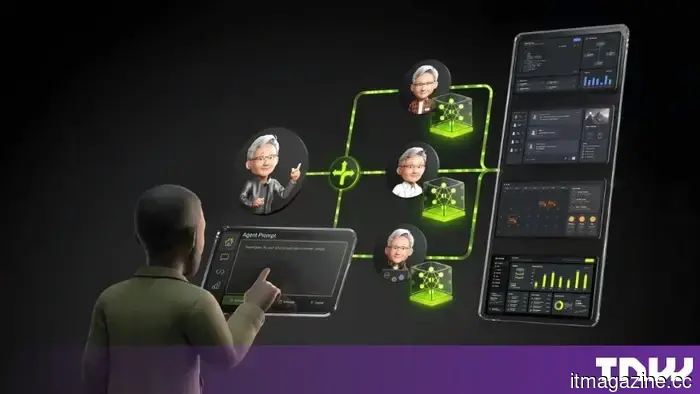 Nvidia is developing an open model with a trillion parameters, which would still be less extensive than China's model.
Nvidia's Nemotron 3.5 Lightning is both free and quick. The upcoming trillion-parameter Nemotron 4 would still lag behind the top Chinese open models.
Nvidia is developing an open model with a trillion parameters, which would still be less extensive than China's model.
Nvidia's Nemotron 3.5 Lightning is both free and quick. The upcoming trillion-parameter Nemotron 4 would still lag behind the top Chinese open models.
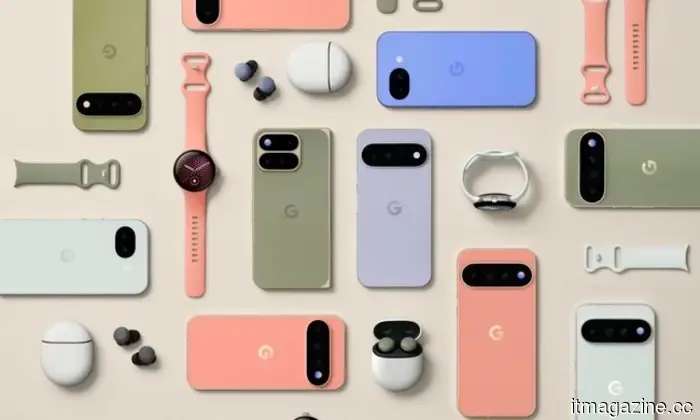 Pixel 11 finally enables voice typing to comprehend how people really speak.
The new Rambler feature in Pixel 11 leverages Gemini Intelligence to enhance natural speech, resulting in clearer text. This makes Gboard dictation more accommodating while still allowing you to maintain control over the final edits.
Pixel 11 finally enables voice typing to comprehend how people really speak.
The new Rambler feature in Pixel 11 leverages Gemini Intelligence to enhance natural speech, resulting in clearer text. This makes Gboard dictation more accommodating while still allowing you to maintain control over the final edits.
 Jaguar presents a sneak peek of its fully electric Type 01.
Jaguar has unveiled the initial interior photos of the Type 01 electric GT, the vehicle on which it is banking for its relaunch after halting sales in the UK in November 2024.
Jaguar presents a sneak peek of its fully electric Type 01.
Jaguar has unveiled the initial interior photos of the Type 01 electric GT, the vehicle on which it is banking for its relaunch after halting sales in the UK in November 2024.
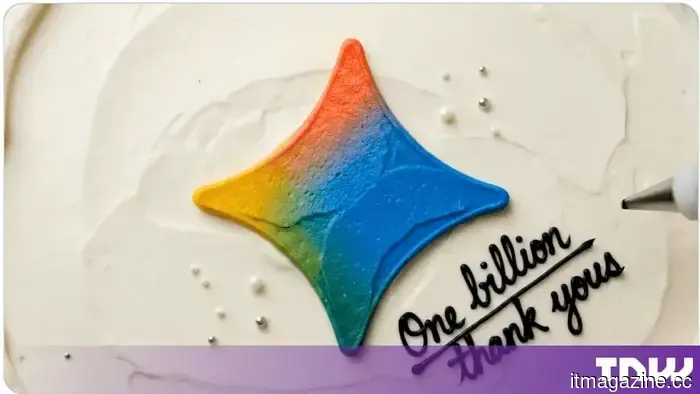 Gemini boasts a billion monthly users. ChatGPT reached that milestone in June and subsequently raised the bar.
Gemini has surpassed a billion monthly users. ChatGPT achieved this milestone in June and hit a billion weekly users in July. Therefore, Gemini is one metric behind, rather than being on the same level.
Gemini boasts a billion monthly users. ChatGPT reached that milestone in June and subsequently raised the bar.
Gemini has surpassed a billion monthly users. ChatGPT achieved this milestone in June and hit a billion weekly users in July. Therefore, Gemini is one metric behind, rather than being on the same level.
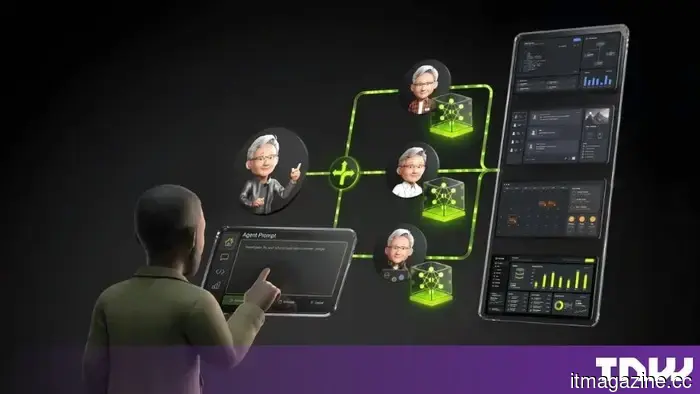 Nvidia is developing an open model with a trillion parameters, which would still be smaller than China's model.
Nvidia's Nemotron 3.5 Lightning is both free and quick. However, the upcoming trillion-parameter Nemotron 4 would still fall behind the top Chinese open models.
Nvidia is developing an open model with a trillion parameters, which would still be smaller than China's model.
Nvidia's Nemotron 3.5 Lightning is both free and quick. However, the upcoming trillion-parameter Nemotron 4 would still fall behind the top Chinese open models.
 Megadeals accounted for 87.5% of venture capital in the US, with the remainder of the market priced according to vintage.
In the first half of 2026, deals of $100 million or more accounted for 87.5% of venture capital investment in the US. Firms that last secured funding in 2021 are valued at a 59.1% discount in secondary markets.
Megadeals accounted for 87.5% of venture capital in the US, with the remainder of the market priced according to vintage.
In the first half of 2026, deals of $100 million or more accounted for 87.5% of venture capital investment in the US. Firms that last secured funding in 2021 are valued at a 59.1% discount in secondary markets.
Beyond algorithms: Booker Loud discusses creating trustworthy social platforms.
Booker Loud, the founder of Pin-Social, asserts that the forthcoming phase of social media will be characterized not by algorithm-driven reach but by the platforms that foster the most trusted environments. His approach prioritizes connection instead of outrage.