

Why minor instances of acknowledgment are becoming essential to workplace culture.
TL;DR: Employee engagement reached a five-year low of 20% in 2025, leading to global losses of $10 trillion. GroupTogether co-founder Julie Tylman asserts that formal recognition programs overlook the key source of appreciation: peer acknowledgment. She recommends integrating small, repetitive rituals, like group cards, into everyday tasks to strengthen connections in distributed teams, emphasizing that organizations thriving amid AI disruption will prioritize human connection alongside efficiency.
Gallup’s State of the Global Workplace report indicated employee engagement fell to 20% in 2025, the lowest since 2020, with disengagement costing the global economy about $10 trillion yearly. Research demonstrates that engagement correlates strongly with employee experiences of their workplace relationships. Gallup found that highly engaged teams saw 23% higher profitability, 14% greater productivity in production roles, and significantly reduced absenteeism and turnover than their less engaged counterparts.
With hybrid and remote work becoming prevalent, the way employees connect has fundamentally shifted. Connections that were once formed through physical proximity are now mediated through screens and scheduled interactions. Tylman argues that this process has resulted in a loss of essential spontaneous interactions.
“We’ve lost those impromptu moments: casual chats across desks about shared challenges, conversations by the water cooler about shows you both enjoy, birthday cake in the break room, and unplanned drinks with colleagues,” Tylman explains. “These interactions help transform co-workers into people you genuinely enjoy being with.”
Studies show that increased digital communication has not necessarily led to a heightened sense of connection among employees. While online interactions have taken the place of many in-person encounters, they often result in lower levels of engagement, satisfaction, and social connection.
In light of this, many organizations have turned to formal recognition programs, usually initiated by leadership or linked to structured incentives. However, Tylman believes these methods often overlook the most impactful source of appreciation.
“It’s about building a team,” she explains. “Your manager or the company isn’t with you every day, solving problems, discussing issues, and listening when things get tough. Your colleagues witness firsthand the effort and passion you bring to your work.”
This closeness gives peer recognition an authenticity that formal systems struggle to replicate. “When colleagues acknowledge you, a shout-out, a celebration, or a kind word holds more significance because you know they comprehend the effort involved,” she states. “Acknowledgment from your manager still matters, but it can sometimes feel transactional, as if a box has been ticked. Peer recognition never has that feeling.”
Research increasingly indicates that recognition is a key driver of employee engagement. A 2025 study involving 25,285 employees found a significant positive connection between recognition and engagement, with engagement linked to increased job satisfaction. These findings emphasize that feeling valued is central to employees’ experiences at work. Nevertheless, appreciation in many workplaces remains infrequent and rigidly structured.
Tylman advocates for integrating recognition into the daily rhythm of work through small, consistent rituals. Celebrating birthdays, anniversaries, farewells, baby showers, and retirements can foster a sense of belonging when shared collectively. She believes group cards can serve as an effective means to make these moments visible and inclusive across distributed teams.
“Culture doesn’t stem from one-off initiatives,” Tylman states. “It develops from small, repeated actions that allow people to feel acknowledged over time.”
Her perspective is informed by her own experience. Having operated GroupTogether across teams in Sydney and Austin, she has long navigated an environment where colleagues rarely meet face-to-face. “Working with people you seldom see in person has been normal for us for years,” she notes. “What’s changing now is that this has become the norm for everyone else.”
In this context, she has witnessed the emotional impact of peer recognition on a large scale. “From a personal standpoint, it’s been an absolute honor to observe people celebrating one another,” she remarks. “What colleagues say holds great significance. It can evoke strong emotions. More than 17,000 thank you notes were written on our platform last year, highlighting how much appreciation often goes unexpressed until someone prompts it.”
Looking forward, Tylman believes organizations are entering a transformative era influenced by artificial intelligence and evolving workforce expectations. While many firms continue in a wait-and-see mode, she sees a clear distinction developing between those that emphasize efficiency and those that invest in human connection.
“We are in the midst of an AI disruption, and most companies are still waiting to see how it unfolds,” she remarks. “The best organizations will leverage this transition to create workforces that rely on judgment, creativity, and collaboration to thrive.”
In this environment, connection becomes a strategic asset. “Connection will be crucial, along with the ability to meaningfully recognize successes, acknowledge challenging weeks, and celebrate the little victories regardless of where someone logs in,” Tylman explains. “That’s something no algorithm can replicate.”
Ultimately, Tylman returns
Other articles
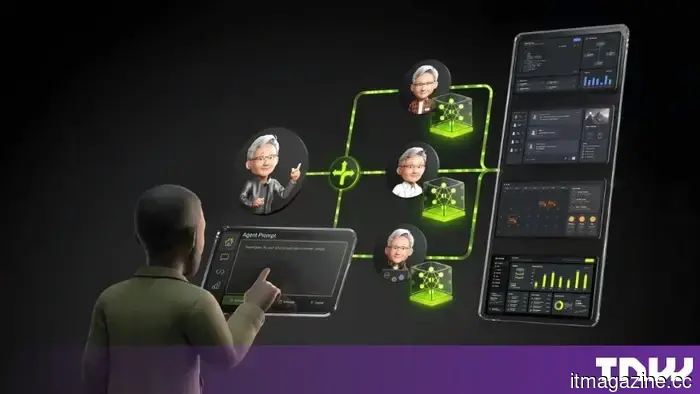 Nvidia is developing an open model with a trillion parameters, which would still be less extensive than China's model.
Nvidia's Nemotron 3.5 Lightning is both free and quick. The upcoming trillion-parameter Nemotron 4 would still lag behind the top Chinese open models.
Nvidia is developing an open model with a trillion parameters, which would still be less extensive than China's model.
Nvidia's Nemotron 3.5 Lightning is both free and quick. The upcoming trillion-parameter Nemotron 4 would still lag behind the top Chinese open models.
 Beyond algorithms: Booker Loud discusses creating trustworthy social platforms.
Booker Loud, the founder of Pin-Social, asserts that the forthcoming phase of social media will be characterized not by algorithmic reach but by the platforms that foster the most trustworthy environments. His framework prioritizes connections rather than outrage.
Beyond algorithms: Booker Loud discusses creating trustworthy social platforms.
Booker Loud, the founder of Pin-Social, asserts that the forthcoming phase of social media will be characterized not by algorithmic reach but by the platforms that foster the most trustworthy environments. His framework prioritizes connections rather than outrage.
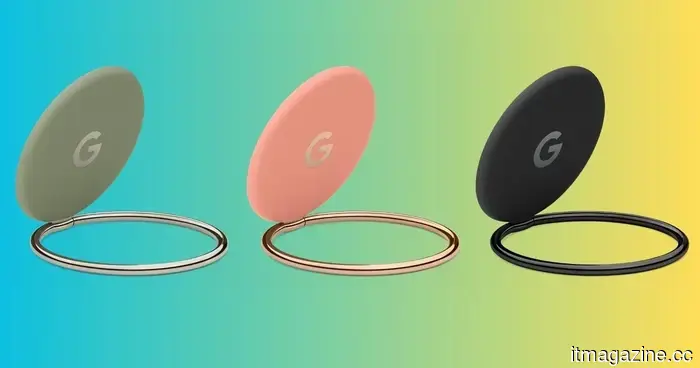 Forget about the Pixel 11; I can't take my eyes off these PixelSnap accessories.
Google's latest PixelSnap accessories enhance the functionality of your Pixel, making it a more valuable desk companion.
Forget about the Pixel 11; I can't take my eyes off these PixelSnap accessories.
Google's latest PixelSnap accessories enhance the functionality of your Pixel, making it a more valuable desk companion.
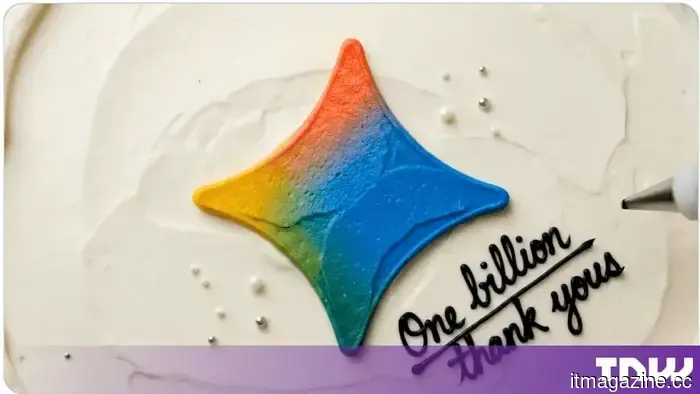 Gemini boasts a billion monthly users. ChatGPT reached that milestone in June and subsequently raised the bar.
Gemini has surpassed a billion monthly users. ChatGPT achieved this milestone in June and hit a billion weekly users in July. Therefore, Gemini is one metric behind, rather than being on the same level.
Gemini boasts a billion monthly users. ChatGPT reached that milestone in June and subsequently raised the bar.
Gemini has surpassed a billion monthly users. ChatGPT achieved this milestone in June and hit a billion weekly users in July. Therefore, Gemini is one metric behind, rather than being on the same level.
 Jaguar presents a sneak peek of its fully electric Type 01.
Jaguar has unveiled the initial interior photos of the Type 01 electric GT, the vehicle on which it is banking for its relaunch after halting sales in the UK in November 2024.
Jaguar presents a sneak peek of its fully electric Type 01.
Jaguar has unveiled the initial interior photos of the Type 01 electric GT, the vehicle on which it is banking for its relaunch after halting sales in the UK in November 2024.
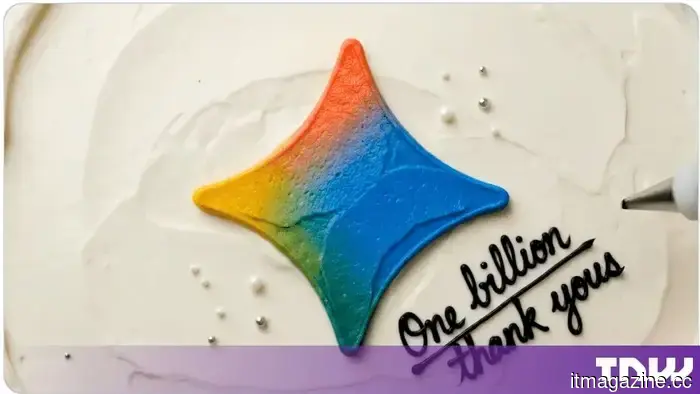 Gemini boasts a billion monthly users, while ChatGPT achieved that milestone in June and subsequently changed the targets.
Gemini reached over a billion monthly users, while ChatGPT achieved that milestone in June and hit a billion weekly users in July. This means that Gemini is one metric behind and not at the same level.
Gemini boasts a billion monthly users, while ChatGPT achieved that milestone in June and subsequently changed the targets.
Gemini reached over a billion monthly users, while ChatGPT achieved that milestone in June and hit a billion weekly users in July. This means that Gemini is one metric behind and not at the same level.
Why minor instances of acknowledgment are becoming essential to workplace culture.
Gallup indicates that employee engagement dropped to 20% in 2025. Julie Tylman, co-founder of GroupTogether, contends that peer recognition via small, consistent rituals fosters a culture that formal programs and algorithms are unable to achieve.