

How AI is changing frontend engineering for contemporary web applications
Artificial intelligence has quickly become integral to software development, but its most significant effect may not be the replacement of developers; rather, it is redefining how developers allocate their time. For frontend engineers, AI is shifting the emphasis from repetitive coding tasks to creating smarter, more robust digital experiences.
Historically, frontend development involved creating user interfaces, integrating APIs, resolving browser compatibility challenges, and enhancing application performance. Although these tasks remain crucial, AI-enhanced development tools are now speeding up several routine activities. Tasks like code completion, automated testing, documentation generation, bug detection, and UI prototyping can now be accomplished in minutes rather than hours.
This change enables engineers to focus on more valuable activities that demand creativity and critical thinking. One of the most notable advantages of AI is the acceleration of development cycles. Intelligent coding assistants can recommend optimized code, spot potential errors before deployment, and automatically generate unit tests based on existing components. Consequently, teams can launch features more rapidly while upholding high quality and reliability standards.
AI is also altering how frontend applications are designed. Contemporary user interfaces are increasingly adaptable, utilizing machine learning to customize content, suggest products, forecast user behavior, and enhance accessibility. Rather than crafting a single static experience for every user, developers are creating applications that continually learn and adjust based on user interactions.
Nonetheless, AI cannot replace solid engineering principles. Scalable frontend applications still necessitate careful architecture, reusable components, effective state management, security measures, and performance enhancements. While AI can aid in coding, it cannot substitute for the human insight needed to design maintainable systems or make strategic technical choices.
Another key aspect is collaboration. Frontend engineers are increasingly partnering with product managers, UX designers, backend developers, data scientists, and AI experts. Grasping how AI models interact with web applications is now a vital skill, urging developers to think beyond the browser and consider the larger ecosystem surrounding modern applications.
The increasing integration of AI also imposes greater responsibility on developers. Issues like privacy, transparency, and ethical AI practices must be addressed from the initial stages of application design. Establishing user trust is equally important as delivering smart features.
Looking forward, the role of frontend engineers will keep evolving. Success will hinge less on memorizing frameworks and more on comprehending architecture, user behavior, cloud technologies, and AI-assisted development processes. Engineers who embrace these shifts will be better positioned to create applications that are not only functional but also intelligent, responsive, and prepared for the future.
AI is revolutionizing frontend engineering, but its most significant contribution is not just automation. It empowers developers to devote more time to solving meaningful challenges, providing outstanding user experiences, and driving digital innovation on a scale that was previously hard to achieve.
Other articles
 Apple might have discovered a solution to the OLED iMac’s most significant issue, but it is still several years away from being released.
LG Display's latest OLED strategy aims to address the burn-in issue that has prevented OLED from being included in the iMac for years, rather than merely enhancing brightness.
Apple might have discovered a solution to the OLED iMac’s most significant issue, but it is still several years away from being released.
LG Display's latest OLED strategy aims to address the burn-in issue that has prevented OLED from being included in the iMac for years, rather than merely enhancing brightness.
 AquaNab secures funding to combat the $4 billion sea lice issue affecting salmon using alpaca nanoantibodies.
AquaNab is working on nanoantibodies derived from alpacas that are distributed via fish feed to combat sea lice, presenting a cleaner option compared to the chemical and mechanical methods used for delousing in salmon farms.
AquaNab secures funding to combat the $4 billion sea lice issue affecting salmon using alpaca nanoantibodies.
AquaNab is working on nanoantibodies derived from alpacas that are distributed via fish feed to combat sea lice, presenting a cleaner option compared to the chemical and mechanical methods used for delousing in salmon farms.
 AquaNab secures funding to combat the $4 billion sea lice issue affecting salmon using alpaca nanoantibodies.
AquaNab is working on alpaca-based nanoantibodies that are administered via fish feed to combat sea lice, presenting a more environmentally friendly option compared to the chemical and mechanical methods currently used for delousing in salmon farms.
AquaNab secures funding to combat the $4 billion sea lice issue affecting salmon using alpaca nanoantibodies.
AquaNab is working on alpaca-based nanoantibodies that are administered via fish feed to combat sea lice, presenting a more environmentally friendly option compared to the chemical and mechanical methods currently used for delousing in salmon farms.
 Intel secures up to $20 billion to back its foundry investment in competition with TSMC.
Intel is offering $15 billion in stock, with the possibility of increasing this to $20 billion, to finance its foundry initiative, taking advantage of the fact that its shares have nearly tripled in value since 2026, making new equity relatively inexpensive.
Intel secures up to $20 billion to back its foundry investment in competition with TSMC.
Intel is offering $15 billion in stock, with the possibility of increasing this to $20 billion, to finance its foundry initiative, taking advantage of the fact that its shares have nearly tripled in value since 2026, making new equity relatively inexpensive.
 The Minimal Phone 2 features an AMOLED screen and 5G connectivity, all while retaining its vintage appeal.
The second-generation phone from Minimal replaces its distraction-proof E Ink display with OLED technology and adds 5G capabilities, all encapsulated in a curved aluminum shell that completely eliminates the headphone jack.
The Minimal Phone 2 features an AMOLED screen and 5G connectivity, all while retaining its vintage appeal.
The second-generation phone from Minimal replaces its distraction-proof E Ink display with OLED technology and adds 5G capabilities, all encapsulated in a curved aluminum shell that completely eliminates the headphone jack.
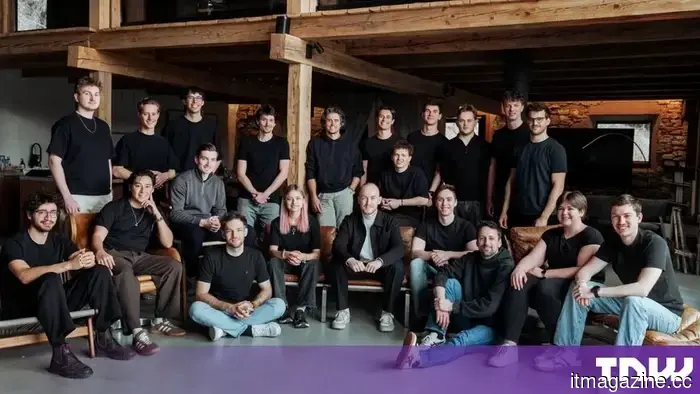 Exclusive: Vienna's fonio.ai reaches $10 million in annual recurring revenue less than a year after launching its subscription model.
Fonio.ai, the Vienna-based voice-AI startup, reports that it has surpassed $10 million in annual recurring revenue within less than a year, achieving monthly growth of over 30% since transitioning to a subscription model.
Exclusive: Vienna's fonio.ai reaches $10 million in annual recurring revenue less than a year after launching its subscription model.
Fonio.ai, the Vienna-based voice-AI startup, reports that it has surpassed $10 million in annual recurring revenue within less than a year, achieving monthly growth of over 30% since transitioning to a subscription model.
How AI is changing frontend engineering for contemporary web applications
AI-driven development tools are transitioning frontend developers from monotonous coding tasks to creating more intelligent, adaptive digital experiences with quicker delivery timelines.