
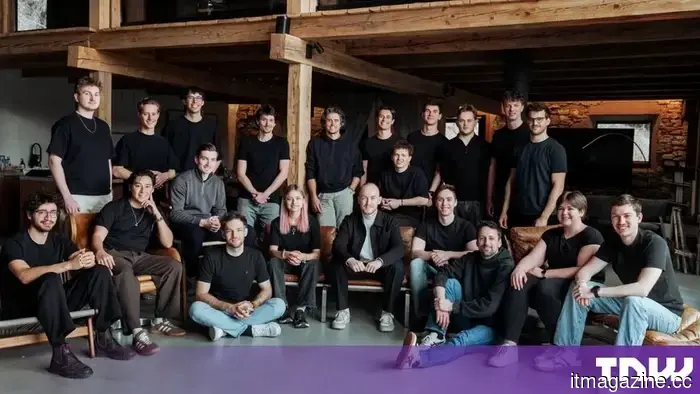
Exclusive: Vienna's fonio.ai reaches $10 million in annual recurring revenue less than a year after launching its subscription model.
A startup in Vienna that many in the tech industry may not recognize has recently announced impressive numbers. fonio.ai, a European platform specializing in AI-driven customer calls, reports it has exceeded $10 million in annual recurring revenue within less than a year.
Since February, when the company transitioned from a prepaid model to subscriptions, it claims to have increased revenue by over 30% monthly, a growth trajectory that has propelled it into eight-figure revenue territory.
Fonio.ai offers automated conversations; its AI agents manage phone calls, handle WhatsApp messages, and will soon take care of email and chat, facilitating natural-sounding interactions for businesses dealing with high volumes of customer inquiries at all hours.
The scale of its operations is already significant, with the company claiming to serve over 7,000 customers and facilitating several million calls each month, transforming a clever demonstration into a genuine operational asset.
In June, fonio.ai secured a $17 million seed funding round led by Harry Stebbings’ 20VC at a $140 million valuation, reportedly one of the largest seed rounds ever in Austria, following an earlier fundraising effort just months prior.
“We are creating a global market leader from Vienna,” says co-founder and CEO Daniel Keinrath, who launched the company in late 2024 alongside Matthias Gruber.
The company’s strategy focuses on maintaining control over more of the technology stack than its competitors. Fonio.ai develops its own voices, which it claims sound extremely realistic and rank among the best available in various languages, rather than relying solely on widely available human-like voice technologies.
Additionally, fonio.ai emphasizes personalization. Its agents are designed to learn from the interactions they manage and can recognize returning callers, addressing them by name and recalling their details—a feature that is GDPR-compliant and must be activated intentionally.
Staffing customer service lines is costly and notoriously challenging to operate continuously, making an agent that responds instantly, speaks the caller's language, and operates at any time an efficient solution for a major cost area for companies.
The company has ambitious growth targets, aiming for annual recurring revenue of €20 million to €30 million by year-end, which would more than double what it is currently celebrating.
Furthermore, fonio.ai made its first hire in June 2025 and now has around 80 employees, with 17 joining last month alone, and 52 positions currently open, aiming for a workforce of 130 to 150 by year-end across ten markets.
The company has also pursued growth through acquisitions, acquiring its Linz-based rival fluently last September, indicating its intent to consolidate its position in its home region rather than just defend it.
However, the competitive landscape poses challenges. Well-funded American competitors like HappyRobot, which recently raised $150 million, are targeting the same enterprise customers, and market labs continue to develop even better voice technologies for their products.
There are typical caveats regarding company-announced milestones as well. The annual recurring revenue is self-reported and unaudited; rapid monthly growth is more manageable from a smaller base compared to a larger one, and crucial issues of gross margin, churn, and profitability remain outside the celebratory announcement.
Daniel Keinrath, co-founder and CEO of fonio.ai, shared insights on these topics during a conversation.
Achieving $10 million in annual recurring revenue in twelve months is exceptional. How much of this comes from new customers versus expansion within existing accounts, and what is your net revenue retention?
Daniel Keinrath: We prefer not to disclose our exact revenue breakdown, but our current net revenue retention is just below 100%. Our aim is to reach 110% by year-end.
Churn can be a hidden challenge for rapidly growing AI companies. What are your logo and revenue churn rates, and how has the switch from prepaid to subscription impacted these metrics?
Daniel Keinrath: While we can't provide specific churn figures, we believe that not offering a free trial benefits us significantly. We operate with a strict paywall, which results in a strong commitment from our customers and leads to a low churn rate for an AI startup.
Your agents "learn from the conversations they hold." What precisely do they learn, how do you prevent them from picking up incorrect information, and how can customers verify this?
Daniel Keinrath: Our customers automatically receive a list of suggested additions to the knowledge base, which they can review, accept, decline, or modify. In 95% of cases, customers tend to accept the proposed improvements.
You mention building a global market leader from Vienna. Can a European voice AI company truly become globally competitive, or will market dynamics eventually shift your focus to the US?
Daniel Keinrath: I believe we currently have an excellent opportunity to lead our market segment globally. We are based in Europe but operate with a US mindset and intensity. Additionally, our $17 million seed round would rank among the top 1-2% of US seed funding rounds.
For fonio.ai,
Other articles
 Intel secures up to $20 billion to support its foundry initiative in competition with TSMC.
Intel is offering $15 billion in stock, potentially increasing it to $20 billion, to support its foundry investment, taking advantage of a near-tripling of its share price by 2026, which makes new equity more affordable.
Intel secures up to $20 billion to support its foundry initiative in competition with TSMC.
Intel is offering $15 billion in stock, potentially increasing it to $20 billion, to support its foundry investment, taking advantage of a near-tripling of its share price by 2026, which makes new equity more affordable.
 Lovable's solution to the risks of enterprise AI is an insurance policy offered by Lloyd's.
Lovable is the inaugural coding agent platform to receive certification under AIUC-1, and this certification is backed by Lloyd's underwriting. Three launches, one goal: procurement.
Lovable's solution to the risks of enterprise AI is an insurance policy offered by Lloyd's.
Lovable is the inaugural coding agent platform to receive certification under AIUC-1, and this certification is backed by Lloyd's underwriting. Three launches, one goal: procurement.
 Intel secures up to $20 billion to support its foundry initiative in competition with TSMC.
Intel is offering $15 billion in stock, with the possibility of increasing it to $20 billion, to finance its foundry investment. This move comes as the company's shares are expected to nearly triple by 2026, making new equity more affordable.
Intel secures up to $20 billion to support its foundry initiative in competition with TSMC.
Intel is offering $15 billion in stock, with the possibility of increasing it to $20 billion, to finance its foundry investment. This move comes as the company's shares are expected to nearly triple by 2026, making new equity more affordable.
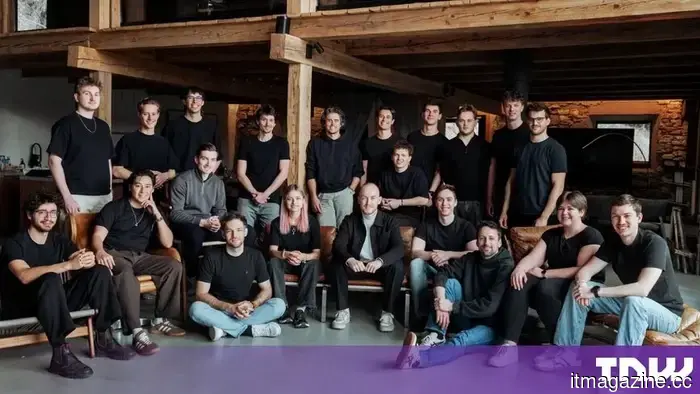 Exclusive: fonio.ai in Vienna reaches $10 million in annual recurring revenue within just a year of launching its subscription service.
Fonio.ai, the Vienna-based voice-AI startup, reports that it has exceeded $10 million in annual recurring revenue within less than a year, experiencing over 30% monthly growth since transitioning to a subscription-only model.
Exclusive: fonio.ai in Vienna reaches $10 million in annual recurring revenue within just a year of launching its subscription service.
Fonio.ai, the Vienna-based voice-AI startup, reports that it has exceeded $10 million in annual recurring revenue within less than a year, experiencing over 30% monthly growth since transitioning to a subscription-only model.
 AquaNab secures funding to combat the $4 billion sea lice issue affecting salmon using alpaca nanoantibodies.
AquaNab is working on nanoantibodies derived from alpacas that are distributed via fish feed to combat sea lice, presenting a cleaner option compared to the chemical and mechanical methods used for delousing in salmon farms.
AquaNab secures funding to combat the $4 billion sea lice issue affecting salmon using alpaca nanoantibodies.
AquaNab is working on nanoantibodies derived from alpacas that are distributed via fish feed to combat sea lice, presenting a cleaner option compared to the chemical and mechanical methods used for delousing in salmon farms.
 Bios Life exits stealth mode with a $25 million investment and a partnership with Tempus for cancer monitoring.
Bios Life has unveiled itself with $25 million in funding and a partnership with Tempus to create continuous, AI-based cancer monitoring for those at high risk and survivors.
Bios Life exits stealth mode with a $25 million investment and a partnership with Tempus for cancer monitoring.
Bios Life has unveiled itself with $25 million in funding and a partnership with Tempus to create continuous, AI-based cancer monitoring for those at high risk and survivors.
Exclusive: Vienna's fonio.ai reaches $10 million in annual recurring revenue less than a year after launching its subscription model.
Fonio.ai, the Vienna-based voice-AI startup, reports that it has surpassed $10 million in annual recurring revenue within less than a year, achieving monthly growth of over 30% since transitioning to a subscription model.