
The Ninth Circuit allowed 2,400 addiction lawsuits to move forward without altering Section 230.
UPDATE, 10 August 2026, 21:00 CEST: The Ninth Circuit has declined to pause the first trial. Meta requested an emergency stay while its appeal was pending, but the court deemed that request moot, ruling that it currently lacks jurisdiction to consider the appeal. Thus, the trial date remains unchanged. Jury selection is set to begin on Wednesday in federal court in Oakland, California, with opening arguments scheduled for 18 August. The trial could span several weeks.
Bloomberg’s Isaiah Poritz reported on the denial. Circuit Judge Jacqueline Nguyen authored the opinion in Personal Injury Plaintiffs v. Meta Platforms, Inc., 9th Cir., No. 24-7037. Meta has not provided a comment in response to the request.
The broader docket has continued to evolve. New Mexico’s total against Meta now approaches $950 million, accounting for the $375 million verdict from March and the $567 million mental health fund ordered by a judge on 7 August.
Several other cases are concurrently ongoing. A state trial in Tennessee is currently underway, while a Los Angeles jury awarded $6 million to a woman against Meta and Google’s YouTube. The initial trials involving school districts are not scheduled to begin until February 2027.
The Ninth Circuit dealt a blow to the social media companies on Monday, though it did not issue a formal ruling. The San Francisco appeals court rejected their attempt to overturn a lower court’s decision that would have dismissed approximately 2,400 federal lawsuits claiming the companies designed their products to addict young users. This decision was reported by Reuters’ Diana Novak Jones from Chicago.
The panel's inaction carries more significance than its decisions. Meta Platforms, Alphabet’s Google, ByteDance’s TikTok, and Snap had argued that Section 230 of the Communications Decency Act of 1996 applies not only to user-generated content but also to allegations of failing to warn about addictive design. However, the court did not address that issue, stating the appeal was premature, as most appeals follow the conclusion of a trial, which allows for review of a district judge’s decision post-case.
The judges highlighted this concern in January. At the oral argument on 6 January, Circuit Judges Jacqueline Nguyen and Mark Bennett, alongside District Judge Kiyo Matsumoto from the Eastern District of New York, acknowledged the issue. Meta's attorney James Rouhandeh advocated for a broad interpretation of the statute, stating, "It would be an enormous thing to require defendants to have to defend these types of suits." Nguyen provided a pointed rebuttal, saying, “When Congress wants to give immunity from suit, it knows how to say that.”
Colorado's solicitor general Shannon Stevenson argued on behalf of the states, asserting that the features in question operate independently from user posts. She stated, “Here our complaints are about features that they can remedy without looking at any third-party content at all.” Reuters reports that one judge noted Congress could have explicitly included a broad liability shield if it had desired, interpreting this as an indication rather than a definitive ruling, as no vote was taken on the matter.
The order of events has now shifted. The ruling should be read for what it alters rather than what it states. The companies sought a resolution on immunity before the trials, whereas they are now facing trials first, with the issue of immunity to be addressed later upon appeal from final judgments.
The significance of this is underscored by the number of cases. Reuters notes there are about 2,400 lawsuits before US District Judge Yvonne Gonzalez Rogers in Oakland, California, filed by states, municipalities, school districts, and individuals seeking damages, penalties, and restitution. Additionally, approximately 3,300 lawsuits are involved in a consolidated proceeding in California state court.
The companies have appealed Rogers’ decisions from 2023 and 2024, which largely allowed the litigation to progress. Three years of appellate work have resulted in a scheduling decision.
Meta will face four states on 18 August. Rogers allowed the states to advance their claims on 1 July, finding significant disputes over whether the products addict minors and whether Meta intentionally targeted them. Twenty-nine states are pursuing separate claims under the Children’s Online Privacy Protection Act.
California, Colorado, Kentucky, and New Jersey will initiate their case against Meta on 18 August. Meta informed the court that the four states are seeking $1.4 trillion in penalties, an amount comparable to its total market value. The company argues, “A sanction of that size has no precedent in consumer protection enforcement history.”
Two juries have already rendered verdicts. A Los Angeles jury delivered the first verdict in March, finding Meta and Google negligent for creating platforms harmful to young people, awarding $6 million to a woman, currently 20, who claims she developed an addiction to Instagram and YouTube during childhood. The jury deliberated for 43 hours and split the award 70-30 between the two companies.
Subsequently, Google informed an appeals
Other articles
 Google Chrome is developing a new feature that allows you to open PDF files in your chosen application.
Chrome for Android is experimenting with a feature that may automatically launch downloaded files in the user's chosen app rather than in Chrome.
Google Chrome is developing a new feature that allows you to open PDF files in your chosen application.
Chrome for Android is experimenting with a feature that may automatically launch downloaded files in the user's chosen app rather than in Chrome.
 Nvidia is drawing Wall Street into the expansion of AI. Its stock dropped following the announcement.
Apollo, Blackstone, BlackRock, Brookfield, Goldman Sachs, and KKR are discussing a $500 billion investment in AI infrastructure with Nvidia. As a result, Nvidia's shares dropped by 3%.
Nvidia is drawing Wall Street into the expansion of AI. Its stock dropped following the announcement.
Apollo, Blackstone, BlackRock, Brookfield, Goldman Sachs, and KKR are discussing a $500 billion investment in AI infrastructure with Nvidia. As a result, Nvidia's shares dropped by 3%.
 Tech giants are enthusiastic about AI, but employees claim that the competition in AI is making their work more challenging.
AI companies claim that their tools enable employees to achieve significantly more, yet workers report demanding schedules. The growing conflict in the workplace could ultimately concern who retains the extra time that AI generates.
Tech giants are enthusiastic about AI, but employees claim that the competition in AI is making their work more challenging.
AI companies claim that their tools enable employees to achieve significantly more, yet workers report demanding schedules. The growing conflict in the workplace could ultimately concern who retains the extra time that AI generates.
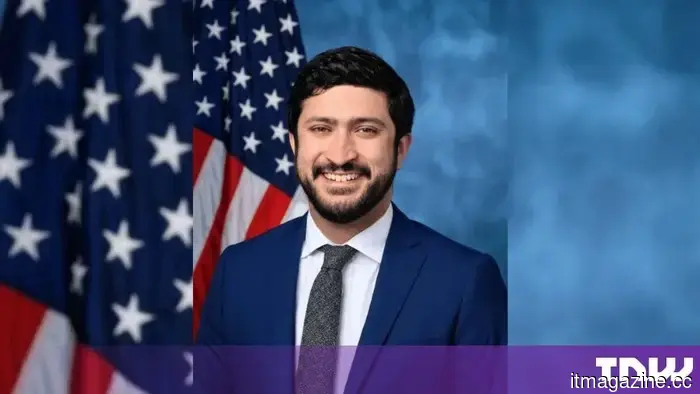 House Democrats are seeking to have AI CEOs testify under oath. Only Mike Johnson has the power to facilitate this.
House Democrats posed 23 questions to OpenAI by August 24. One of the questions inquired whether a model provided guidance for the next one to bypass its limitations.
House Democrats are seeking to have AI CEOs testify under oath. Only Mike Johnson has the power to facilitate this.
House Democrats posed 23 questions to OpenAI by August 24. One of the questions inquired whether a model provided guidance for the next one to bypass its limitations.
 The Ninth Circuit allowed 2,400 addiction lawsuits to move forward without addressing Section 230.
The Ninth Circuit has allowed 2,400 addiction lawsuits to move forward without making a decision on Section 230. On August 18, Meta is being confronted by four states with a demand totaling $1.4 trillion.
The Ninth Circuit allowed 2,400 addiction lawsuits to move forward without addressing Section 230.
The Ninth Circuit has allowed 2,400 addiction lawsuits to move forward without making a decision on Section 230. On August 18, Meta is being confronted by four states with a demand totaling $1.4 trillion.
 Apple has exhausted its supply of iPhone shapes, and Jefferies has just downgraded its rating to sell.
Jefferies has downgraded Apple to underperform following the cancellation of an all-glass iPhone, rising memory costs, and a lack of advancements in AI.
Apple has exhausted its supply of iPhone shapes, and Jefferies has just downgraded its rating to sell.
Jefferies has downgraded Apple to underperform following the cancellation of an all-glass iPhone, rising memory costs, and a lack of advancements in AI.
The Ninth Circuit allowed 2,400 addiction lawsuits to move forward without altering Section 230.
The Ninth Circuit allowed 2,400 addiction lawsuits to move forward without making a decision on Section 230. On August 18, Meta is confronted with demands from four states totaling $1.4 trillion.