
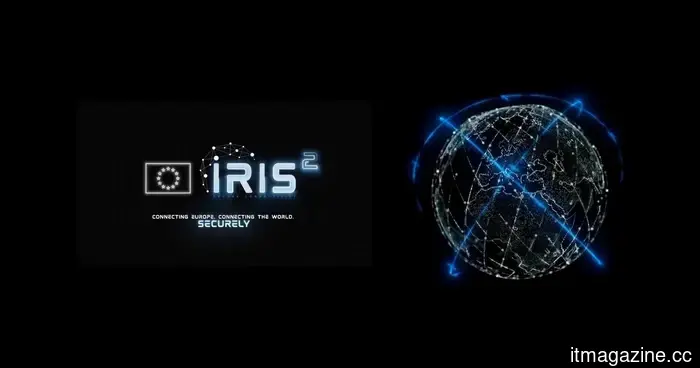
The EU's alternative to Starlink is finally progressing beyond the planning phase.
IRIS² will ensure secure satellite connectivity for European defense, security, and emergency services.
The European Space Agency reports that while SpaceX aims to compete with Verizon, AT&T, and T-Mobile in the mobile network space, the European Union is pursuing a different path by establishing a satellite network under its own control.
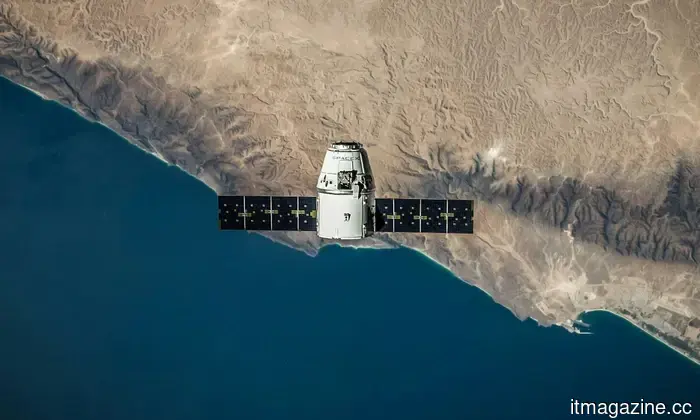
The European Commission and the SpaceRISE consortium have signed an implementation agreement for IRIS², the EU's secure satellite connectivity initiative. This agreement adds another 66 satellites to the project, bringing the total planned constellation to 348 satellites. Of these, 330 will be in low Earth orbit, and 18 will be in medium Earth orbit, with initial launches expected in 2029.
What is the necessity for a European satellite network?
IRIS² is not primarily designed as a consumer broadband service. Instead, it is being developed for governments, defense and security entities, emergency services, and critical infrastructure. Recent events have made the rationale quite clear. Starlink has proven to be crucial in Ukraine, where damaged mobile and fixed-line networks have forced both civilians and military units to depend on satellite connectivity. Similar scenarios have emerged during natural disasters, where cell towers and broadband infrastructure can be rendered inoperable almost instantly.
SpaceX has demonstrated how valuable a satellite network can be when terrestrial systems fail. However, the challenge for Europe is that Starlink is owned by an American company beyond the EU's jurisdiction. Relying solely on an external provider for communication during a conflict, disaster, or major security event is not an ideal situation.
IRIS² is expanding before it even launches
The additional 66 satellites are being incorporated specifically to enhance defense, security, and emergency communications. The European Commission asserts that the expanded system will boost secure governmental capacity by 60% within the EU and 54% worldwide.
The European Space Agency (ESA) will oversee much of the technical development and validation, while SpaceRISE members SES, Eutelsat, and Hispasat will collaborate with European manufacturers on the satellites and ground infrastructure.
Although IRIS² is still years away from becoming operational, the program has progressed beyond the planning stage. Europe is beginning to establish the hardware, funding, and industrial capacity necessary to ensure that its essential communications remain independent and reliable.



Other articles
 My upcoming phone needs to prove itself before it can retire.
Promises of seven-year software support are making it more feasible to own smartphones for the long term. The more significant issue is whether the hardware, repair infrastructure, and yearly upgrade cycle are prepared for this shift.
My upcoming phone needs to prove itself before it can retire.
Promises of seven-year software support are making it more feasible to own smartphones for the long term. The more significant issue is whether the hardware, repair infrastructure, and yearly upgrade cycle are prepared for this shift.
 Apple is evaluating Chinese DRAM despite CXMT's refusal to lower prices.
Apple is said to be testing CXMT memory in various products such as iPhones and MacBooks, despite the Chinese supplier declining to provide the more affordable DRAM prices that Apple sought.
Apple is evaluating Chinese DRAM despite CXMT's refusal to lower prices.
Apple is said to be testing CXMT memory in various products such as iPhones and MacBooks, despite the Chinese supplier declining to provide the more affordable DRAM prices that Apple sought.
 I transitioned from the M1 MacBook Air to the M5, and here’s what has changed for me.
After using my M1 MacBook Air for four years, the M5 has altered my daily workflow more than I anticipated.
I transitioned from the M1 MacBook Air to the M5, and here’s what has changed for me.
After using my M1 MacBook Air for four years, the M5 has altered my daily workflow more than I anticipated.
 My smart home experiment has come to its natural conclusion.
The initial device I included in my smart home was a light bulb. It felt like the most sensible place to begin. I was able to switch it on from any location, set a schedule for it, and eventually incorporate it into routines with other devices. After that, I pressed the button in the app and waited. The delay […]
My smart home experiment has come to its natural conclusion.
The initial device I included in my smart home was a light bulb. It felt like the most sensible place to begin. I was able to switch it on from any location, set a schedule for it, and eventually incorporate it into routines with other devices. After that, I pressed the button in the app and waited. The delay […]
 According to a report, Apple is considering developing a wearable device without a screen to compete with Whoop and Fitbit Air.
Bloomberg's report indicates that Apple is contemplating a revamp of its wearable devices, which includes plans to create a fitness tracker that can be worn on the wrist without a screen.
According to a report, Apple is considering developing a wearable device without a screen to compete with Whoop and Fitbit Air.
Bloomberg's report indicates that Apple is contemplating a revamp of its wearable devices, which includes plans to create a fitness tracker that can be worn on the wrist without a screen.
 The Galaxy Tab S12 Ultra has appeared online, and Samsung appears unwilling to alter a successful approach.
Recent renders of the Galaxy Tab S12 Ultra indicate that Samsung is retaining the well-known notch and overall design, while primarily concentrating the enhancements on the internal components.
The Galaxy Tab S12 Ultra has appeared online, and Samsung appears unwilling to alter a successful approach.
Recent renders of the Galaxy Tab S12 Ultra indicate that Samsung is retaining the well-known notch and overall design, while primarily concentrating the enhancements on the internal components.
The EU's alternative to Starlink is finally progressing beyond the planning phase.
The EU is increasing the number of IRIS² satellites to 348, establishing an independent network for governments, defense forces, emergency services, and critical infrastructure.