

My upcoming phone needs to prove itself before it can retire.
My next phone will need to provide a compelling reason for me to upgrade.
As it stands, my Pixel 8a is performing exceptionally well. It meets all my needs, remains speedy, and my daily usage doesn’t prompt me to consider a replacement. Although newer models feature faster processors, brighter displays, superior cameras, and more advanced AI functions, none have made my current phone feel outdated.
Perhaps support will cease, the battery will become too difficult to replace, or a genuinely beneficial feature will emerge that my phone cannot support. I'm not saying that I’m completely immune to temptation; I’ve simply stopped expecting my upgrade cycle to align with the calendar.
The concept of keeping a phone for seven years exists within a rapidly evolving industry.
Companies encouraging us to upgrade annually are increasingly implying that we can hold off for much longer.
Google pledges seven years of operating system and security updates for the Pixel 8 series and newer devices, including my Pixel 8a. Meanwhile, Samsung promises seven generations of OS upgrades and seven years of security updates for the Galaxy S26 series.
These commitments clash with an industry that turns its marketing machine back on every twelve months. According to Counterpoint, the global smartphone replacement cycle is projected to be 43 months in 2024, indicating that the average replacement period is approaching four years.
Enthusiasts and reviewers keep pace, along with those affluent enough to view a flagship priced in the four figures as an annual subscription. They represent a rather niche segment of the market.
For the majority, each new Galaxy, Pixel, or iPhone launch occurs amidst a much longer relationship with their existing device. New products hit the market, people admire camera samples, debate bezels for a week, and many continue using what they already have.
Seven years of updates don’t ensure a useful lifespan of seven years for the phone.
The unsettling aspect of a seven-year support commitment is that software isn’t the only factor at play.
This is purely anecdotal, but frequenting Galaxy S-series forums introduces you to the infamous green line. Owners have shared images of vertical lines appearing on displays over multiple Galaxy generations. While forum discussions don’t clarify how widespread the issue is, they serve as a reminder of how quickly physical limitations can disrupt a long-term ownership plan.
Google has also faced its own well-documented challenges, even establishing an extended repair program for certain Pixel 8 units affected by display line issues or flickering.
Batteries degrade over time, charging ports wear out, buttons can fail, and accidents remain indifferent to commitments of seven years of software support. An Android update waiting in 2031 doesn’t offer much solace if your display gives out in 2029.
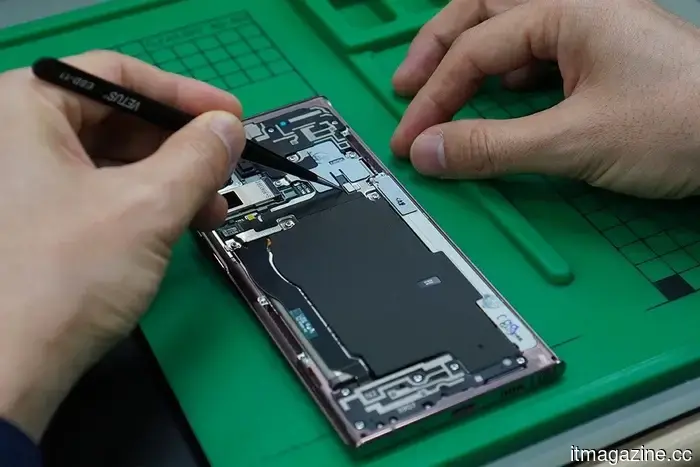
The topic of repairability becomes significantly more relevant when considering multiyear phone ownership. Replacing the battery during its lifespan could simply count as regular maintenance if the processor works well, the software is still updated, and everything else functions properly.
There’s also an ongoing uncertainty that we can’t fully address yet. The latest models promising seven years of support have not yet been on the market for that long. We understand Google's and Samsung's intentions regarding software, but customers will soon learn how well the hardware holds up over time.
Yearly launches might not cater to those who upgrade annually anymore.
An annual launch cycle makes more sense when considering multiple generations of owners arriving at different times.
Someone with a Galaxy S21 might be ready for an upgrade when the S27 hits the market. Another user might happily keep a newer model for several release cycles since nothing has prompted them to consider a replacement. Eventually, a worn-out part, an end to support, or a genuinely useful feature might convert someone from a bystander to a purchaser.
This situation bears a resemblance to the automotive industry. New models are introduced every year, but no one expects owners to replace their perfectly functional three-year-old vehicles just because this year's model has new headlights.
Smartphone launches still carry a sense of urgency, but the devices themselves are increasingly capable of lasting through multiple waves of that urgency.
That’s likely what intrigues me most looking ahead. Phone manufacturers may already be designing devices intended for five-to-seven-year ownership, even as their marketing continues to behave as though each January or September resets the clock.
For now, my Pixel 8a hasn’t given me any reason to start planning for its replacement. If it continues to perform, remains supported, and is easy to repair, I’m interested to see how many new phone launches it can outlast.
My next phone can arrive whenever it wants; it still has to persuade me that this one is ready for retirement.

Other articles
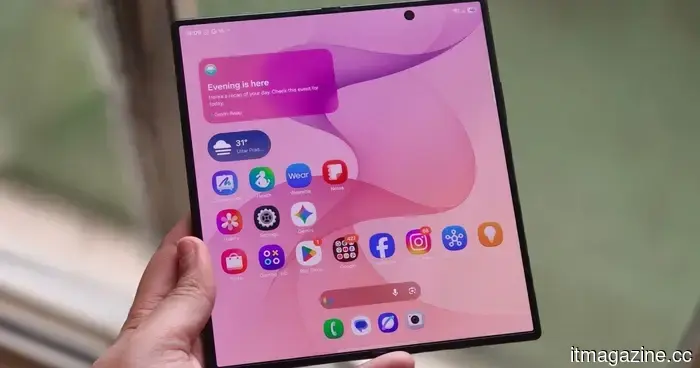 The Galaxy Z Fold 8 is really impressive, but I would spend extra for the Z Fold 8 Ultra.
If I’m looking for the top foldable Samsung model in 2026, I would bypass the Fold 8's broader display and head directly to the Ultra.
The Galaxy Z Fold 8 is really impressive, but I would spend extra for the Z Fold 8 Ultra.
If I’m looking for the top foldable Samsung model in 2026, I would bypass the Fold 8's broader display and head directly to the Ultra.
 The EU's alternative to Starlink is finally progressing beyond the planning phase.
The EU is increasing the number of IRIS² satellites to 348, establishing an independent network for governments, defense forces, emergency services, and critical infrastructure.
The EU's alternative to Starlink is finally progressing beyond the planning phase.
The EU is increasing the number of IRIS² satellites to 348, establishing an independent network for governments, defense forces, emergency services, and critical infrastructure.
 Apple has recently fixed a security vulnerability in Mac. It's advisable to update today.
Apple has issued macOS updates that address a Screen Sharing vulnerability which could permit network attackers to circumvent authentication.
Apple has recently fixed a security vulnerability in Mac. It's advisable to update today.
Apple has issued macOS updates that address a Screen Sharing vulnerability which could permit network attackers to circumvent authentication.
 My upcoming phone needs to justify its retirement.
Promises of seven-year software support are making long-term ownership of smartphones more feasible. The greater concern is whether the hardware, repair infrastructure, and annual upgrade cycle are prepared for this change.
My upcoming phone needs to justify its retirement.
Promises of seven-year software support are making long-term ownership of smartphones more feasible. The greater concern is whether the hardware, repair infrastructure, and annual upgrade cycle are prepared for this change.
 Apple is evaluating Chinese DRAM despite CXMT's refusal to lower prices.
Apple is said to be testing CXMT memory in various products such as iPhones and MacBooks, despite the Chinese supplier declining to provide the lower DRAM prices that Apple preferred.
Apple is evaluating Chinese DRAM despite CXMT's refusal to lower prices.
Apple is said to be testing CXMT memory in various products such as iPhones and MacBooks, despite the Chinese supplier declining to provide the lower DRAM prices that Apple preferred.
 I transitioned from the M1 MacBook Air to the M5, and here’s what has changed for me.
After using my M1 MacBook Air for four years, the M5 has altered my daily workflow more than I anticipated.
I transitioned from the M1 MacBook Air to the M5, and here’s what has changed for me.
After using my M1 MacBook Air for four years, the M5 has altered my daily workflow more than I anticipated.
My upcoming phone needs to prove itself before it can retire.
Promises of seven-year software support are making it more feasible to own smartphones for the long term. The more significant issue is whether the hardware, repair infrastructure, and yearly upgrade cycle are prepared for this shift.