
My upcoming phone needs to justify its retirement.
My next phone will need to provide a compelling reason for me to switch.
Currently, my Pixel 8a is still performing admirably. It meets all my needs, feels fast, and my daily usage doesn’t prompt me to consider a replacement. Even with new phones featuring quicker processors, brighter displays, better cameras, and more ambitious AI capabilities, none have made my current phone feel particularly outdated.
Perhaps support will eventually cease, the battery will become difficult to replace, or something genuinely useful will come along that my phone can't handle. I’m not claiming that I’ve stopped feeling tempted. I've simply stopped expecting my upgrade cycle to align with the calendar.
The seven-year phone exists in an industry focused on one-year cycles.
Companies urging us to pay attention every year are increasingly allowing us to disregard them for much longer.
Google has pledged seven years of OS and security updates for the Pixel 8 series and newer models, including my Pixel 8a. Similarly, Samsung has promised seven generations of OS upgrades and seven years of security updates for the Galaxy S26 series.
Those commitments clash with an industry that resets its marketing every twelve months. Counterpoint estimates the global smartphone replacement cycle will be 43 months in 2024, which means we’re edging toward an average of four years.
Enthusiasts and reviewers, along with those who can afford to treat a flagship as a yearly subscription, keep up with the releases. However, they represent a small segment of the market.
For most consumers, each new Galaxy, Pixel, or iPhone launch occurs amid a much longer relationship with their existing device. When a new model is unveiled, people may admire the camera samples and debate bezels for a week, but many will continue using the phone they already own.
However, seven years of updates do not guarantee seven years of functionality.
The uncomfortable reality of a seven-year support promise is that the software is not the only factor at play.
If you spend enough time in Galaxy S-series communities, you’ll inevitably encounter the disliked green line. Users have shared images of vertical lines appearing on displays across several Galaxy generations. While forum discussions don’t provide precise statistics on the issue, they serve as a reminder of how swiftly a long-term ownership plan can confront physical limitations.
Google has faced its share of documented issues too, creating an extended repair program for specific Pixel 8 units with display line or flickering problems.
Batteries deteriorate over time, charging ports wear and tear, buttons may become unresponsive, and accidents can occur, rendering seven-year software assurances less comforting if your display gives out well before the promised updates are due.
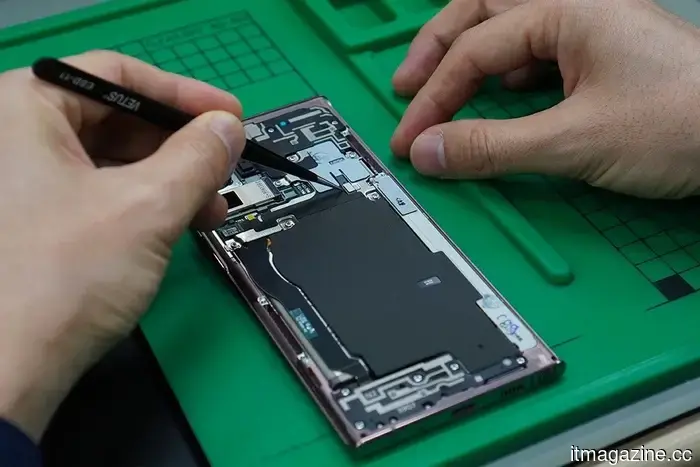
Repairability becomes much more significant when considering holding onto a phone for several years. A battery replacement midway through its lifespan can simply be normal maintenance if the processor operates efficiently, the software is still supported, and everything else functions properly.
There’s also an uncertainty we can't fully address yet. The latest generation of phones offering seven years of support hasn’t been in use for that duration. While we understand Google's and Samsung's intentions regarding software, owners will ultimately find out how well the hardware holds up over time.
Annual launches may no longer cater to those who upgrade every year.
A yearly release cycle seems more logical when looking at different groups of owners acquiring devices at various times.
Someone using a Galaxy S21 might finally feel ready to upgrade when the S27 is released. Another user might happily hold onto a newer model through several launches because nothing has made them feel compelled to replace it. Eventually, a worn-out component, an ending support window, or a genuinely useful feature can prompt someone to shift from being a spectator to a buyer.
This is starting to mirror the automobile industry. New models are introduced every year, but nobody expects an owner to trade in a perfectly good three-year-old car simply because this year's model features different headlights.
Smartphone launches still convey a sense of urgency, but the devices themselves are increasingly able to withstand several cycles of that urgency.
That's what I'm most interested in observing over the next few years. Smartphone manufacturers might already be designing devices for five-to-seven-year ownership while their marketing continues to imply that every January or September resets the clock.
For now, my Pixel 8a has provided me with no reason to consider its retirement. If it continues to function, remains supported, and is practical to repair, I’m content to see how many more phone launches it outlasts.
My next phone can arrive whenever it wishes; it must convince me that this one deserves to be retired.
Other articles
 My upcoming phone needs to prove itself before it can retire.
Promises of seven-year software support are making it more feasible to own smartphones for the long term. The more significant issue is whether the hardware, repair infrastructure, and yearly upgrade cycle are prepared for this shift.
My upcoming phone needs to prove itself before it can retire.
Promises of seven-year software support are making it more feasible to own smartphones for the long term. The more significant issue is whether the hardware, repair infrastructure, and yearly upgrade cycle are prepared for this shift.
 Apple is evaluating Chinese DRAM despite CXMT's refusal to lower prices.
Apple is said to be testing CXMT memory in various products such as iPhones and MacBooks, despite the Chinese supplier declining to provide the lower DRAM prices that Apple preferred.
Apple is evaluating Chinese DRAM despite CXMT's refusal to lower prices.
Apple is said to be testing CXMT memory in various products such as iPhones and MacBooks, despite the Chinese supplier declining to provide the lower DRAM prices that Apple preferred.
 Apple has recently fixed a security vulnerability in Mac. It's advisable to update today.
Apple has issued macOS updates that address a Screen Sharing vulnerability which could permit network attackers to circumvent authentication.
Apple has recently fixed a security vulnerability in Mac. It's advisable to update today.
Apple has issued macOS updates that address a Screen Sharing vulnerability which could permit network attackers to circumvent authentication.
 I transitioned from the M1 MacBook Air to the M5, and here’s what has changed for me.
After using my M1 MacBook Air for four years, the M5 has altered my daily workflow more than I anticipated.
I transitioned from the M1 MacBook Air to the M5, and here’s what has changed for me.
After using my M1 MacBook Air for four years, the M5 has altered my daily workflow more than I anticipated.
 The EU's alternative to Starlink is finally progressing beyond the planning phase.
The EU is increasing the number of IRIS² satellites to 348, establishing an independent network for governments, defense forces, emergency services, and critical infrastructure.
The EU's alternative to Starlink is finally progressing beyond the planning phase.
The EU is increasing the number of IRIS² satellites to 348, establishing an independent network for governments, defense forces, emergency services, and critical infrastructure.
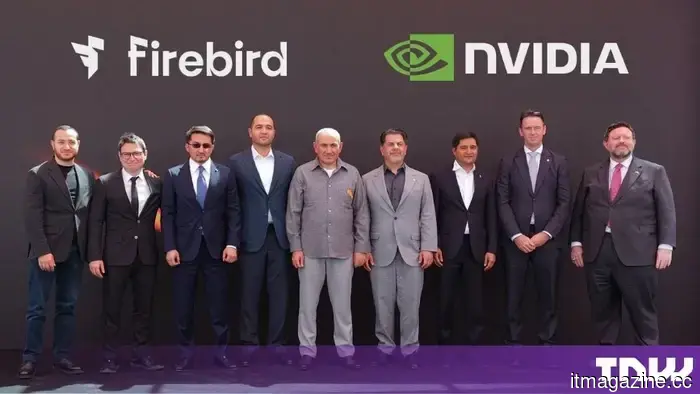 Armenia has just launched the largest AI factory in the region, made possible by a license signed by Washington.
Firebird has launched the largest AI factory in the CIS region in Armenia. The number of GPUs is less significant than having the export license and the presence of the Kazakh minister in the room.
Armenia has just launched the largest AI factory in the region, made possible by a license signed by Washington.
Firebird has launched the largest AI factory in the CIS region in Armenia. The number of GPUs is less significant than having the export license and the presence of the Kazakh minister in the room.
My upcoming phone needs to justify its retirement.
Promises of seven-year software support are making long-term ownership of smartphones more feasible. The greater concern is whether the hardware, repair infrastructure, and annual upgrade cycle are prepared for this change.