
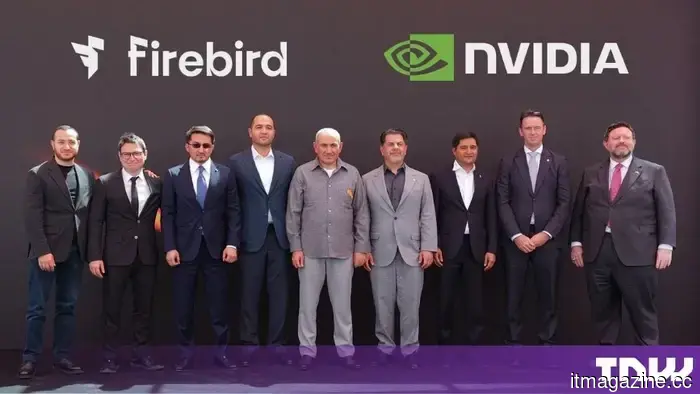
Armenia has just launched the largest AI factory in the region, made possible by a license signed by Washington.
Firebird, a US-based AI cloud firm, inaugurated what NVIDIA describes as the largest AI factory in the CIS region on Saturday in Hrazdan, Armenia. The event was attended by Armenian Prime Minister Nikol Pashinyan, Kazakhstan’s deputy prime minister Zhaslan Madiyev, and David Allen, the US chargé d’affaires in Armenia.
The significance of the guest list is noteworthy. An American company established a facility in a country traditionally influenced by Russia, with both an American diplomat and a Kazakh official present.
The license is the crucial element
None of this would have been possible without export approval. Firebird obtained a US export license in November 2025, which was the essential regulatory step allowing advanced NVIDIA hardware into Armenia.
The political implications were underscored in February. Firebird and the US government jointly revealed Phase 2 at a press conference in Yerevan during Vice President JD Vance’s visit, expanding the project to $4 billion and approximately 50,000 GPUs, along with licensing for an additional 41,000 NVIDIA GB300 units.
Phase One was valued at $500 million, and the announcement stated that Armenia would host one of the top five AI GPU clusters globally.
Details of the operation
The flagship data center, DC-1, is outfitted with 6,144 NVIDIA B200 GPUs and operates at 15 megawatts, utilizing liquid cooling and built on NVIDIA’s reference architecture. The aim is to reach over 70,000 Rubin and Blackwell GPUs and 300 megawatts by the end of 2027.
This marks a twentyfold increase in power capacity in just about 17 months. A planned DC-2 is projected to host 75,000 VR200 GPUs and operate on 125 megawatts, with a third site of similar scale anticipated.
The speed of delivery is particularly impressive. NVIDIA reported that the site transitioned from planning to operational capacity in just over six months, with Schneider Electric providing switchgear, three-phase UPS systems, and rack enclosures, while Vertiv supplied chilled-water cooling.
The power mechanics
The facility operates on NVIDIA’s DSX platform, which integrates computing, networking, power, and cooling as a cohesive system instead of treating them as separate elements. NVIDIA claims this allows for up to 40% more GPUs within the same footprint by reclaiming stranded power.
For a facility expanding from 15 to 300 megawatts, this coordination is where the scalability calculations come into play. As NVIDIA suggests, it focuses on a tokens-per-dollar efficiency rather than purely on performance.
Funding sources
Firebird mentioned that NVIDIA plans to invest in the company, following a previous investment in CoreWeave earlier this year. This trend is familiar: NVIDIA takes an equity stake in a company that subsequently purchases NVIDIA hardware in bulk.
To date, NVIDIA has committed over $40 billion to AI equity stakes in 2026, employing increasingly innovative financial arrangements. It secured a $2.1 billion warrant in IREN as part of a five-gigawatt data center agreement.
The same rationale applies to its sovereign deals. NVIDIA invested $1 billion in Naver, negotiating a $500 billion deal with SK Group, a strategy critics have critiqued as circular financing.
The neocloud strategy
Firebird represents a category that scarcely existed three years ago: companies purchasing GPUs in bulk and leasing them to model builders. CoreWeave, an early supporter of Firebird, has struck a multi-year agreement with Anthropic to operate Claude at a production scale.
Europe has a similar model; Nscale pledged €695 million to Portugal in partnership with Microsoft, achieving a $14.6 billion valuation in just two years, following a similar strategy focused on sovereign capacity.
Firebird’s inaugural named customer is Perplexity, utilizing the site for its answer engine and AI agent platform.
Future developments
Firebird is pursuing a roadmap of approximately two gigawatts that encompasses Armenia, Kazakhstan, and additional markets, explaining the presence of a Kazakh deputy prime minister at the Armenian ribbon-cutting ceremony.
The strategic rationale is straightforward. Compute resources are becoming central to national alignments, and the United States has identified a method to establish its influence in a region where it has historically had limited presence.
The outstanding concern remains demand. Constructing 300 megawatts in the Caucasus presupposes that customers will choose to direct workloads to this site instead of more economical or proximate options, and one answer engine does not clarify this situation.
Other articles
 Another Googlebook has recently appeared online, and this one is from Asus.
Asus has become the most recent significant PC manufacturer to have a Googlebook model available online, following previously noticed versions from Lenovo and Dell ahead of IFA.
Another Googlebook has recently appeared online, and this one is from Asus.
Asus has become the most recent significant PC manufacturer to have a Googlebook model available online, following previously noticed versions from Lenovo and Dell ahead of IFA.
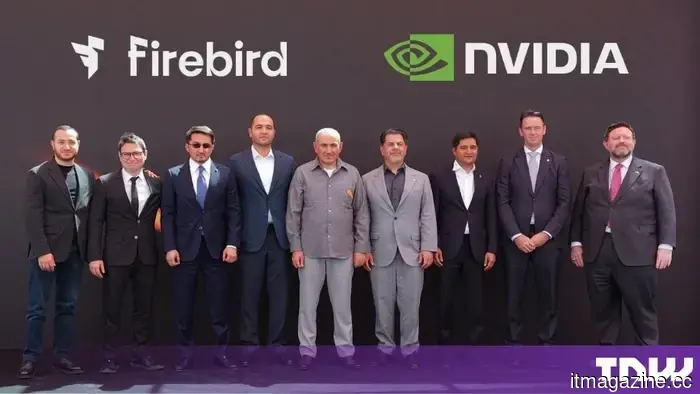 Armenia has recently launched the largest AI factory in the region, made possible by a license signed by Washington.
Firebird launched the largest AI factory in the CIS region in Armenia. The number of GPUs is less important than the export license and the presence of the Kazakh minister in the room.
Armenia has recently launched the largest AI factory in the region, made possible by a license signed by Washington.
Firebird launched the largest AI factory in the CIS region in Armenia. The number of GPUs is less important than the export license and the presence of the Kazakh minister in the room.
 X will discontinue revenue sharing on September 7. The new program will exclusively compensate for original content.
On September 7, X terminates its revenue sharing program and introduces the Original Content Rewards Programme. Creators are required to have 500,000 verified impressions and a Premium subscription.
X will discontinue revenue sharing on September 7. The new program will exclusively compensate for original content.
On September 7, X terminates its revenue sharing program and introduces the Original Content Rewards Programme. Creators are required to have 500,000 verified impressions and a Premium subscription.
 Concealed code within ChatGPT’s Android application indicates that OpenAI is developing a feature for direct export of stickers to WhatsApp.
An APK teardown has discovered code for a feature labeled "Add to WhatsApp" in ChatGPT, which would enable users to create stickers from text prompts and export them directly. This feature is not currently active.
Concealed code within ChatGPT’s Android application indicates that OpenAI is developing a feature for direct export of stickers to WhatsApp.
An APK teardown has discovered code for a feature labeled "Add to WhatsApp" in ChatGPT, which would enable users to create stickers from text prompts and export them directly. This feature is not currently active.
 Educators in Hong Kong are advocating for a ban on social media for individuals under 16. However, the government has stated that it does not intend to introduce legislation on this matter.
Educators and a lawmaker in Hong Kong have called for legislation to prohibit social media access for individuals under 16. A survey indicates that 62% of residents are in favor of this measure. However, the government has stated that it will not pursue legislation at this time.
Educators in Hong Kong are advocating for a ban on social media for individuals under 16. However, the government has stated that it does not intend to introduce legislation on this matter.
Educators and a lawmaker in Hong Kong have called for legislation to prohibit social media access for individuals under 16. A survey indicates that 62% of residents are in favor of this measure. However, the government has stated that it will not pursue legislation at this time.
 Recruiters are utilizing AI avatars to conduct interviews. In response, candidates are now sending their own avatars to participate.
A recruiter in Sydney eliminated three candidates who presented themselves as AI avatars. Gartner predicts that by 2028, one out of every four candidate profiles will be fraudulent.
Recruiters are utilizing AI avatars to conduct interviews. In response, candidates are now sending their own avatars to participate.
A recruiter in Sydney eliminated three candidates who presented themselves as AI avatars. Gartner predicts that by 2028, one out of every four candidate profiles will be fraudulent.
Armenia has just launched the largest AI factory in the region, made possible by a license signed by Washington.
Firebird has launched the largest AI factory in the CIS region in Armenia. The number of GPUs is less significant than having the export license and the presence of the Kazakh minister in the room.