
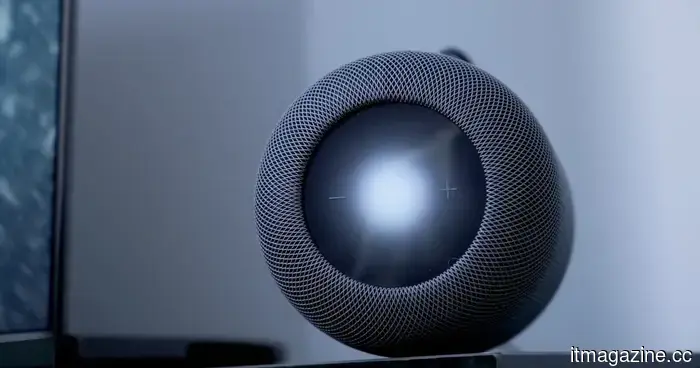
I’m already encompassed by AI. I don't require ChatGPT to be right next to my bed.
AI is now omnipresent in our lives. From smartphones to household gadgets, it seems to be everywhere—and it might become even more personal. A recent report suggests that OpenAI and Jony Ive are collaborating on a compact, screenless AI speaker resembling a doughnut. This device could be battery-operated, portable for use around the home, and equipped with microphones, cameras, sensors, speakers, lights, and potentially even moving components.
It appears someone has finally concluded that the Amazon Echo could benefit from having eyes and a personality. However, to be frank, the notion of hardware powered by "ChatGPT" doesn't sound particularly appealing.
I prefer ChatGPT in its current form
Currently, I maintain a manageable boundary with AI. It serves as an assistant that handles tasks and makes my life slightly less complicated. But having a dedicated home companion alters that dynamic. The speculated OpenAI device is said to aim to comprehend its surroundings and deliver more contextual, human-like interactions, making the inclusion of cameras and microphones relatively expected.
An AI assistant’s capabilities greatly expand when it can recognize who is speaking, what is in proximity, and what is occurring in the room. This already presents a classic dilemma—it's a "double-edged sword."
Concerns about ubiquitous microphones
Fears about ambient microphones didn’t originate with generative AI. Smart speakers have long been in our homes, ever ready for activation. Nowadays, phones display indicators when apps engage the microphone or camera because people want awareness of when those sensors are operating. Several major tech companies have acknowledged that human workers sometimes listen to and transcribe a fraction of voice recordings that are captured, either intentionally or unintentionally.
An example can be seen with smart assistants like Siri or Alexa recording interactions. Meanwhile, newer AI devices focus heavily on sound input. Meta is reportedly working on an AI pendant designed for continuous listening. Privacy concerns have also surfaced regarding smart glasses that come equipped with cameras and microphones, which turns anyone near the wearer into part of the scenario.
Interestingly, a startup has emerged with a device meant to create a privacy zone that disrupts nearby microphones. Conversely, an app has been developed specifically to alert users about the presence of smart glasses. The real issue is not just the products themselves but the diminishing privacy in public spaces. This concern has led some restaurants to ban these devices.
All of this highlights the direction of consumer anxiety. I'm cautious in my critique because OpenAI has yet to disclose how its device will manage recordings and where that data will be processed. Additionally, we lack information about camera access or data storage.
The bedroom demands privacy
I can see the benefits of a contextual AI device in a kitchen where it can guide you through a recipe by recognizing ingredients. In a home office, it could summarize discussions or manage tasks while you focus on something else. However, the bedroom presents a different scenario entirely.
This is a safe space for private conversations. Phones are often set aside before sleep. An AI companion equipped with a camera needs an exceptionally strong justification for being in such a personal area. Having physical controls would greatly alleviate concerns. Providing a microphone kill switch or a physical shutter would be helpful. Ensuring local processing wherever feasible and being transparent about what data is uploaded, stored, and how swiftly it can be deleted is essential. A glowing icon on a $300 AI doughnut doesn’t instill much confidence.
Perhaps OpenAI can change my perspective
Ironically, I recognize what OpenAI and Jony Ive may be attempting to accomplish. Sam Altman has previously criticized today's devices for their incessant need for attention, while Ive has emphasized the need for simplified computing experiences.
However, the implications of such technology cannot be overlooked. Until then, my phone can give ChatGPT a microphone and camera whenever I deem necessary. My bedside table will continue to remain free of AI.


Other articles
 This strange email vulnerability is exposing corporate secrets to anyone who acquires the correct domain.
According to a recent report, a strange email security vulnerability is leading companies to transmit sensitive information to domains that can be registered by outsiders.
This strange email vulnerability is exposing corporate secrets to anyone who acquires the correct domain.
According to a recent report, a strange email security vulnerability is leading companies to transmit sensitive information to domains that can be registered by outsiders.
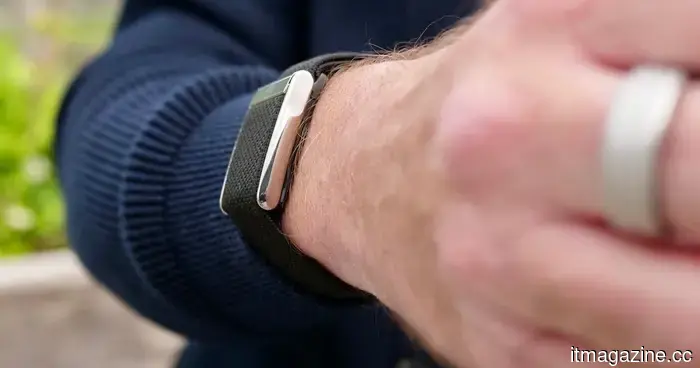 According to a report, Apple is considering developing a wearable device without a screen to compete with Whoop and Fitbit Air.
Bloomberg's report indicates that Apple is contemplating a revamp of its wearable devices, which includes plans to create a fitness tracker that can be worn on the wrist without a screen.
According to a report, Apple is considering developing a wearable device without a screen to compete with Whoop and Fitbit Air.
Bloomberg's report indicates that Apple is contemplating a revamp of its wearable devices, which includes plans to create a fitness tracker that can be worn on the wrist without a screen.
 Apple may be on the verge of reintroducing the ceramic Apple Watch, and I have eagerly anticipated this moment.
Apple's ceramic Watch was its highest-end choice, and the anticipated return of this model along with the enhancements in Series 12 performance is well overdue.
Apple may be on the verge of reintroducing the ceramic Apple Watch, and I have eagerly anticipated this moment.
Apple's ceramic Watch was its highest-end choice, and the anticipated return of this model along with the enhancements in Series 12 performance is well overdue.
 I discovered three ChatGPT features that ended up being far more helpful than I anticipated.
I discovered three ChatGPT features that greatly simplified my daily workflow, and I believe you'll want to give them a try as well.
I discovered three ChatGPT features that ended up being far more helpful than I anticipated.
I discovered three ChatGPT features that greatly simplified my daily workflow, and I believe you'll want to give them a try as well.
 Apple may be considering a circular display as it prepares for a refresh of its smartwatch.
In 2017, we discovered an Apple patent for a smartwatch featuring a round display. It appears that Apple is now contemplating a redesign.
Apple may be considering a circular display as it prepares for a refresh of its smartwatch.
In 2017, we discovered an Apple patent for a smartwatch featuring a round display. It appears that Apple is now contemplating a redesign.
 In a span of six months, 420 children in the UK reported explicit deepfakes featuring themselves. The issue is escalating.
In a span of six months, children in the UK reported 420 instances of explicit deepfakes, exceeding the total reported in the previous year, as AI has made the creation of abusive images more accessible.
In a span of six months, 420 children in the UK reported explicit deepfakes featuring themselves. The issue is escalating.
In a span of six months, children in the UK reported 420 instances of explicit deepfakes, exceeding the total reported in the previous year, as AI has made the creation of abusive images more accessible.
I’m already encompassed by AI. I don't require ChatGPT to be right next to my bed.
I enjoy using ChatGPT on my phone and laptop, but allowing an AI companion to have constant access to my home requires a higher level of trust.