

In a span of six months, 420 children in the UK reported explicit deepfakes featuring themselves. The issue is escalating.
Reports of AI-generated sexual deepfakes involving children in the UK are on the rise.
Children in the UK are experiencing a notable increase in explicit AI-generated images of themselves, as shown by data from Report Remove, an online platform that allows young individuals to report intimate images shared without their consent anonymously.
In the first half of 2026, the service recorded 420 reports from children who suspected that images of them had been altered or created. This number surpasses the 397 reports documented throughout all of 2025, according to The Guardian.
These statistics underscore a growing issue with generative AI: producing convincing fake images of real individuals is becoming simpler, while preventing the dissemination of those images is increasingly challenging.
AI simplifies the creation of fake images
Report Remove, managed by the Internet Watch Foundation in conjunction with the NSPCC, has encountered enough altered images involving minors to implement a specific option for children to report AI-generated content. The service indicated that most of the manipulated image reports it received in 2025 and 2026 were severe enough to meet its criteria for child sexual abuse material.
Dan Sexton, the chief technology officer at the Internet Watch Foundation, emphasized that the data illustrates how challenging it is to prevent ordinary photographs from being modified once they are shared online.
This is particularly troubling because the original image doesn't need to be explicit. A benign photo taken from a public social media profile could be modified and turned into something harmful.
The issue goes beyond mere embarrassment or reputational harm. The report highlights that some victims are being targeted for sextortion, with perpetrators demanding money or threatening to spread manipulated images further. There have also been instances of attempts to target schools by gathering photos of students and using AI to alter them.
Parents and platforms need to rethink safety measures
Experts in online safety argue that technology firms must implement stronger protections around AI image-generation tools. Rani Zachariah, an online safety expert at the NSPCC, stated that the uptick in children reporting fake or AI-generated sexual imagery is alarming yet expected, suggesting that more robust safeguards should be integrated into AI products.
The National Crime Agency and Internet Watch Foundation have also advised parents and guardians to be cautious when posting identifiable images of children publicly. The recommendation is not necessarily to remove all photos from the internet but to limit how easily strangers can access and reuse identifiable images.
For children who have already been affected, Report Remove offers a means to anonymously report images and request their removal.
However, the larger issue is advancing faster than the protective measures. AI tools can create increasingly realistic images within seconds, whereas the process to remove copies from websites and social media platforms is considerably slower. As Sexton warned, everyone is potentially vulnerable.




Other articles
 The Galaxy Tab S12 Ultra has appeared online, and Samsung appears unwilling to alter a successful approach.
Recent renders of the Galaxy Tab S12 Ultra indicate that Samsung is retaining the well-known notch and overall design, while primarily concentrating the enhancements on the internal components.
The Galaxy Tab S12 Ultra has appeared online, and Samsung appears unwilling to alter a successful approach.
Recent renders of the Galaxy Tab S12 Ultra indicate that Samsung is retaining the well-known notch and overall design, while primarily concentrating the enhancements on the internal components.
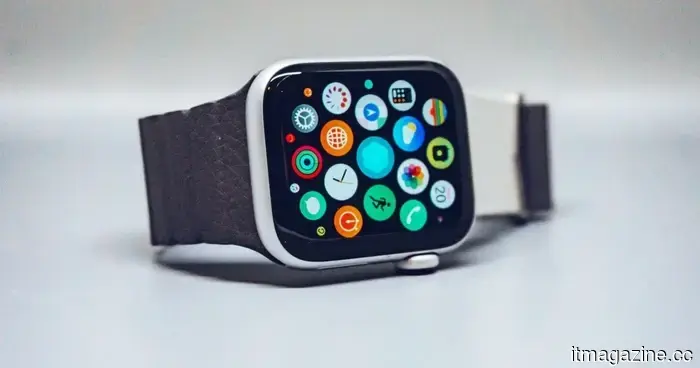 Apple is already preparing for a third-generation model set for release in 2027.
Apple is considering a significant redesign of the Apple Watch for 2027, which may feature new screen sizes, different display types, and possibly models that don't have screens at all.
Apple is already preparing for a third-generation model set for release in 2027.
Apple is considering a significant redesign of the Apple Watch for 2027, which may feature new screen sizes, different display types, and possibly models that don't have screens at all.
 The EU's alternative to Starlink is finally progressing beyond the planning phase.
The EU is increasing the number of IRIS² satellites to 348, establishing an independent network for governments, defense forces, emergency services, and critical infrastructure.
The EU's alternative to Starlink is finally progressing beyond the planning phase.
The EU is increasing the number of IRIS² satellites to 348, establishing an independent network for governments, defense forces, emergency services, and critical infrastructure.
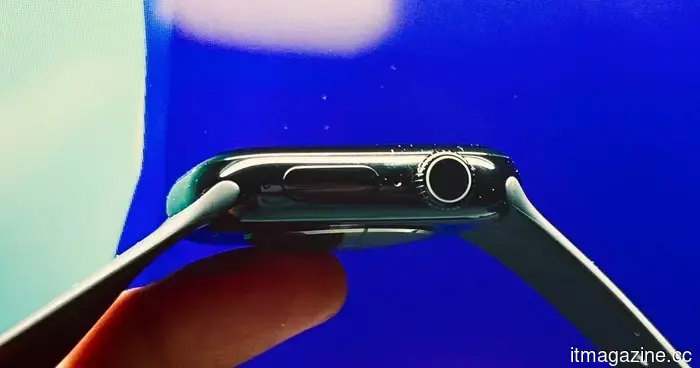 Apple may finally reintroduce the ceramic Apple Watch, and I've been looking forward to it.
Apple's ceramic Watch was its highest-end choice, and its anticipated return along with enhancements in Series 12 performance has been long awaited.
Apple may finally reintroduce the ceramic Apple Watch, and I've been looking forward to it.
Apple's ceramic Watch was its highest-end choice, and its anticipated return along with enhancements in Series 12 performance has been long awaited.
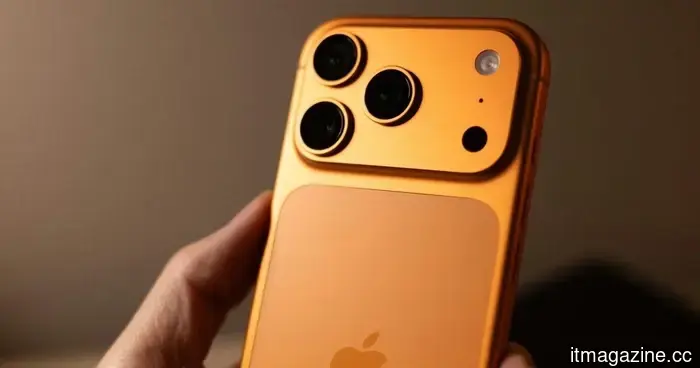 Apple is evaluating Chinese DRAM despite CXMT's refusal to lower prices.
Apple is said to be testing CXMT memory in various products such as iPhones and MacBooks, despite the Chinese supplier declining to provide the lower DRAM prices that Apple preferred.
Apple is evaluating Chinese DRAM despite CXMT's refusal to lower prices.
Apple is said to be testing CXMT memory in various products such as iPhones and MacBooks, despite the Chinese supplier declining to provide the lower DRAM prices that Apple preferred.
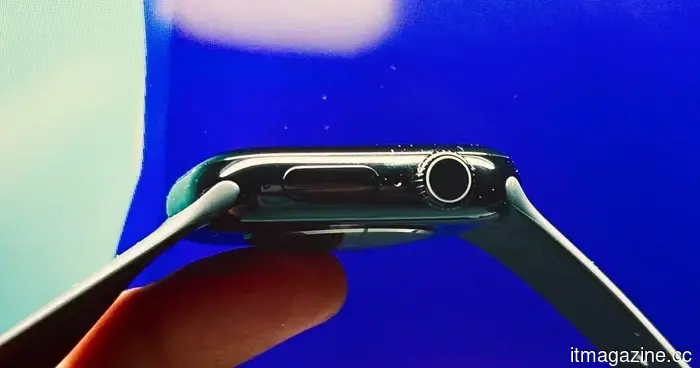 Apple may be on the verge of reintroducing the ceramic Apple Watch, and I have eagerly anticipated this moment.
Apple's ceramic Watch was its highest-end choice, and the anticipated return of this model along with the enhancements in Series 12 performance is well overdue.
Apple may be on the verge of reintroducing the ceramic Apple Watch, and I have eagerly anticipated this moment.
Apple's ceramic Watch was its highest-end choice, and the anticipated return of this model along with the enhancements in Series 12 performance is well overdue.
In a span of six months, 420 children in the UK reported explicit deepfakes featuring themselves. The issue is escalating.
In a span of six months, children in the UK reported 420 instances of explicit deepfakes, exceeding the total reported in the previous year, as AI has made the creation of abusive images more accessible.