
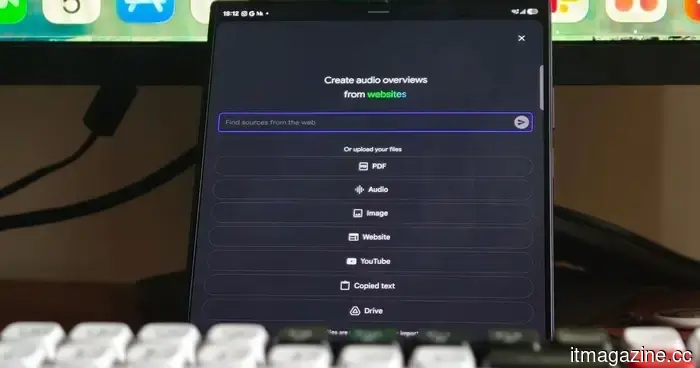
Having spent a week with the Gemini Notebook on my Galaxy Z Fold 8 Ultra, I can't envision using it on a flat phone.
Gemini Notebook has become one of my most frequently used apps. Whether I'm researching for a project, studying intensely, or trying to make sense of numerous PDFs, it’s nearly always open on my phone. Over the years, I've utilized it on nearly every type of device, but one aspect always nagged at me: it never felt truly like a notebook.
Don’t misunderstand — it functioned excellently on a standard phone. All features were available, and I never felt like I was lacking anything. However, each research session followed the same routine: scrolling through sources, switching between sections, opening another app, returning, and repeating the process. It wasn’t until I stopped using a small screen that I realized how much it impeded my efficiency.
This issue resolved itself when I transitioned to the Samsung Galaxy Z Fold 8 Ultra. Gemini Notebook is now pre-installed on Samsung’s latest foldables, and the larger display finally provides the app with necessary space.
It genuinely feels like a proper notebook now.
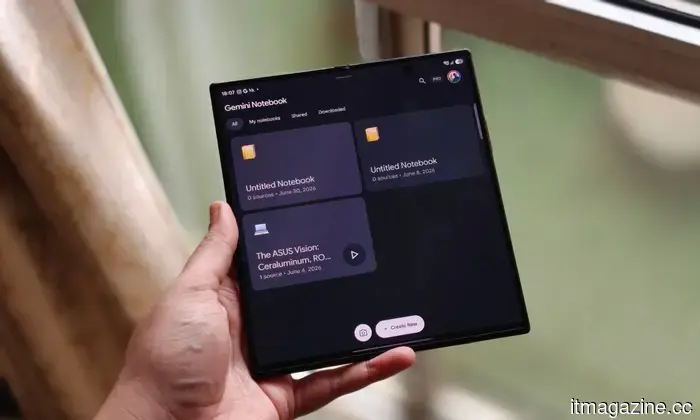
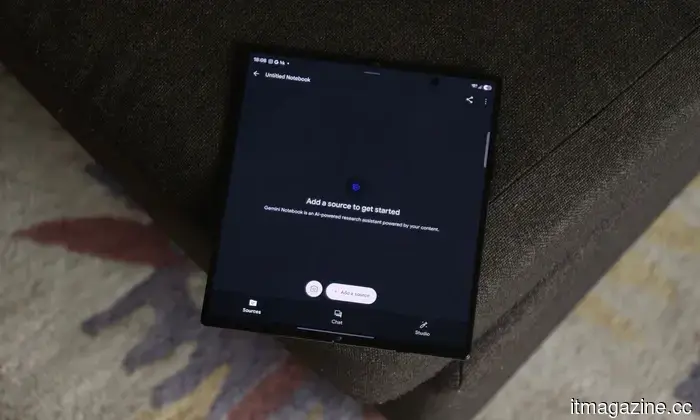
Interestingly, on the surface, nothing has changed. You still have the same interface, tools, and experience you’d encounter on any other Android device. Yet, the moment you unfold the Galaxy Z Fold 8 Ultra, everything seems different. Rather than trying to compress an entire workspace onto a tall, narrow screen, the app suddenly has room to expand. My notebooks often start similarly. I upload several research papers, incorporate a few web articles, add in collected screenshots, and sometimes request Gemini to find additional sources. With a standard phone, this usually involves a lot of scrolling to recall what I've already uploaded, but on the Fold, I can actually see all my materials at once. My source material remains open, Gemini’s responses accompany it, and the key points I want to remember are visible simultaneously. This allows me to read through multiple sources and ask follow-up questions without losing momentum.
I also didn’t anticipate Samsung’s multitasking becoming such an integral part of my workflow. When I discover an interesting article in Chrome, a screenshot in Gallery, a PDF in Files, or notes from other apps, I keep both apps side by side and easily drag everything into Gemini Notebook. This process is quick, feels entirely natural, and switching back to my previous method now seems unnecessarily slow. One feature I frequently use is Audio Overviews. I enjoyed them before switching to the Fold, but creating them on the larger display is oddly satisfying. Watching the podcast-style animation stretch across the screen makes the entire experience feel more vibrant. Then the conversation begins, reminding me why I use this feature so often. The AI hosts don’t sound like they’re simply reading from a document. They interact, interrupt each other, and explain ideas in a way that feels incredibly human. Listening to lengthy research summaries has transformed into something I genuinely enjoy instead of a task I endure.
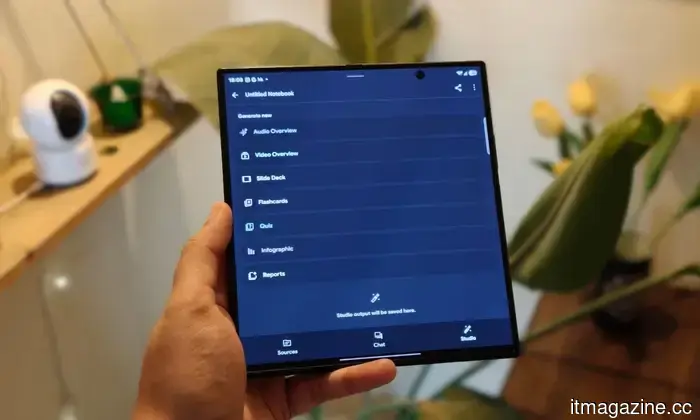
The same holds true for Flashcards and Video Overviews. On a regular phone, I often find myself navigating between various sections of the notebook to stay on track. With the Galaxy Z Fold 8 Ultra, everything remains consolidated. I spend less time managing windows and more time actually learning. Along the way, I noticed something unexpected: I wasn’t reaching for my laptop nearly as frequently. This isn’t because the Fold replaces a computer in all situations, but because it manages so much of my daily research that I don’t feel the need to switch devices anymore.
Now I understand why it’s pre-installed.
Initially, when I realized Gemini Notebook was pre-installed on the Galaxy Z Fold 8 and Galaxy Z Fold 8 Ultra, I didn’t give it much thought. However, after daily use, the decision makes complete sense. Google is clearly aiming to make Gemini a more significant component of the Android experience, and Samsung’s foldables are likely the best platform to showcase that vision right now. The larger display allows Gemini Notebook the space it needs, transforming it into a genuine productivity tool that can be comfortably used for extended periods. Samsung also provides an added incentive — purchasing the Galaxy Z Fold 8 or Galaxy Z Fold 8 Ultra includes a six-month trial that unlocks higher Gemini generation limits and more extensive source caps. For those who use Notebook for studying, work, or research, it proves to be a genuinely beneficial bonus instead of just another free trial to forget about.
More significantly, this setup has altered my working approach. Whether I'm gathering research, dragging in web clips, or listening to Audio Overviews while making notes, I can efficiently do everything on the larger display of the Fold. I no longer feel as though I'm trying to impose desktop-style work onto a phone. Instead, it feels like the phone has finally adjusted to how I truly work. That’s probably the highest praise I can offer Gemini Notebook on the Galaxy Z Fold 8 Ultra. After a week of using it this way, opening Gemini Notebook on a standard slab phone feels akin to trying to work through a keyhole. You can certainly accomplish the
Other articles
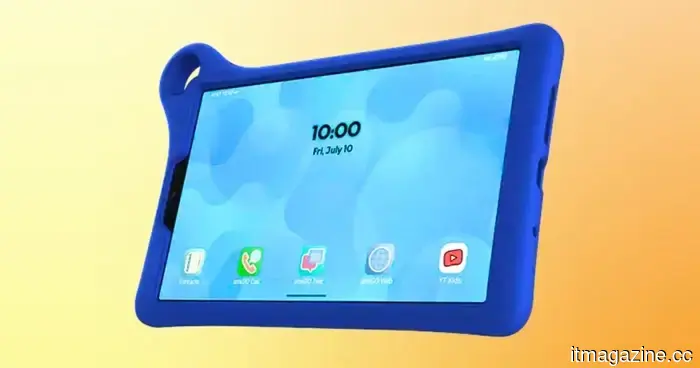 AT&T has just provided parents with a children's tablet that allows them to keep their iPad.
AT&T's latest amiGO Jr. Tab 2 features 5G connectivity, an expanded anti-glare screen, and includes a stylus designed for children.
AT&T has just provided parents with a children's tablet that allows them to keep their iPad.
AT&T's latest amiGO Jr. Tab 2 features 5G connectivity, an expanded anti-glare screen, and includes a stylus designed for children.
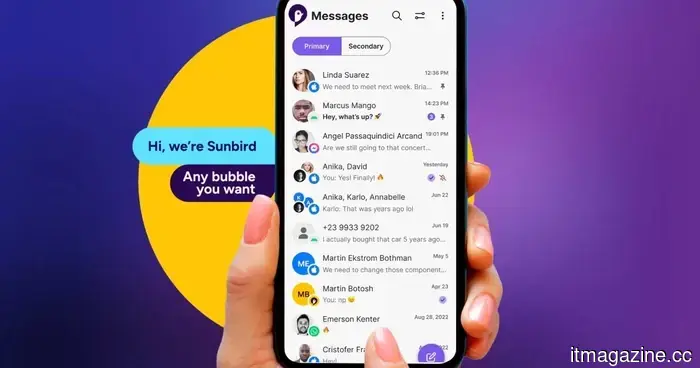 Sunbird reintroduces its iMessage app for Android, three years following a privacy controversy that led to its closure.
Sunbird Messaging is making a comeback on Android following its shutdown in 2023, introducing encryption improvements, a priority inbox, and an AI assistant set to launch later this year.
Sunbird reintroduces its iMessage app for Android, three years following a privacy controversy that led to its closure.
Sunbird Messaging is making a comeback on Android following its shutdown in 2023, introducing encryption improvements, a priority inbox, and an AI assistant set to launch later this year.
 Asus and Gigabyte have increased the price of your upcoming RTX 50 GPU.
Asus and Gigabyte have announced new price increases on RTX 50-series and Radeon graphics cards, and the situation is looking bleak.
Asus and Gigabyte have increased the price of your upcoming RTX 50 GPU.
Asus and Gigabyte have announced new price increases on RTX 50-series and Radeon graphics cards, and the situation is looking bleak.
 SpaceX aims to compete with Verizon, AT&T, and T-Mobile by launching its own mobile network.
SpaceX has announced intentions to establish a comprehensive mobile network utilizing EchoStar spectrum and rooftop base stations, with the goal of directly competing with AT&T, Verizon, and T-Mobile by the end of next year.
SpaceX aims to compete with Verizon, AT&T, and T-Mobile by launching its own mobile network.
SpaceX has announced intentions to establish a comprehensive mobile network utilizing EchoStar spectrum and rooftop base stations, with the goal of directly competing with AT&T, Verizon, and T-Mobile by the end of next year.
 The Interactive Storytime feature of Google Home makes me curious about who really requested this.
The newest update for Google Home allows families to collaboratively create interactive bedtime stories using Gemini, and it also broadens camera compatibility.
The Interactive Storytime feature of Google Home makes me curious about who really requested this.
The newest update for Google Home allows families to collaboratively create interactive bedtime stories using Gemini, and it also broadens camera compatibility.
 Huawei created an incredibly sleek laptop that is 35% lighter than the MacBook Air. Unfortunately, it’s not a necessity for you.
Huawei's newest MateBook incorporates a 14.2-inch OLED touchscreen and a 54Wh battery within a 798-gram frame, featuring a privacy display for use in public settings.
Huawei created an incredibly sleek laptop that is 35% lighter than the MacBook Air. Unfortunately, it’s not a necessity for you.
Huawei's newest MateBook incorporates a 14.2-inch OLED touchscreen and a 54Wh battery within a 798-gram frame, featuring a privacy display for use in public settings.
Having spent a week with the Gemini Notebook on my Galaxy Z Fold 8 Ultra, I can't envision using it on a flat phone.
I already found Gemini Notebook to be fantastic — that was until I used it on a foldable device. Now, I can't envision using it any other way.