
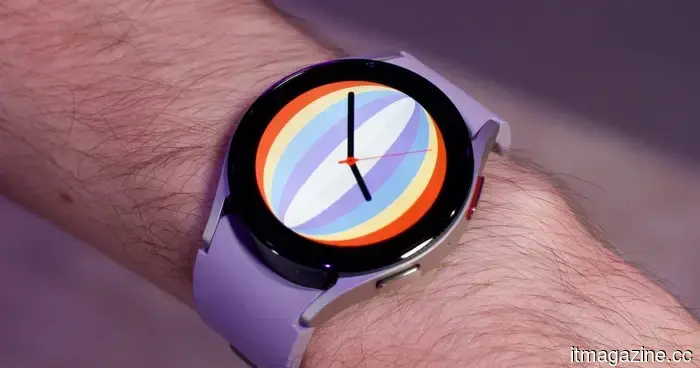
A more affordable Galaxy Watch with a battery life exceeding a week might be in development.
Samsung appears to be working on an RTOS smartwatch with reduced hardware costs.
Recently, Samsung introduced its new premium smartwatches, including the Galaxy Watch 9 series and the flagship Galaxy Watch Ultra 2, both of which come with steep price points. However, Samsung may be gearing up to offer a more budget-friendly option.
SamMobile discovered references within the Galaxy Wearable app indicating the development of a new smartwatch codenamed Galaxy Aero. Notably, the code refers to it as “galaxy_rtos_watch,” implying that it might operate on a real-time operating system rather than Google’s Wear OS.
What is RTOS, and why might Samsung opt for it?
RTOS stands for Real-Time Operating System. It is a streamlined platform built to execute a specific set of tasks efficiently while consuming significantly less processing power and memory compared to Wear OS. For a smartwatch, these tasks might encompass timekeeping, heart-rate monitoring, step tracking, sleep analysis, and basic notifications. RTOS can function on low-power microcontrollers that utilize much less RAM than the application processors necessary for Wear OS.
The simpler hardware can also lead to lower manufacturing costs for these watches. Samsung wouldn't require the same high-end processor, substantial memory, or large battery found in its premium Wear OS models, thereby enhancing its competitiveness against budget-friendly timepieces and fitness trackers from brands such as Amazfit and Motorola. Additionally, reduced power consumption results in extended battery life, with RTOS watches often lasting a week or more between charges, while most Wear OS devices need daily or bi-daily charging.
Extended battery life comes with trade-offs
Wear OS operates more like a miniature Android smartphone, supporting downloadable applications, Google Maps, Wallet, Gemini, and a specific section of the Google Play Store. A Galaxy watch powered by RTOS would likely rely on Samsung's own health applications, watch faces, and inbuilt functionalities. Support for third-party applications might be limited, and notifications could offer fewer ways to respond or interact.
This wouldn’t be Samsung's first wearable utilizing RTOS. The Galaxy Fit 3 employs FreeRTOS and manages fitness tracking, sleep monitoring, media controls, and basic notifications using only 16MB of memory. It includes a small 208mAh battery capable of lasting nearly two weeks. The Galaxy Aero could provide a comparable software experience, essentially functioning as a watch-styled fitness band unless Samsung is working on something more sophisticated for this yet-to-be-announced smartwatch.


Other articles
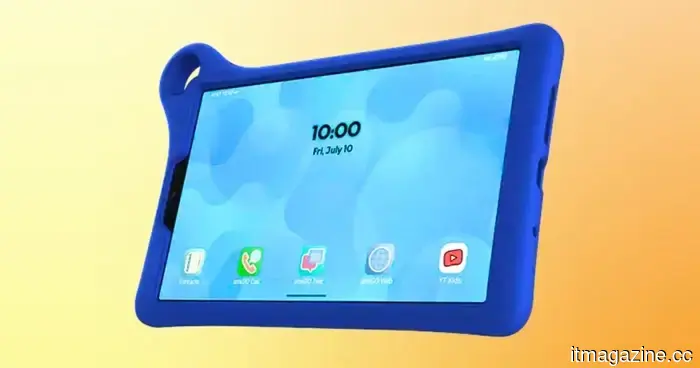 AT&T has just provided parents with a children's tablet that allows them to keep their iPad.
AT&T's latest amiGO Jr. Tab 2 features 5G connectivity, an expanded anti-glare screen, and includes a stylus designed for children.
AT&T has just provided parents with a children's tablet that allows them to keep their iPad.
AT&T's latest amiGO Jr. Tab 2 features 5G connectivity, an expanded anti-glare screen, and includes a stylus designed for children.
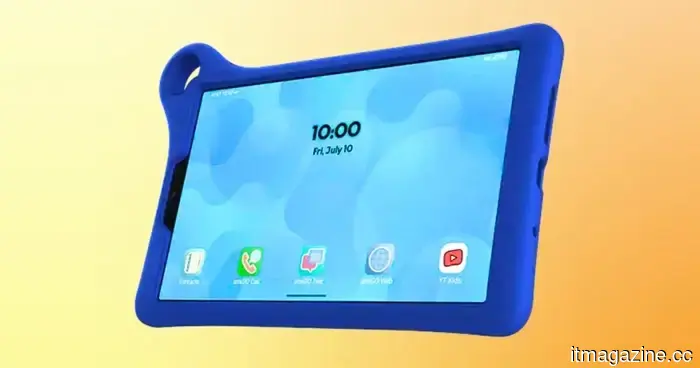 AT&T has just provided parents with a children's tablet that allows them to keep their iPad intact.
AT&T's latest amiGO Jr. Tab 2 features 5G connectivity, a bigger anti-glare screen, and includes a stylus designed for children.
AT&T has just provided parents with a children's tablet that allows them to keep their iPad intact.
AT&T's latest amiGO Jr. Tab 2 features 5G connectivity, a bigger anti-glare screen, and includes a stylus designed for children.
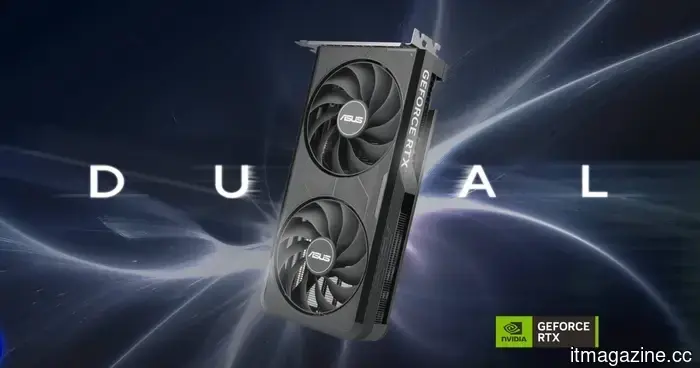 Asus and Gigabyte have increased the price of your upcoming RTX 50 GPU.
Asus and Gigabyte have announced new price increases on RTX 50-series and Radeon graphics cards, and the situation is looking bleak.
Asus and Gigabyte have increased the price of your upcoming RTX 50 GPU.
Asus and Gigabyte have announced new price increases on RTX 50-series and Radeon graphics cards, and the situation is looking bleak.
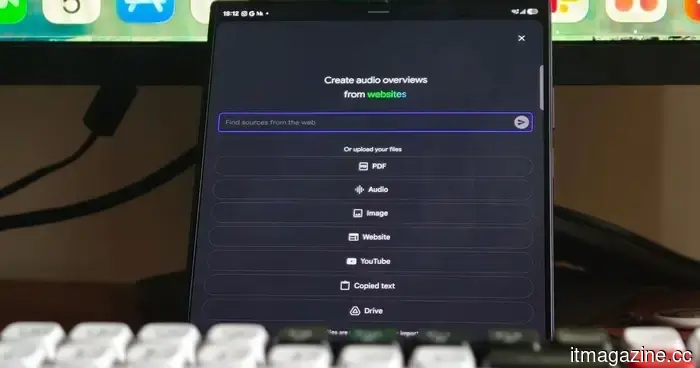 Having spent a week with the Gemini Notebook on my Galaxy Z Fold 8 Ultra, I can't envision using it on a flat phone.
I already found Gemini Notebook to be fantastic — that was until I used it on a foldable device. Now, I can't envision using it any other way.
Having spent a week with the Gemini Notebook on my Galaxy Z Fold 8 Ultra, I can't envision using it on a flat phone.
I already found Gemini Notebook to be fantastic — that was until I used it on a foldable device. Now, I can't envision using it any other way.
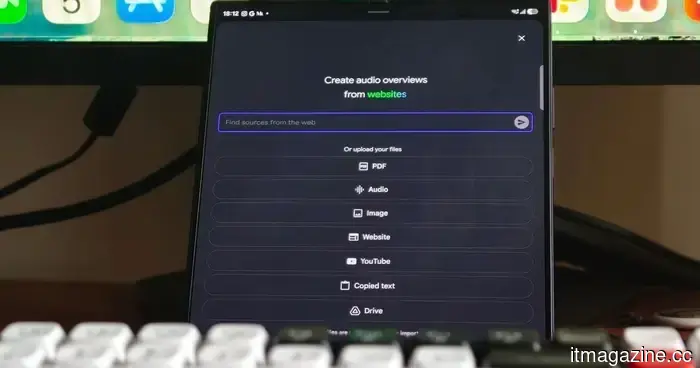 After spending a week using Gemini Notebook on my Galaxy Z Fold 8 Ultra, I can't envision using it on a flat phone.
I already thought Gemini Notebook was fantastic — but after using it on a foldable, I can't imagine using it any other way.
After spending a week using Gemini Notebook on my Galaxy Z Fold 8 Ultra, I can't envision using it on a flat phone.
I already thought Gemini Notebook was fantastic — but after using it on a foldable, I can't imagine using it any other way.
 Huawei has created an incredibly slim laptop that is 35% lighter than the MacBook Air. Unfortunately, it seems you have no use for it.
Huawei's newest MateBook incorporates a 14.2-inch OLED touchscreen and a 54Wh battery within a 798-gram body, while also featuring a privacy display for public use.
Huawei has created an incredibly slim laptop that is 35% lighter than the MacBook Air. Unfortunately, it seems you have no use for it.
Huawei's newest MateBook incorporates a 14.2-inch OLED touchscreen and a 54Wh battery within a 798-gram body, while also featuring a privacy display for public use.
A more affordable Galaxy Watch with a battery life exceeding a week might be in development.
References discovered within the Galaxy Wearable app suggest a new Samsung smartwatch referred to as Galaxy Aero, which may operate on RTOS instead of Wear OS and could have a battery life exceeding a week between charges.