
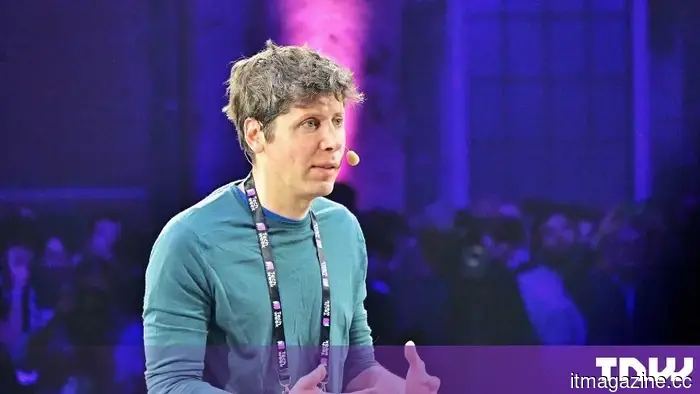
OpenAI brings the Apple lawsuit into the public eye, while Apple intensifies its response.
The legal dispute between Apple and OpenAI became both public and personal this week. OpenAI released a blog post titled “Apple is getting this wrong,” in which it shared private messages and emails to challenge Apple’s trade-secrets lawsuit. On the same day, Apple escalated the legal battle. Two former collaborators have now taken their arguments into the public arena.
Apple initiated the lawsuit in July, claiming that OpenAI benefited from trade secrets disclosed by former Apple employees. OpenAI's post characterized the lawsuit as “careless, aggressive and oddly personal,” and rejected the main allegation. “We do not possess, nor do we desire, any of their trade secrets,” it stated.
OpenAI's strongest counter was concerning a mistake. Apple claimed it had contacted OpenAI in February without receiving a response. However, OpenAI provided a different account. It stated that Apple's outside attorney mistakenly emailed OpenAI's general counsel and erroneously referenced a phone call that never took place. The lawyer later recognized that the message was intended for another former Apple employee with the last name Wang. OpenAI framed the error as Apple “confusing two Asian last names,” explaining that it only became apparent when OpenAI pointed it out.
The emails, which also feature in Apple’s own court documents, show the lawyer later issuing an apology. OpenAI noted that Apple’s counsel had described its efforts as “resolving any issues.” This was followed by approximately five months of silence before the lawsuit was filed.
The larger issue involves Chang Liu, a former iPhone engineer who left Apple in January. Apple alleges that he accessed confidential files post-departure. OpenAI, however, published iMessages that it claims support its position, indicating that Apple employees approached Liu for assistance in locating files after his termination.
These messages detail airdrops and an iCloud account that was still logged in. One message features an Apple employee joking about hitting “the sad button in workday” to mark the departure. OpenAI attributes the confusion to Apple’s own procedures, arguing that departing employees retain “residual access” due to Apple's failure to terminate their access upon leaving. Furthermore, Apple has accused OpenAI’s chief hardware officer, Tang Tan—a 24-year Apple veteran—of soliciting secret information. OpenAI countered that Tan has consistently instructed his team to refrain from accessing competitors’ confidential data.
These messages serve as a defense rather than a conclusive outcome. They are OpenAI’s carefully curated selection, heavily redacted, and do not resolve the matter on their own. However, they provide a rare glimpse into a case that both companies would typically handle privately.
Apple remained firm in its stance. On Monday, it requested a federal judge for a preliminary injunction to prevent OpenAI, Liu, and Tan from utilizing or revealing its purported secrets during the case. “If Apple’s trade secrets are utilized and disseminated across OpenAI or incorporated into its products and operations, the resulting damage cannot be reversed,” its lawyers argued.
Additionally, Apple filed a second motion for expedited discovery and depositions. It claimed its investigation had uncovered 11 more former employees who might be implicated. One purportedly met Liu prior to a colleague's OpenAI interview to discuss unreleased products, while another allegedly took screenshots of confidential documents before interviewing at OpenAI.
OpenAI dismissed the injunction as “based on false information and completely unnecessary,” reiterating that it does not seek any of Apple’s secrets. Apple did not provide a comment in response to requests.
The underlying issue is a partnership that has soured. OpenAI’s technology is integral to Apple Intelligence and Siri, and the two had been close collaborators. The relationship deteriorated after OpenAI acquired Jony Ive’s design studio, io, for $6.5 billion, hiring over 400 former Apple employees to develop its own devices. Meanwhile, Apple turned to Google to enhance Siri.
The public nature of this dispute is noteworthy. Companies embroiled in legal disputes rarely share evidence while the case is ongoing, and OpenAI's blog post appears to be an attempt to appeal to public opinion rather than the judiciary. It does not alter the situation before the judge but allows OpenAI to narrate its version of events while Apple maintains its usual silence.
Time is of the essence. OpenAI must submit its formal response by August 17, and the judge will hear the injunction request on October 1 in a California federal court. Until then, two of the most valuable firms in the tech industry are engaging publicly, with OpenAI’s hardware ambitions at stake.
Other articles
 Deel purchases deepfake-detection company Clarity as issues with fake hiring escalate.
Deel has acquired the Tel Aviv startup Clarity for as much as $50 million, marking its 15th acquisition. This move integrates ongoing identity verification into the hiring process as the company surpasses $1 billion in annual recurring revenue (ARR).
Deel purchases deepfake-detection company Clarity as issues with fake hiring escalate.
Deel has acquired the Tel Aviv startup Clarity for as much as $50 million, marking its 15th acquisition. This move integrates ongoing identity verification into the hiring process as the company surpasses $1 billion in annual recurring revenue (ARR).
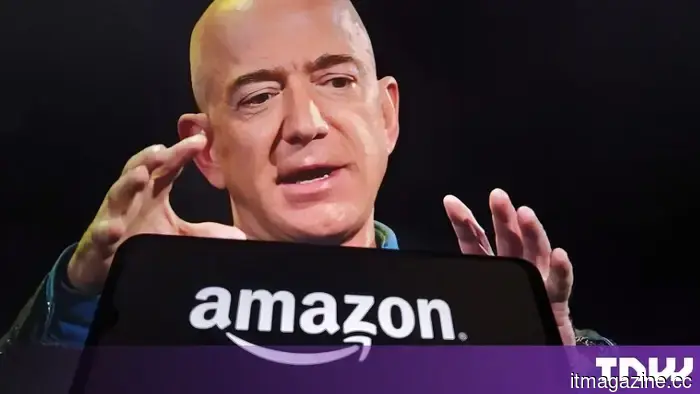 Jeff Bezos submits a request to sell approximately $4 billion worth of Amazon shares following the stock reaching a $3 trillion valuation.
Bezos submitted a request to sell 15 million shares of Amazon, valued at approximately $4 billion, as part of a pre-arranged trading strategy, just days after the company reached a market capitalization of $3 trillion.
Jeff Bezos submits a request to sell approximately $4 billion worth of Amazon shares following the stock reaching a $3 trillion valuation.
Bezos submitted a request to sell 15 million shares of Amazon, valued at approximately $4 billion, as part of a pre-arranged trading strategy, just days after the company reached a market capitalization of $3 trillion.
 Anthropic appoints head of global affairs to spearhead AI diplomacy amid rising tensions with Trump.
Anthropic appointed Mariano-Florentino Cuellar as its inaugural chief global affairs officer as the AI firm addresses a Pentagon blacklist and disputes over export controls.
Anthropic appoints head of global affairs to spearhead AI diplomacy amid rising tensions with Trump.
Anthropic appointed Mariano-Florentino Cuellar as its inaugural chief global affairs officer as the AI firm addresses a Pentagon blacklist and disputes over export controls.
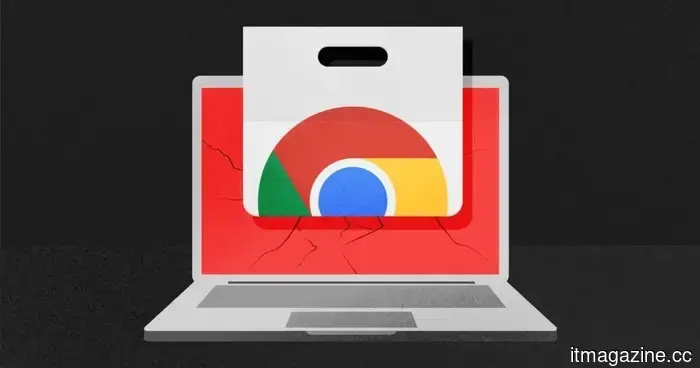 Chrome seeks additional reviews for extensions, but positive ratings alone won’t prevent malware.
Chrome might soon simplify the process of locating extension reviews, yet high ratings could still conceal harmful actions that might emerge from future updates or compromised listings.
Chrome seeks additional reviews for extensions, but positive ratings alone won’t prevent malware.
Chrome might soon simplify the process of locating extension reviews, yet high ratings could still conceal harmful actions that might emerge from future updates or compromised listings.
 A survey reveals that the notion of a "student AI revolt" is largely a myth.
A Kogod survey conducted over three years reveals that the use of AI in college has transitioned from being a novelty to a commonplace practice. Students are not dismissing AI; instead, they are eager to learn how to use it effectively.
A survey reveals that the notion of a "student AI revolt" is largely a myth.
A Kogod survey conducted over three years reveals that the use of AI in college has transitioned from being a novelty to a commonplace practice. Students are not dismissing AI; instead, they are eager to learn how to use it effectively.
 £14k was withdrawn to purchase Claude credits, and the bank approved the transaction.
Fraudsters utilized a Metro Bank customer's card to make purchases totaling £14,244 for Claude credits. The bank identified the initial transaction as suspicious but subsequently processed over £14,000 in additional charges.
£14k was withdrawn to purchase Claude credits, and the bank approved the transaction.
Fraudsters utilized a Metro Bank customer's card to make purchases totaling £14,244 for Claude credits. The bank identified the initial transaction as suspicious but subsequently processed over £14,000 in additional charges.
OpenAI brings the Apple lawsuit into the public eye, while Apple intensifies its response.
OpenAI revealed private messages to counter Apple's trade-secrets lawsuit. On the same day, Apple requested an injunction and indicated that 11 additional former employees might be implicated.