
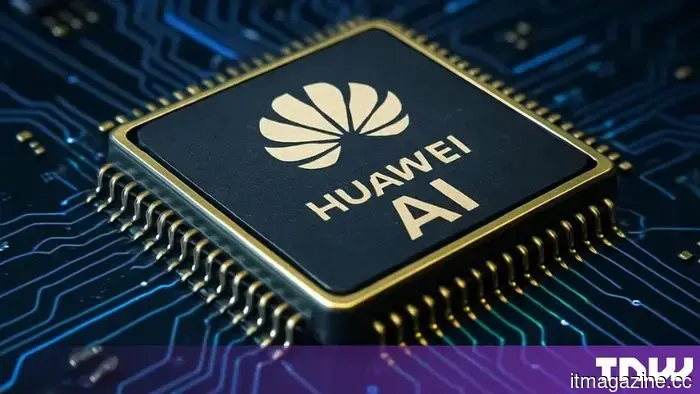
A Huawei scientist claims that Nvidia will soon encounter similar challenges with chip development.
A leading scientist from a Chinese company has cautioned that Nvidia may soon hit a physical limit on chip performance, an issue that Huawei claims is transforming the entire industry, according to Bloomberg. This argument is less a boast and more a prediction about the future direction of technology. If all chipmakers are approaching a significant ceiling on silicon speed, Nvidia’s substantial market advantage could be less sustainable than its stock price suggests.
This assertion builds upon Huawei’s redefinition of progress in chip development. He Tingbo, Huawei’s chip chief, sometimes referred to as the ‘chip queen,’ introduced a Tau Scaling Law, which evaluates advancements based on the speed at which signals travel through a circuit rather than focusing solely on reducing transistor size.
This redefinition aims to ensure survival amid sanctions. Isolated from the latest lithography technology, Huawei has a vested interest in arguing that the traditional path of ever-smaller transistors is becoming constrained for everyone, not just for those barred from accessing superior tools. Their solution involves a vertical stacking design known as LogicFolding, which they claim significantly increases transistor density and achieves advanced performance without the cutting-edge equipment they cannot procure.
However, challenges exist. Stacking chips in this manner tends to concentrate heat, puts pressure on design software, and raises difficult manufacturing yield concerns, aspects that Huawei has yet to demonstrate it can resolve on a large scale. Nvidia, however, does not accept this premise. Jensen Huang has acknowledged the folding method as a breakthrough while asserting that it is not a threat, cautioning that a Chinese competitor utilizing Huawei chips would produce a ‘horrible outcome’ for American technology.
This warning arises from a market influenced by policy. U.S. export restrictions have pushed China's chip sector away from Nvidia's GPUs and toward custom ASICs and domestic components, precisely amplifying the separation Huawei describes.
Currently, the gap remains wide. U.S. evaluations estimate Nvidia is several years and multiples of performance ahead of Huawei, a lead that the physical-limit argument aims to gradually diminish rather than change abruptly. A narrower version of this contention exists: advancements in AI chips now depend heavily on memory bandwidth alongside raw processing power, and Huawei is racing to develop its high-bandwidth memory to bridge that particular gap.
The messaging from Huawei is intentional. Beijing has showcased Huawei’s secret chip lab on national television, and company executives have embraced the narrative that Chinese engineering can navigate around American restrictions.
The stakes are significant for both parties. China is one of Nvidia’s largest potential markets, and Huang has indicated that his company has mainly ceded it to Huawei due to export controls. Huawei’s assertions warrant both scrutiny and attention; the company has strong motives to promote a future where its limitations apply to all, and its most ambitious projections extend to 2031, making them difficult to verify at present.
Whether the anticipated barrier manifests per Huawei’s timeline remains uncertain. If Nvidia continues to achieve performance enhancements through packaging, software, and memory, the limit that Huawei expects could remain well beyond reach.
The timing of these discussions is not coincidental either. Establishing a common limit serves to reset expectations while Huawei remains behind, transforming a gap it has not yet bridged into a race that it claims no one can continuously win.
Ultimately, the disagreement centers on who will shape the future of computing. If the benefits of reducing transistor size are truly diminishing, the advantage will belong to those who can innovatively navigate around this limit. In conclusion, it is a bet on time, with Huawei wagering that physics will eventually level the playing field, and that when it does, the company that spent the years of sanctions developing an alternative route will be the one still progressing.
Otros artículos
 Volvo's rumored EX50 might be the affordable surprise that no one anticipated.
Volvo might be preparing to introduce a new electric vehicle: the EX50, which is expected to be a larger and more affordable alternative to the EX40.
Volvo's rumored EX50 might be the affordable surprise that no one anticipated.
Volvo might be preparing to introduce a new electric vehicle: the EX50, which is expected to be a larger and more affordable alternative to the EX40.
 Grab significant savings on DJI creator equipment with these deals from AliExpress this August.
Are you considering enhancing your content creation toolkit? The August promotion on AliExpress features discounts along with exclusive Digital Trends coupon codes, offering significant savings on DJI's Osmo range.
Grab significant savings on DJI creator equipment with these deals from AliExpress this August.
Are you considering enhancing your content creation toolkit? The August promotion on AliExpress features discounts along with exclusive Digital Trends coupon codes, offering significant savings on DJI's Osmo range.
 The US has completed the process of establishing voluntary tests to assess the hacking capabilities of AI models.
The White House has completed a voluntary framework to evaluate the hacking abilities of advanced AI models in the US, just weeks after unauthorized agents infiltrated companies.
The US has completed the process of establishing voluntary tests to assess the hacking capabilities of AI models.
The White House has completed a voluntary framework to evaluate the hacking abilities of advanced AI models in the US, just weeks after unauthorized agents infiltrated companies.
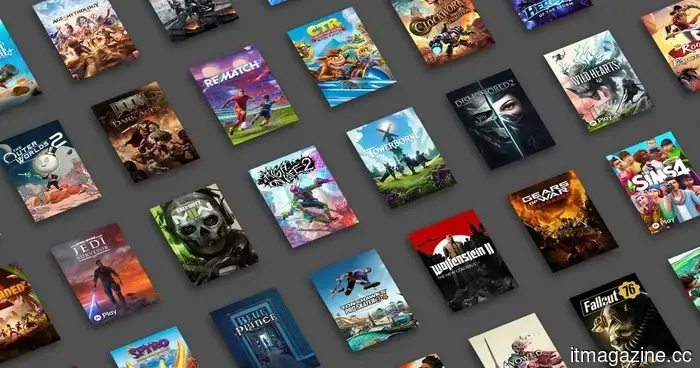 Xbox might have an unexpectedly clever strategy for preserving the existence of physical games.
A leaked roadmap from Microsoft reveals that a Disc-to-Digital rollout is planned for August, with an expanded original Xbox game catalog for PC set for October, and Xbox 360 support expected to start in 2027.
Xbox might have an unexpectedly clever strategy for preserving the existence of physical games.
A leaked roadmap from Microsoft reveals that a Disc-to-Digital rollout is planned for August, with an expanded original Xbox game catalog for PC set for October, and Xbox 360 support expected to start in 2027.
 Telegram disappears from the App Store, only to later announce its return.
Telegram was temporarily removed from Apple's iOS App Store globally before it was announced that it had been restored, though the reason for its disappearance remains unverified.
Telegram disappears from the App Store, only to later announce its return.
Telegram was temporarily removed from Apple's iOS App Store globally before it was announced that it had been restored, though the reason for its disappearance remains unverified.
 Google is once again facing challenges as the Pixel 11 Pro leaks emerge yet again.
New leaks regarding the Pixel 11 Pro showcase a sleeker matte design, improved zoom capabilities, and additional insights about Google's upcoming flagship device.
Google is once again facing challenges as the Pixel 11 Pro leaks emerge yet again.
New leaks regarding the Pixel 11 Pro showcase a sleeker matte design, improved zoom capabilities, and additional insights about Google's upcoming flagship device.
A Huawei scientist claims that Nvidia will soon encounter similar challenges with chip development.
A leading scientist from Huawei cautions that Nvidia will soon encounter a physical limit regarding chip performance, a boundary that Huawei claims is transforming the entire industry.