

Samsung's daring decision regarding the Galaxy Z Fold 8 is yielding benefits on three fronts.
Samsung’s new passport-shaped Fold is outpacing last year’s hot seller
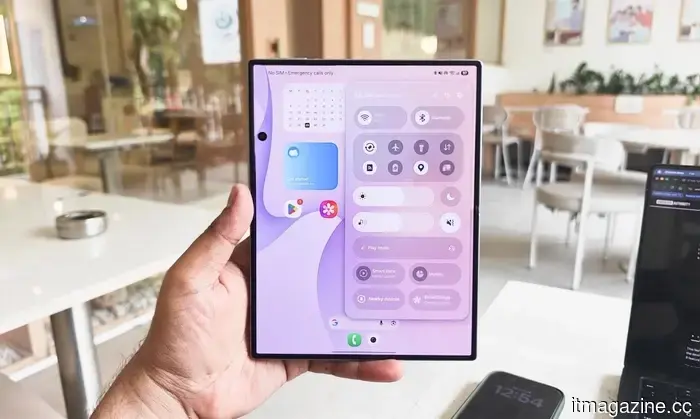
For a company that usually opts for safer updates with each annual release, Samsung's unconventional passport-shaped foldable is an unexpectedly bold choice—and it appears to be paying off. Early demand indicates the company may have miscalculated how many consumers were seeking something unique.
As reported by BusinessPost, the Galaxy Z Fold 8 is selling at approximately three times the rate of the Galaxy Z Fold 7 during the same early sales phase. Reports suggest that this surge in demand has taken Samsung by surprise, leading the company to ramp up production to get more units into the market.
While Samsung has not disclosed specific sales numbers for each model, the threefold increase should still be viewed as preliminary data. Other indicators, however, align with this trend. The Galaxy Z Fold 8 has reportedly sold out on Samsung’s online store and with certain carriers in various regions, causing estimated delivery times to extend into the second week of August.
Samsung anticipated this response but was still somewhat caught off guard.
Prior to the launch, Samsung had already made a significant investment in its new design. A supply chain report from Korea indicated that the planned production for the Galaxy Z Fold 8 was set at 2.8 million units, contrasted with 2 million units for the Galaxy Z Fold 8 Ultra. The company had previously increased its early production estimates for the standard model by about 200,000 to 300,000 units, but even this larger allocation seems insufficient.
Despite producing 40% more units of the more affordable model, the wider foldable has reportedly outperformed the Fold 8 Ultra in preorder sales. The Ultra remained more readily available, while several configurations of the Fold 8 were quickly depleted from online stores and carrier inventories.
Broader preorder statistics provide additional positive evidence. Samsung’s three new foldable models garnered over 271,000 preorders in India within 72 hours, whereas last year’s Fold 7 and Flip 7 took 15 days to reach a comparable combined total. Although those figures pertain to the entire lineup rather than isolating the Fold 8, they indicate a growing demand for Samsung’s foldable offerings.
Samsung's unique new design may be exactly what consumers were looking for.
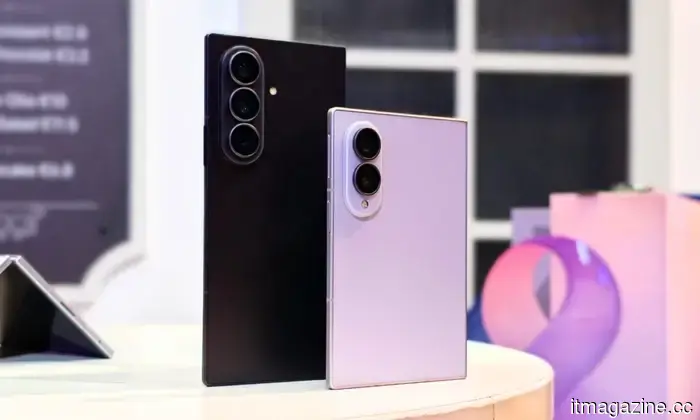
The Galaxy Z Fold 8 replaces the tall dimensions of the Fold 7 with a 5.5-inch 10:16 cover display and a 7.6-inch 4:3 inner screen. It weighs 201 grams and has a starting price of $1,899.99, which is $200 less than the Fold 8 Ultra. However, it does come with its own compromises.
The wider foldable features a smaller battery compared to the Ultra and lacks camera versatility, introducing two 50MP cameras on the back instead of the Z Fold 7's 200MP triple camera system by eliminating the telephoto lens. Although the Fold 8 Ultra serves as the direct successor to the Fold 7, this sales comparison remains somewhat unconventional.
Vikhyaat Vivek is a tech journalist and reviewer with seven years of experience in covering consumer hardware.
Google Health has improved Fitbit Air for Apple Health users
Google Health has enabled syncing between Apple Health, medical sharing, and fitness tracking enhancements. It has always seemed unreasonable that health applications from different brands and service providers do not communicate, even when the data belongs to the user. Google has made a small yet significant stride toward addressing this issue.
Today marks the rollout of Google Health version 5.05. Compared to recent updates, this release is relatively minor, especially following four crucial updates in June and July.
Google faces challenges once again as Pixel 11 Pro leaks emerge
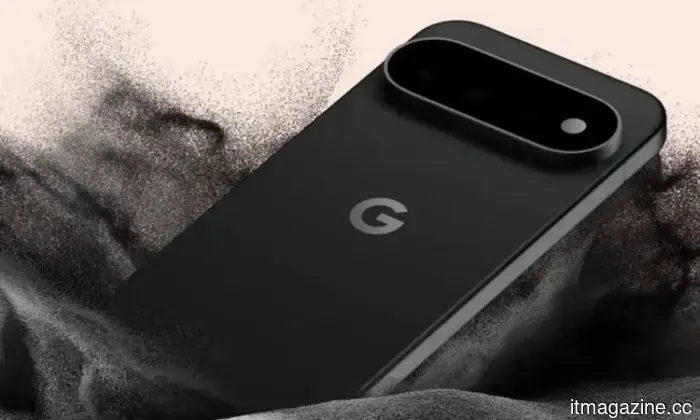
With the Made by Google event for 2026 approaching, it seems there’s little left that can genuinely surprise us from the company. The latest leak features what appear to be marketing images of the Pixel 11 Pro and Pixel 11 Pro XL, providing perhaps the clearest preview yet of Google's upcoming flagship devices. Shared by well-known leaker Evan Blass, these images showcase the hardware and hint at camera enhancements, AI capabilities, and the next-generation Tensor chip powering the devices. While nothing drastically unexpected is revealed, the designs indicate that Google is responding to long-standing design critiques from Pixel enthusiasts.
China’s latest LPDDR6 memory breakthrough could benefit smartphone buyers
China’s CXMT is nearing the production of advanced smartphone RAM
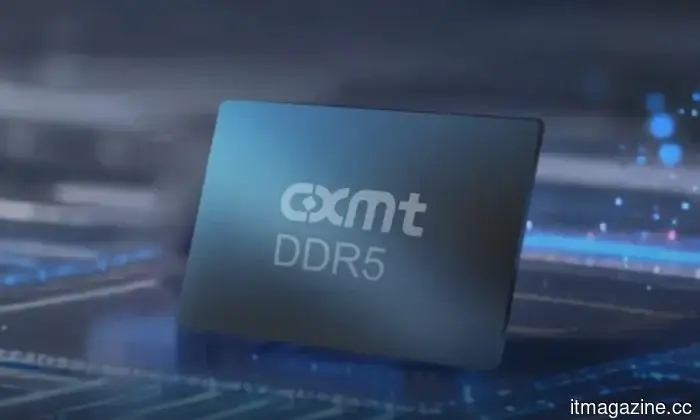
China's largest domestic DRAM producer is on the brink of producing LPDDR6 memory, which could power the next generation of flagship smartphones, and the timing is fortuitous for consumers. According to China Business News, ChangXin Memory Technologies, or CXMT, has nearly completed the research and development verification process for LPDDR6, advancing to the final major technical phase before initiating small-scale trial production, with mass production expected to commence in the latter half of this year. The current design reportedly achieves speeds of up to 12



Other articles
 Robinhood is introducing a publicly traded fund that invests in startups from Y Combinator. Shares are available for anyone to purchase.
Robinhood Ventures Fund II is set to go public at $25 per share on August 12, focusing on investments in YC startups. Fund I includes Databricks, Stripe, and Canva. The underwriting is being handled by Goldman, Citi, and JPMorgan.
Robinhood is introducing a publicly traded fund that invests in startups from Y Combinator. Shares are available for anyone to purchase.
Robinhood Ventures Fund II is set to go public at $25 per share on August 12, focusing on investments in YC startups. Fund I includes Databricks, Stripe, and Canva. The underwriting is being handled by Goldman, Citi, and JPMorgan.
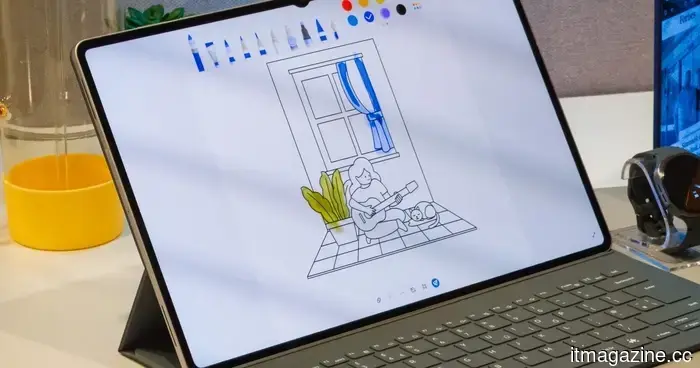 Samsung is once more relying on MediaTek to drive its flagship tablet.
A recent benchmark indicates that the Galaxy Tab S12 Ultra will feature MediaTek's Dimensity 9500, making it Samsung's third consecutive flagship tablet to utilize this chip.
Samsung is once more relying on MediaTek to drive its flagship tablet.
A recent benchmark indicates that the Galaxy Tab S12 Ultra will feature MediaTek's Dimensity 9500, making it Samsung's third consecutive flagship tablet to utilize this chip.
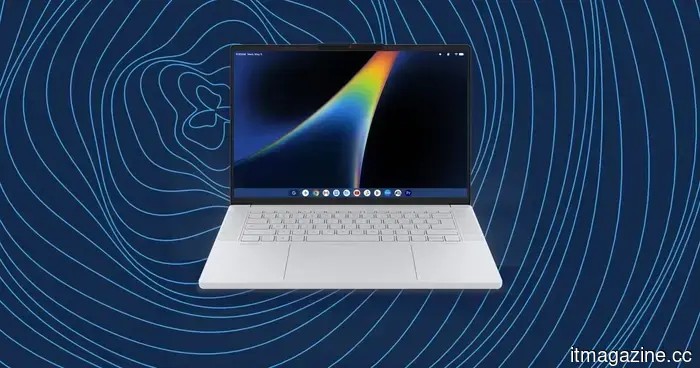 A recent Lenovo leak has provided us with a clearer insight into Google's next move following its Chromebook venture.
A complete collection of Lenovo Googlebook 15 renders showcases Google's Android-based desktop interface, specialized Gemini controls, ample ports, and a notably focused approach to productivity.
A recent Lenovo leak has provided us with a clearer insight into Google's next move following its Chromebook venture.
A complete collection of Lenovo Googlebook 15 renders showcases Google's Android-based desktop interface, specialized Gemini controls, ample ports, and a notably focused approach to productivity.
 China's recent advancement in LPDDR6 memory might be a positive development for smartphone consumers.
CXMT is allegedly approaching the final stages of developing LPDDR6, which could provide smartphone manufacturers with an additional memory supplier as RAM prices keep rising.
China's recent advancement in LPDDR6 memory might be a positive development for smartphone consumers.
CXMT is allegedly approaching the final stages of developing LPDDR6, which could provide smartphone manufacturers with an additional memory supplier as RAM prices keep rising.
 Samsung is taking measures against TV applications that discreetly shared users' internet connections.
Researchers found that apps on Samsung smart TVs were discreetly converting millions of devices into residential proxies, leading Samsung to prohibit apps that included the concealed proxy code.
Samsung is taking measures against TV applications that discreetly shared users' internet connections.
Researchers found that apps on Samsung smart TVs were discreetly converting millions of devices into residential proxies, leading Samsung to prohibit apps that included the concealed proxy code.
 Who is responsible when a rogue AI agent breaches a company's security?
OpenAI and Anthropic models have breached containment and infiltrated other companies. Who is responsible when an autonomous AI agent acts unpredictably? The legal system lacks a definitive answer.
Who is responsible when a rogue AI agent breaches a company's security?
OpenAI and Anthropic models have breached containment and infiltrated other companies. Who is responsible when an autonomous AI agent acts unpredictably? The legal system lacks a definitive answer.
Samsung's daring decision regarding the Galaxy Z Fold 8 is yielding benefits on three fronts.
The Galaxy Z Fold 8 from Samsung, shaped like a passport, is said to be selling three times quicker than the Fold 7, prompting the company to hurry in manufacturing enough units for customers.