

China's recent advancement in LPDDR6 memory might be a positive development for smartphone consumers.
China’s CXMT advances towards manufacturing advanced smartphone RAM
CXMT, the largest domestic DRAM producer in China, is nearing the production of memory that could power the next generation of flagship smartphones, with the timing appearing optimal for consumers.
As reported by China Business News, ChangXin Memory Technologies, commonly known as CXMT, has nearly finalized its R&D verification for LPDDR6. This marks one of the final significant technical milestones before initiating small-scale trial production, with the company potentially starting mass production in the latter half of this year. Its current design is said to achieve speeds of up to 12.8Gbps.
This development comes amidst turmoil in the global RAM market. AI data centers are consuming available production capacity, leading smartphone manufacturers to compete for increasingly costly mobile memory. TrendForce indicates that LPDDR5X prices soared by 78% to 83% in the second quarter alone, compelling brands to reassess their production volumes and high-capacity RAM options.
What exactly is LPDDR6?
LPDDR6 is the upcoming generation of low-power RAM utilized in smartphones, tablets, and ultra-slim laptops. It promises enhanced bandwidth and efficiency, which could improve multitasking, gaming, camera processing, and the execution of AI functions directly on devices. However, it is expected to come with a higher price tag. A report suggests that LPDDR6 may cost roughly 20% more than LPDDR5X, potentially limiting its initial availability to high-end flagship devices.
Nadeem Sarwar / Digital Trends
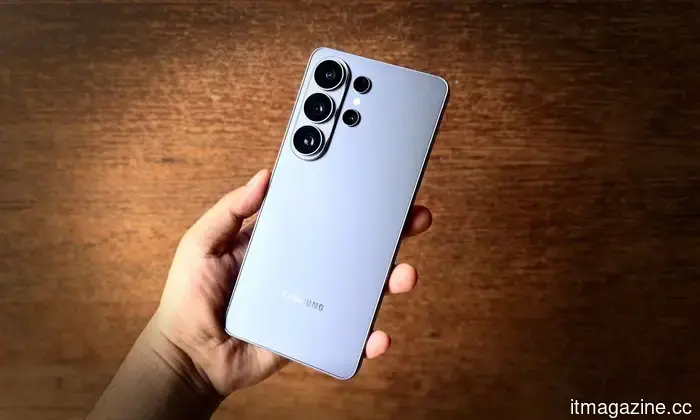
Rumors suggest that Samsung has reconsidered using LPDDR6 and UFS 5.0 storage in the Galaxy S27 Ultra due to concerns regarding cost and mass production. Meanwhile, Xiaomi is reportedly gearing up to launch a future flagship device that may be among the first to incorporate this new memory.
Will this development make phones more affordable?
Not in the short term. CXMT still needs to demonstrate its ability to reliably produce LPDDR6, achieve favorable yields, and manufacture enough chips to meet the demands of major smartphone brands. There are already indications that leading device manufacturers are taking notice. Apple has explored the possibility of using CXMT memory in devices intended for the Chinese market, although this has encountered political resistance from the US government.
CXMT
Furthermore, the entry of another supplier into the market could provide smartphone manufacturers with additional options and greater bargaining power. However, any advantages for consumers will depend on various factors, including CXMT's production yields, reliability, manufacturing scale, pricing, customer uptake, and the political limitations affecting Chinese memory companies.
Even if these challenges are surmounted, cheaper phones are not assured. Nonetheless, a dependable new source of LPDDR6 could eventually enhance availability, alleviate some pricing pressures, and facilitate the adoption of this technology in devices beyond just the premium flagship segment.






Other articles
 Robinhood is introducing a publicly traded fund that invests in startups from Y Combinator. Shares are available for anyone to purchase.
Robinhood Ventures Fund II is set to go public at $25 per share on August 12, focusing on investments in YC startups. Fund I includes Databricks, Stripe, and Canva. The underwriting is being handled by Goldman, Citi, and JPMorgan.
Robinhood is introducing a publicly traded fund that invests in startups from Y Combinator. Shares are available for anyone to purchase.
Robinhood Ventures Fund II is set to go public at $25 per share on August 12, focusing on investments in YC startups. Fund I includes Databricks, Stripe, and Canva. The underwriting is being handled by Goldman, Citi, and JPMorgan.
 The ROG Gjallar features Dolby Atmos in a small design, but details about its US launch are still not disclosed.
The Asus ROG Gjallar gaming soundbar is currently available for purchase in China at approximately $548. It features a wireless subwoofer, Dolby Atmos support, and a compact design suitable for placement under a monitor.
The ROG Gjallar features Dolby Atmos in a small design, but details about its US launch are still not disclosed.
The Asus ROG Gjallar gaming soundbar is currently available for purchase in China at approximately $548. It features a wireless subwoofer, Dolby Atmos support, and a compact design suitable for placement under a monitor.
 DeepSeek has once again reduced its AI prices, and the competition in China's AI sector is becoming increasingly chaotic.
DeepSeek's newest AI model is more affordable than ever, but the escalating price competition may have enduring effects on China's AI sector.
DeepSeek has once again reduced its AI prices, and the competition in China's AI sector is becoming increasingly chaotic.
DeepSeek's newest AI model is more affordable than ever, but the escalating price competition may have enduring effects on China's AI sector.
 Apple might enhance the iPhone 18e with an additional gigabyte and label it as an AI improvement.
Another analyst suggests that Apple's iPhone 18e will increase its RAM from 8GB to a unique 9GB, providing more capacity for on-device Apple Intelligence.
Apple might enhance the iPhone 18e with an additional gigabyte and label it as an AI improvement.
Another analyst suggests that Apple's iPhone 18e will increase its RAM from 8GB to a unique 9GB, providing more capacity for on-device Apple Intelligence.
 A recent Lenovo leak has provided us with the clearest view yet of Google’s venture beyond Chromebooks.
A complete collection of Lenovo Googlebook 15 renders showcases Google's Android-based desktop interface, specialized Gemini controls, ample ports, and a notably serious emphasis on productivity.
A recent Lenovo leak has provided us with the clearest view yet of Google’s venture beyond Chromebooks.
A complete collection of Lenovo Googlebook 15 renders showcases Google's Android-based desktop interface, specialized Gemini controls, ample ports, and a notably serious emphasis on productivity.
 Samsung is taking measures against TV applications that discreetly shared users' internet connections.
Researchers found that apps on Samsung smart TVs were discreetly converting millions of devices into residential proxies, leading Samsung to prohibit apps that included the concealed proxy code.
Samsung is taking measures against TV applications that discreetly shared users' internet connections.
Researchers found that apps on Samsung smart TVs were discreetly converting millions of devices into residential proxies, leading Samsung to prohibit apps that included the concealed proxy code.
China's recent advancement in LPDDR6 memory might be a positive development for smartphone consumers.
CXMT is allegedly approaching the final stages of developing LPDDR6, which could provide smartphone manufacturers with an additional memory supplier as RAM prices keep rising.