

The true advantage of AI arises when entrepreneurs cease to restrict their own capabilities.
**TL;DR** Kirk Drake, the founder of CU 2.0, asserts that the greatest barrier to AI adoption is not cost or complexity, but rather the preconceived notions entrepreneurs bring to the technology. Many organizations already possess the knowledge AI requires but have not structured it properly. Companies that define their values, workflows, and brand voice prior to implementing AI tend to achieve consistent results. Those who delay may fall significantly behind competitors who initiate small, gradual experiments.
Artificial intelligence has swiftly emerged as a crucial topic in business discussions over the past decade. However, despite increased investment and extensive discourse, many organizations still approach AI with caution. Research indicates that while organizations remain optimistic about AI's long-term benefits, the transition from experimentation to measurable business results often hinges more on organizational preparedness and leadership execution than on the technology itself.
Kirk Drake, founder of CU 2.0, argues that many business leaders are misidentifying the key challenge. Through CU 2.0, he assists organizations with AI strategy, digital transformation, and leadership enhancement, helping executives grasp how new technologies can be utilized in practical business contexts. He believes the primary obstacle to effective AI adoption is not typically technical capability but rather the misconceptions that AI is prohibitively costly, overly complex, or difficult for smaller businesses to implement.
“The barriers entrepreneurs perceive are often self-imposed,” Drake remarks. “Most businesses already possess the knowledge AI needs; they just haven’t arranged it in a way that allows the technology to comprehend it.”
Drake points out one major fallacy is the belief that AI eliminates the human element from customer interactions. He contends that, conversely, AI can enhance personalization—a goal businesses have always sought but often lacked the time and resources to pursue effectively. He explains that AI offers opportunities for a level of personalization that was previously impractical.
He highlights organizations that establish structured brand guidance, departmental communication methods, and specific workflows before incorporating AI into their operations. Such foundations, he claims, enable technology to enhance a company’s character instead of replacing it.
Drake posits that many entrepreneurs unknowingly restrict themselves by expecting AI to define their business identity, failing to recognize that the technology reflects the quality of input it receives. Companies that have not clearly documented their values, workflows, or brand voice frequently misinterpret inconsistent AI results as a shortcoming of the technology, when in fact, those inconsistencies were already inherent within the organization.
“The technology merely reveals gaps that existed previously,” Drake clarifies. “If you can’t explain your business sufficiently, how can you expect AI to replicate it?”
He also urges leaders to reconsider what successful AI adoption entails. Many assume that implementation necessitates substantial budgets, dedicated technical teams, or extensive planning. Drake argues that meaningful progress can often start with simpler steps like creating better prompts, documenting existing knowledge, and allowing AI to assess existing work.
He observes that entrepreneurs often underestimate the volume of information their organizations have already produced. Emails, websites, presentations, procedures, and customer communications typically contain ample context for AI to start identifying patterns, generating documentation, and aiding daily operations.
Drake advocates for viewing AI adoption as a learning journey rather than merely a technology project. Teams that become accustomed to everyday experimentation gradually gain confidence before pursuing more complex implementations. Based on his experience, these incremental advancements accumulate over time, yielding lasting operational benefits.
This philosophy is informed by a personal lesson. Reflecting on the early internet era, Drake recalls overlooking the importance of websites before recognizing their transformative potential for businesses. He now regards that hesitation as one of the most valuable lessons in his career.
“I promised myself I would never make that mistake again,” he states. “Even if it requires dedicating an extra hour each week to explore technological advancements, that small investment can influence the next twenty years of your business.”
The swift pace of AI development underscores the need for continuous learning. Each new capability builds on previous knowledge, meaning businesses that start gaining practical experience today are typically better equipped to adapt in the future. Organizations that hold off entirely might ultimately confront the far greater challenge of catching up after competitors have gained extensive experience.
Drake believes that entrepreneurs face a decision that transcends mere software choices or operational efficiency. AI can be seen as just another business cost or as an opportunity to enhance knowledge, strengthen leadership, and unlock capabilities previously out of reach for smaller companies.
“The future belongs to those who remain curious,” Kirk Drake concludes. “AI is ultimately another skill to be learned. The decision to pursue that learning will influence not only your future but also the future of all those your business serves.”
Other articles
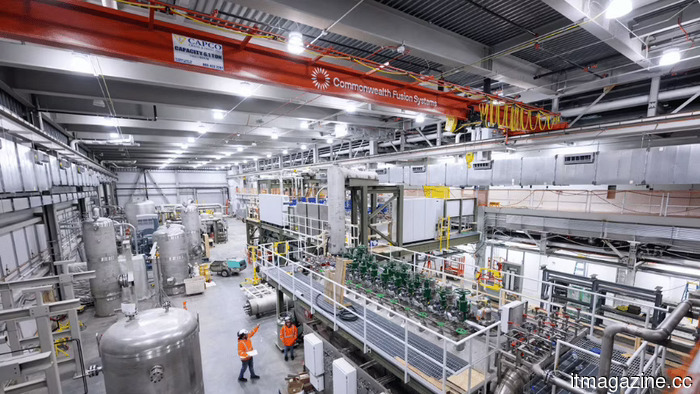 Fusion's most well-capitalized investment secured an additional $1 billion and recruited the banker responsible for Moderna's initial public offering.
The surge in AI requires enormous quantities of electricity. This demand has shifted fusion, long derided as "30 years away," into one of the most promising investments in technology. The most well-funded company has recently secured an additional $1 billion in funding. Commonwealth Fusion Systems, based
Fusion's most well-capitalized investment secured an additional $1 billion and recruited the banker responsible for Moderna's initial public offering.
The surge in AI requires enormous quantities of electricity. This demand has shifted fusion, long derided as "30 years away," into one of the most promising investments in technology. The most well-funded company has recently secured an additional $1 billion in funding. Commonwealth Fusion Systems, based
 The true benefit of AI emerges when entrepreneurs cease to restrict their own capabilities.
Kirk Drake, the founder of CU 2.0, asserts that the primary barrier to AI adoption isn't cost or complexity, but rather the preconceived notions that entrepreneurs have about the technology. Many organizations already possess the knowledge required for AI but have never structured it effectively.
The true benefit of AI emerges when entrepreneurs cease to restrict their own capabilities.
Kirk Drake, the founder of CU 2.0, asserts that the primary barrier to AI adoption isn't cost or complexity, but rather the preconceived notions that entrepreneurs have about the technology. Many organizations already possess the knowledge required for AI but have never structured it effectively.
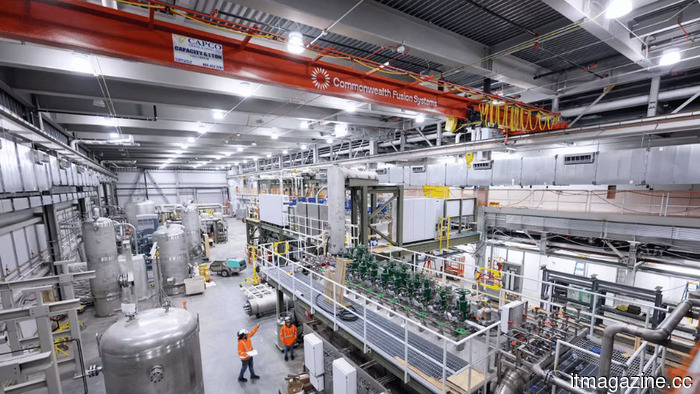 Fusion's most well-funded venture has secured an additional $1 billion and brought on board the banker responsible for taking Moderna public.
The surge in AI requires massive amounts of electricity, which has transformed fusion, long ridiculed as “30 years away,” into a highly sought-after investment in technology. The top-funded company has just secured an additional $1 billion. Commonwealth Fusion Systems, located
Fusion's most well-funded venture has secured an additional $1 billion and brought on board the banker responsible for taking Moderna public.
The surge in AI requires massive amounts of electricity, which has transformed fusion, long ridiculed as “30 years away,” into a highly sought-after investment in technology. The top-funded company has just secured an additional $1 billion. Commonwealth Fusion Systems, located
 AI search is becoming fragmented, outdated, and cluttered with advertisements.
A year ago, AI search was largely represented by a single product known as ChatGPT. However, a recent report indicates that this phase has already come to an end. The 2026 Generative AI Landscape report by Similarweb highlights a market that is both thriving and diversifying simultaneously. Generative AI we
AI search is becoming fragmented, outdated, and cluttered with advertisements.
A year ago, AI search was largely represented by a single product known as ChatGPT. However, a recent report indicates that this phase has already come to an end. The 2026 Generative AI Landscape report by Similarweb highlights a market that is both thriving and diversifying simultaneously. Generative AI we
 The EU has approved the $55 billion Saudi-led acquisition of EA in accordance with its subsidy regulations.
The European Commission has authorized the PIF-led acquisition of Electronic Arts under its Foreign Subsidies Regulation, eliminating one of the final obstacles to what would be the largest leveraged buyout in history.
The European Union has approved the $55 billion takeover.
The EU has approved the $55 billion Saudi-led acquisition of EA in accordance with its subsidy regulations.
The European Commission has authorized the PIF-led acquisition of Electronic Arts under its Foreign Subsidies Regulation, eliminating one of the final obstacles to what would be the largest leveraged buyout in history.
The European Union has approved the $55 billion takeover.
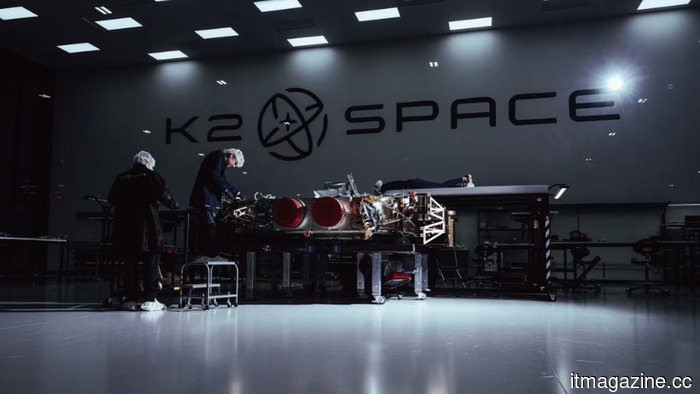 While others are reducing the size of satellites, K2 secured $500 million to develop large satellites and deploy AI in space.
While most satellite startups are focused on developing smaller models, K2 Space is intentionally pursuing a different path by opting for larger designs. The company announced on Thursday that it has secured $500 million in Series D funding, bringing its valuation to $6.8 billion.
While others are reducing the size of satellites, K2 secured $500 million to develop large satellites and deploy AI in space.
While most satellite startups are focused on developing smaller models, K2 Space is intentionally pursuing a different path by opting for larger designs. The company announced on Thursday that it has secured $500 million in Series D funding, bringing its valuation to $6.8 billion.
The true advantage of AI arises when entrepreneurs cease to restrict their own capabilities.
Kirk Drake, the founder of CU 2.0, points out that the primary barrier to adopting AI is not related to cost or complexity, but rather the preconceived notions entrepreneurs hold about the technology. Many organizations possess the knowledge required for AI, but they've yet to structure it effectively.