
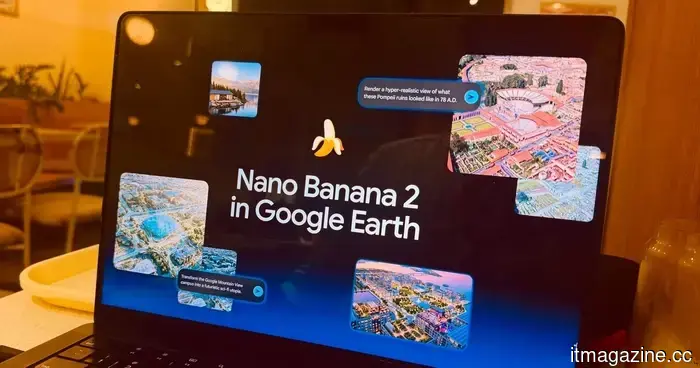
Google Earth's AI misstep endured for just a single day. It was a story marked by perilous naivety.
Technology giants seem to be out of touch with the current climate or perhaps are advancing too quickly in their AI initiatives. Google has already integrated its Gemini AI into every aspect of its software ecosystem, from Android to everyday productivity applications like Gmail, which are relied upon by millions globally. AI is prevalent everywhere, and while not all of it is negative, there are instances where it feels artificial.
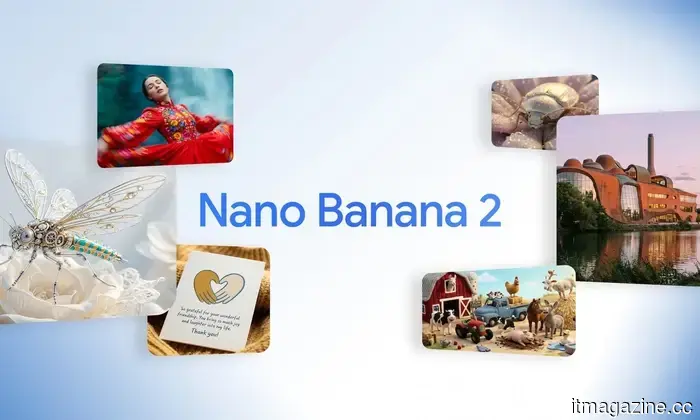
In its most recent attempt at incorporating AI, the company focused on Google Earth. The concept was to allow users to leverage its Nano Banana 2 AI image generator to create images that could be overlaid on the map view. On the surface, it sounds appealing. For example, what might the Colosseum of Rome look like in your local community? Such creative ideas could be entertaining.
However, consider the implications of placing a nuclear reactor on the map of a hostile nation or a tank in a conflict-ridden area—this presents a significant issue, and Google Earth demonstrated this without restraint.
So, why the uproar?
Let’s revisit the original intentions and good intentions behind the feature. Google envisioned it as follows:
“For the first time, you can generate custom images using Google Earth’s satellite, aerial, and 3D imagery alongside Nano Banana, which creates concepts based in reality. Simply zoom in on a location in Google Earth on the web, click 'create image,' and type in what you wish to visualize.”
The issue is that AI isn't always a welcome addition.
In fact, Google’s AI has been misused in various ways by malicious actors in the recent past. A report submitted to Australia’s eSafety Commission revealed that Gemini AI had been exploited to produce AI-generated deepfake material related to terrorism and child exploitation. Earlier this year, Google’s Cloud unit disclosed that Gemini was used by cybercriminals engaged in malware and surveillance activities.
Just days ago, Google filed a lawsuit against a network linked to China for utilizing Gemini to conduct large-scale phishing operations. Even common users can easily manipulate Google’s AI image generator to create something as shocking as a Nazi-themed Spongebob. The situation with OpenAI’s ChatGPT image generation model is similarly problematic.
Google approached a risky boundary. The company’s latest venture into AI was through Google Earth, and the mishap was short-lived, lasting just one day. Henk van Ess, an online research authority, tested the new AI capability and quickly criticized it. In his newsletter, Digital Digging, he remarked:
“Tonight I entered just one sentence into Google Earth and positioned refugees near the Mexican border. Then I added a nuclear facility in Iran. After that, I inserted a fatal accident on a street in Amsterdam. Google’s satellite imagery served as the backdrop for all three. What is Google doing?”
There were multiple layers to this issue.
That was only part of the dilemma. The Nano Banana engine complied with these problematic AI image generation requests without raising any flags. “Nothing was rejected, nothing was toned down, and there was no suggestion to try a different prompt,” van Ess pointed out.
Let’s acknowledge that Google usually takes a cautious approach with AI image generators, aiming to avoid requests for sexualized content, weapons, racial stereotypes, and other clearly inappropriate images. However, it struggled with neutral prompts that could provoke international tension. Situating a nuclear reactor in Iran or depicting a bomb crater in a hospital in Gaza are instances of such “innocent failures,” for lack of a better term.
Yet, this oversight wasn't limited to content generation. The AI-generated images in Google Earth passed through checks without any warnings. The BBC also tested the tool and found it produced controversial results, such as images of Russian tanks on Ukrainian soil, a collapsed Eiffel Tower, and the pyramids of Egypt engulfed by a sinkhole.
Alarmingly, the research indicated it was possible to mislead Google’s Gemini AI into endorsing these fabricated images as authentic. Unsurprisingly, various third-party AI verification tools also failed to flag these issues. Notably, all images generated by Gemini (and Nano Banana) are supposed to include an invisible SynthID watermark (developed by Google DeepMind) along with a visible watermark.
However, this isn’t my main concern. The internet is flooded with unnervingly realistic AI-generated content, and many individuals don't realize that it could be fake. Even if they suspect it, they often lack the means to confirm its authenticity or detect the use of AI. In many cases, users simply have no motivation to fact-check questionable images.
“Journalists might be able to fact-check that image… and report on it. But again, not everyone will take that step,” AI researcher Henry Ajder mentioned to the BBC. I spoke with three fact-checkers from the Poynter-supported International Fact-Checking Network (IFCN), and they indicated a significant gap in digital literacy. Often, there is little reason for them to verify the true source of a synthetic image or to publicly flag
Other articles
 The true advantage of AI emerges when entrepreneurs cease to restrict their own potential.
Kirk Drake, the founder of CU 2.0, states that the primary barrier to AI adoption isn't the cost or complexity; rather, it's the assumptions that entrepreneurs hold about the technology. Many organizations already possess the knowledge necessary for AI but have yet to structure it effectively.
The true advantage of AI emerges when entrepreneurs cease to restrict their own potential.
Kirk Drake, the founder of CU 2.0, states that the primary barrier to AI adoption isn't the cost or complexity; rather, it's the assumptions that entrepreneurs hold about the technology. Many organizations already possess the knowledge necessary for AI but have yet to structure it effectively.
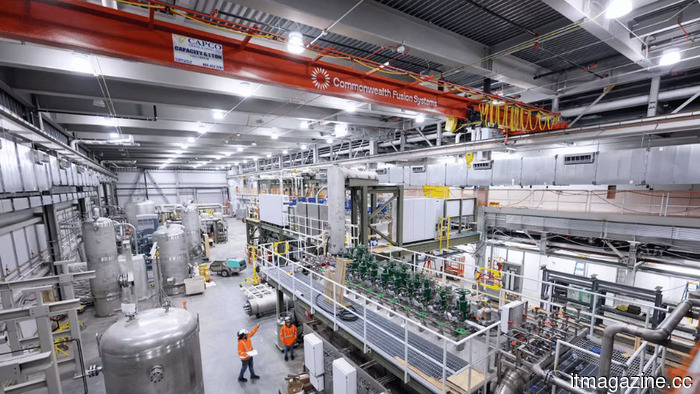 Fusion's most well-funded venture has secured an additional $1 billion and brought on board the banker responsible for taking Moderna public.
The surge in AI requires massive amounts of electricity, which has transformed fusion, long ridiculed as “30 years away,” into a highly sought-after investment in technology. The top-funded company has just secured an additional $1 billion. Commonwealth Fusion Systems, located
Fusion's most well-funded venture has secured an additional $1 billion and brought on board the banker responsible for taking Moderna public.
The surge in AI requires massive amounts of electricity, which has transformed fusion, long ridiculed as “30 years away,” into a highly sought-after investment in technology. The top-funded company has just secured an additional $1 billion. Commonwealth Fusion Systems, located
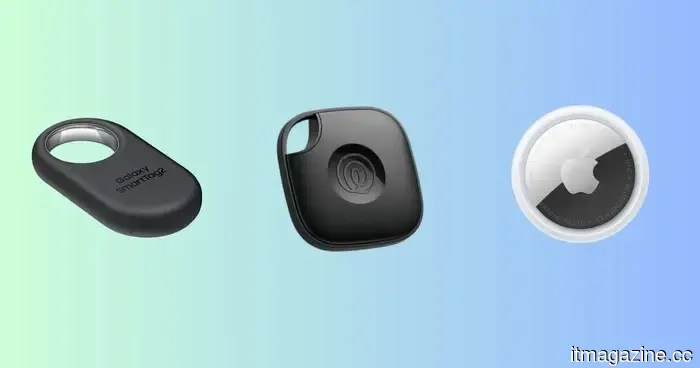 Google's highly anticipated competitor to AirTag has just been revealed ahead of its launch under a recognizable name.
The Pixel Tag has been revealed before Google's major event, suggesting that it might soon be simpler to locate lost keys and wallets.
Google's highly anticipated competitor to AirTag has just been revealed ahead of its launch under a recognizable name.
The Pixel Tag has been revealed before Google's major event, suggesting that it might soon be simpler to locate lost keys and wallets.
 The true benefit of AI emerges when entrepreneurs cease to restrict their own capabilities.
Kirk Drake, the founder of CU 2.0, asserts that the primary barrier to AI adoption isn't cost or complexity, but rather the preconceived notions that entrepreneurs have about the technology. Many organizations already possess the knowledge required for AI but have never structured it effectively.
The true benefit of AI emerges when entrepreneurs cease to restrict their own capabilities.
Kirk Drake, the founder of CU 2.0, asserts that the primary barrier to AI adoption isn't cost or complexity, but rather the preconceived notions that entrepreneurs have about the technology. Many organizations already possess the knowledge required for AI but have never structured it effectively.
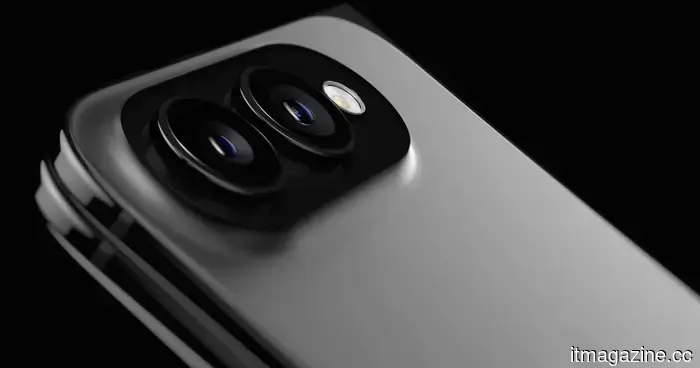 Apple might alter its iPhone launch approach, potentially impacting the standard iPhone the most.
Apple's iPhone releases have maintained a consistent pattern for many years. Each September, Apple unveils its latest flagship models, followed by a more budget-friendly "e" version that appears in the spring a few months later. This has been a straightforward formula, but it may not remain unchanged for long...
Apple might alter its iPhone launch approach, potentially impacting the standard iPhone the most.
Apple's iPhone releases have maintained a consistent pattern for many years. Each September, Apple unveils its latest flagship models, followed by a more budget-friendly "e" version that appears in the spring a few months later. This has been a straightforward formula, but it may not remain unchanged for long...
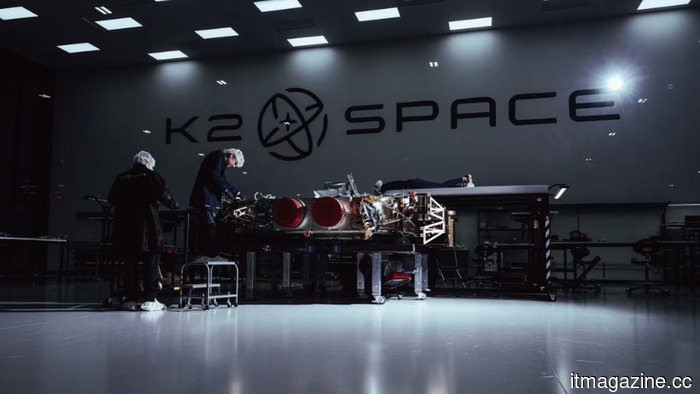 While others are reducing the size of satellites, K2 secured $500 million to develop large satellites and deploy AI in space.
While most satellite startups are focused on developing smaller models, K2 Space is intentionally pursuing a different path by opting for larger designs. The company announced on Thursday that it has secured $500 million in Series D funding, bringing its valuation to $6.8 billion.
While others are reducing the size of satellites, K2 secured $500 million to develop large satellites and deploy AI in space.
While most satellite startups are focused on developing smaller models, K2 Space is intentionally pursuing a different path by opting for larger designs. The company announced on Thursday that it has secured $500 million in Series D funding, bringing its valuation to $6.8 billion.
Google Earth's AI misstep endured for just a single day. It was a story marked by perilous naivety.
Google Earth believed that users would accept AI-generated images integrated into a realistic map without issue. However, it quickly turned into a significant and short-lived failure.