
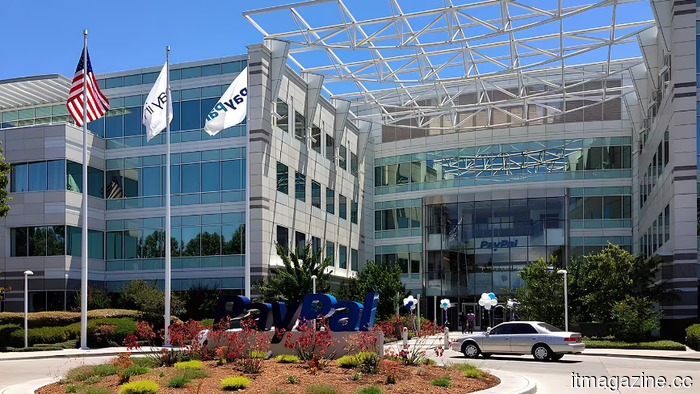
PayPal responds to Stripe's $53 billion offer: willing to consider it, but not at that valuation.
PayPal has finally responded to the $53 billion offer it received, indicating that it won't accept the bid at the proposed price. During the Q2 earnings call on Tuesday, the company provided its first public statement concerning the situation, which coincided with a positive earnings report. Chief Executive Enrique Lores refrained from directly commenting on the bid from Stripe and Advent, stating that PayPal would "carefully consider" any options that would deliver "superior value for our shareholders compared to our current strategy." He made it clear that he did not believe Stripe’s offer met that standard.
PayPal had already dismissed the offer as insufficient, and the latest results allowed it to maintain that stance. Stripe and Advent's proposal is for $60.50 per share. On his LinkedIn account, Lores expressed he was "encouraged by the progress" and held "strong conviction in our direction."
He has a valuation point to reference. Cantor estimates PayPal's worth closer to $70 per share, which is significantly higher than the offer, with the stock currently trading around $58. Even from a favorable perspective, $60.50 appears to undervalue the company if it successfully executes its turnaround.
Support from financial results
The recent financial results provided validation. Revenue increased by 5% to $8.68 billion, surpassing expectations, and adjusted earnings of $1.38 per share exceeded the anticipated $1.28 from analysts. Although net income decreased to $1.1 billion, PayPal raised its full-year outlook, predicting that an important profit measure will rise this year instead of decline, according to the Wall Street Journal.
However, there is a caveat. Transaction-margin dollars only increased by 1% due to decreasing interest on customer balances as rates softened. Excluding this factor, the underlying figure grew by around 3%. The payments sector performed slightly better than the overall headlines suggested, leading to a nearly 4% rise in shares.
The trust needed in the strategy
All of this hinges on a turnaround that is still ongoing. Lores has reorganized PayPal into three divisions, aiming for $1.5 billion in savings over the next two to three years, while laying off about 20% of its workforce and integrating AI into coding, support, and risk management. He refers to this as "improving execution."
The challenge lies in the ask. PayPal has not initiated a public auction, which is typically the method to establish the true price. Instead, it is asking shareholders to have faith in its strategy. As noted by Martin Peers from The Information, this is a significant request from a board that holds approximately 0.6% of the company’s shares, especially as the stock has plummeted nearly 80% since 2021 and with a CEO who took office in March and has no prior experience in running a payments company.
The irony of Stripe
The bidder, Stripe, is the competitor that contributed to PayPal's struggles. Stripe is financially strong and actively pursuing acquisitions, aligning with a broader trend of consolidation in the payments sector. For a company looking to transform online monetary transactions, acquiring the incumbent would represent a shortcut. However, for now, PayPal prefers to rely on itself and challenges Stripe to increase its offer.
Other articles
 Rising cursor prices are driving businesses towards Claude Code and other alternatives.
Price increases from Cursor are driving businesses to switch to Claude Code. However, companies are avoiding both options by using open-source tools that can reduce AI coding expenses by as much as 97%.
Rising cursor prices are driving businesses towards Claude Code and other alternatives.
Price increases from Cursor are driving businesses to switch to Claude Code. However, companies are avoiding both options by using open-source tools that can reduce AI coding expenses by as much as 97%.
 Anthropic stands alone in every AI battle, yet still manages to succeed.
Anthropic stands out as the distinct entity in almost every AI policy debate, whether it concerns open weights or the Pentagon. Furthermore, it remains the most valuable startup globally.
Anthropic stands alone in every AI battle, yet still manages to succeed.
Anthropic stands out as the distinct entity in almost every AI policy debate, whether it concerns open weights or the Pentagon. Furthermore, it remains the most valuable startup globally.
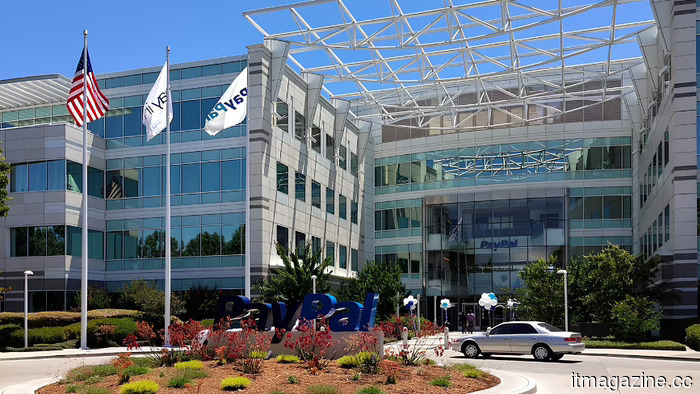 PayPal responds to Stripe’s $53 billion offer: willing to consider, but not at that valuation.
PayPal responded to Stripe's $53 billion offer with a stronger-than-expected Q2 earnings report and a clear message: they are willing to consider a deal, but not at a price of $60.50 per share. One analyst estimates the value to be closer to $70.
PayPal responds to Stripe’s $53 billion offer: willing to consider, but not at that valuation.
PayPal responded to Stripe's $53 billion offer with a stronger-than-expected Q2 earnings report and a clear message: they are willing to consider a deal, but not at a price of $60.50 per share. One analyst estimates the value to be closer to $70.
 Apple's new Upgrade plan will not impose restrictions for missed payments; however, accumulating three missed payments could result in the termination of your lease.
Apple states that missed payments on its Klarna-supported Upgrade plan will not limit app access or device functionalities; however, three consecutive missed payments may result in the termination of the lease.
Apple's new Upgrade plan will not impose restrictions for missed payments; however, accumulating three missed payments could result in the termination of your lease.
Apple states that missed payments on its Klarna-supported Upgrade plan will not limit app access or device functionalities; however, three consecutive missed payments may result in the termination of the lease.
 Apple Upgrade offers the option to lease an iPhone starting at $17.99 per month.
Apple Upgrade enables US customers to lease an iPhone starting at $17.99 per month via Klarna, while discontinuing the 2015 iPhone Upgrade Program. It alters the perception of the price without changing the actual amount.
Apple Upgrade offers the option to lease an iPhone starting at $17.99 per month.
Apple Upgrade enables US customers to lease an iPhone starting at $17.99 per month via Klarna, while discontinuing the 2015 iPhone Upgrade Program. It alters the perception of the price without changing the actual amount.
 eBay agrees to pay $56 million following its harassment campaign involving bloody pig masks.
eBay and three ex-executives are set to pay close to $56 million to the couple they tormented with cockroaches and a bloody pig mask. The larger cost: no non-disclosure agreement.
eBay agrees to pay $56 million following its harassment campaign involving bloody pig masks.
eBay and three ex-executives are set to pay close to $56 million to the couple they tormented with cockroaches and a bloody pig mask. The larger cost: no non-disclosure agreement.
PayPal responds to Stripe's $53 billion offer: willing to consider it, but not at that valuation.
PayPal responded to Stripe's $53 billion offer with a better-than-expected earnings report for Q2 and conveyed that it is amenable to a deal, but not at a price of $60.50 per share. One analyst estimates its value to be closer to $70.