
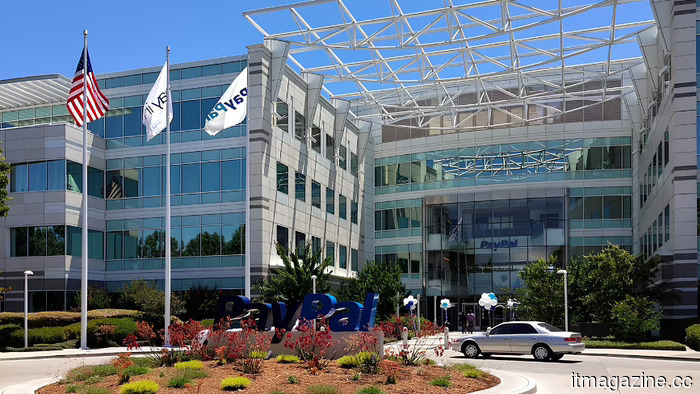
PayPal responds to Stripe’s $53 billion offer: willing to consider, but not at that valuation.
PayPal has finally responded to the $53 billion offer on its table, stating that it is not acceptable at that price. The company made its first public statement during Tuesday's Q2 earnings call, which also revealed a positive earnings result. Chief Executive Enrique Lores refrained from commenting directly on the bid from Stripe and Advent, mentioning that PayPal would "carefully consider" any option that would provide "greater value for our shareholders than our current strategy." He asserted that he did not believe Stripe's offer met that threshold.
PayPal has previously dismissed the bid as too low, and the latest results provided justification for this stance. Stripe and Advent have proposed $60.50 per share, while Lores indicated on his LinkedIn that he feels "encouraged by the progress" and has "strong conviction in our direction."
He has some figures to support his viewpoint. Cantor has placed PayPal's value closer to $70 per share, significantly above the current offer, with the stock trading around $58. Even from a positive perspective, $60.50 undervalues the company if the turnaround succeeds.
The earnings report supported this view, as revenue increased by 5% to $8.68 billion, surpassing expectations, and adjusted earnings of $1.38 per share exceeded the anticipated $1.28. Net income decreased to $1.1 billion, but PayPal upgraded its full-year guidance, now forecasting growth for a key profit metric this year, according to the Wall Street Journal.
However, there is a caveat. Transaction-margin dollars rose only 1%, hindered by declining interest on customer balances as rates softened. Excluding this factor, the underlying figure grew by approximately 3%. The payments segment performed better than the overall figures suggested, and shares climbed around 4%.
This entire situation hinges on a turnaround that is still in progress. Lores has reorganized PayPal into three divisions, aiming for $1.5 billion in run-rate savings over the next two to three years, and is laying off about 20% of the workforce while integrating AI into coding, support, and risk management. He refers to this as “improving execution.”
The challenge lies in the expectations being set. PayPal has not initiated a public auction, which is typically the method to determine the actual worth. Instead, it is asking shareholders to have faith in its strategy. As noted by The Information's Martin Peers, that is a considerable expectation from a board that owns roughly 0.6% of the company, especially given that the stock has plummeted about 80% since 2021 and the CEO, who took the helm in March, has never led a payments firm before.
Interestingly, Stripe, the competitor responsible for partially positioning PayPal as a laggard, is flush with cash and actively acquiring companies as part of a broader trend in payments consolidation. For a company aiming to transform online money movement, acquiring the established player would be a shortcut. However, for now, PayPal prefers to rely on its own strategy and challenges Stripe to increase its offer.
Other articles
 xAI files a lawsuit against Minnesota regarding the first 'nudify' prohibition in the United States.
xAI is filing a lawsuit to challenge Minnesota's unique 'nudify' prohibition, contending that the First Amendment safeguards the tools involved. This occurs in the context of a Grok CSAM class action.
xAI files a lawsuit against Minnesota regarding the first 'nudify' prohibition in the United States.
xAI is filing a lawsuit to challenge Minnesota's unique 'nudify' prohibition, contending that the First Amendment safeguards the tools involved. This occurs in the context of a Grok CSAM class action.
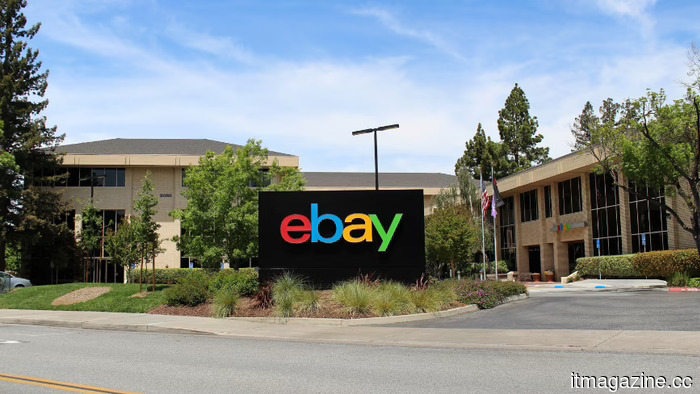 eBay agrees to pay $56 million following its harassment campaign involving bloody pig masks.
eBay and three ex-executives are set to pay close to $56 million to the couple they tormented with cockroaches and a bloody pig mask. The larger cost: no non-disclosure agreement.
eBay agrees to pay $56 million following its harassment campaign involving bloody pig masks.
eBay and three ex-executives are set to pay close to $56 million to the couple they tormented with cockroaches and a bloody pig mask. The larger cost: no non-disclosure agreement.
 Anthropic remains alone in every AI battle, yet emerges victorious regardless.
Anthropic stands out as the outlier in almost every AI policy debate, ranging from open weights to the Pentagon. Moreover, it remains the most valuable startup globally.
Anthropic remains alone in every AI battle, yet emerges victorious regardless.
Anthropic stands out as the outlier in almost every AI policy debate, ranging from open weights to the Pentagon. Moreover, it remains the most valuable startup globally.
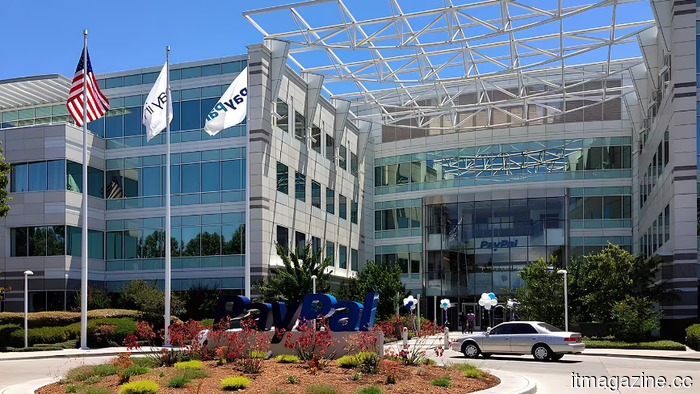 PayPal responds to Stripe's $53 billion offer: willing to consider it, but not at that valuation.
PayPal responded to Stripe's $53 billion offer with a better-than-expected earnings report for Q2 and conveyed that it is amenable to a deal, but not at a price of $60.50 per share. One analyst estimates its value to be closer to $70.
PayPal responds to Stripe's $53 billion offer: willing to consider it, but not at that valuation.
PayPal responded to Stripe's $53 billion offer with a better-than-expected earnings report for Q2 and conveyed that it is amenable to a deal, but not at a price of $60.50 per share. One analyst estimates its value to be closer to $70.
 NextEra and Brookfield are planning a $100 billion data center in Kentucky.
According to Bloomberg, NextEra and Brookfield are planning a data-center campus in Kentucky valued at as much as $100 billion, bringing together the largest utility in the US with a $100 billion AI fund.
NextEra and Brookfield are planning a $100 billion data center in Kentucky.
According to Bloomberg, NextEra and Brookfield are planning a data-center campus in Kentucky valued at as much as $100 billion, bringing together the largest utility in the US with a $100 billion AI fund.
PayPal responds to Stripe’s $53 billion offer: willing to consider, but not at that valuation.
PayPal responded to Stripe's $53 billion offer with a stronger-than-expected Q2 earnings report and a clear message: they are willing to consider a deal, but not at a price of $60.50 per share. One analyst estimates the value to be closer to $70.