
Netflix surpasses the BBC as the top choice for UK viewers.
For the first time, a streaming service has surpassed the BBC as the primary choice for UK viewers. According to Ofcom's annual Media Nations report, released this week, 26% of viewers indicated Netflix as their first choice, slightly ahead of the BBC at 25% and ITV at 15%.
This metric reflects instinct rather than viewing hours. Ofcom inquired which service viewers prefer first, and for many years, the BBC was predominantly the answer in Britain.
While a single percentage point may not represent a landslide, it is indeed a significant benchmark. The corporation has been a cornerstone of British viewing for generations, and being overtaken by a subscription service from California, even by a narrow margin, signals a change the BBC has anticipated and feared for some time.
The broader statistics reveal a more gradual decline. Approximately 70% of Britons engaged with traditional broadcasters for at least 15 minutes weekly in 2025, down from 73% the previous year and 78% in 2022, indicating a slow but clear decrease.
The broadcasters are adapting. Their streaming platforms, including iPlayer, ITVX, Channel 4 Streaming, and Channel 5, saw a 9% year-over-year growth, as viewers transitioning away from scheduled programming continued to follow the same shows on-demand.
On the other hand, subscription streaming seems nearly saturated. Services like Netflix, Disney+, and Amazon Prime Video now reach around 70% of UK households, a figure that has largely plateaued.
This plateau is significant for future growth. Since most households willing to pay for streaming services already do so, any growth now will likely come from competing for viewers' time rather than attracting new subscribers.
YouTube is notable for its rapid progress. Daily viewing of YouTube on actual TV sets has doubled, with individuals spending an average of 19 minutes per day on it, up from nine minutes in 2022.
This growth is no longer limited to younger demographics. Among Britons aged 75 and over, YouTube's weekly reach increased to 33% in 2025 from 28% in 2022, indicating that the platform has moved beyond just a digital-native audience.
The generational trend is a consistent theme throughout the report. Younger viewers are increasingly centering their viewing around on-demand and video platforms, with each year seeing more of the older audience shift in the same direction.
At 15%, ITV lags behind the other two. The competition at the top is primarily between one public broadcaster and one global streaming service, rather than a wide array of competitors.
It’s important to note that being the first choice does not equate to being the most-watched. Traditional broadcasters still account for more total viewing hours than any individual streaming service, even as the tendency to choose them first diminishes gradually.
For the BBC, this report arrives at a particularly challenging time. The corporation is defending the licence fee and gearing up for charter renewal, and headlines indicating that Netflix has surpassed it will complicate those discussions.
The funding debate is closely intertwined with viewing statistics. The licence fee is based on the premise that the BBC is a nearly universal choice, and a ranking that places it second provides critics with renewed ammunition.
The competitive pressure extends beyond viewer attention. Netflix is also facing challenges in Europe, including a consumer lawsuit in the Netherlands over subscription price increases, illustrating that growth invites scrutiny.
Britain’s public broadcasters have navigated the streaming era more successfully than many anticipated. Public-service programming continues to attract sizable audiences for live events and news, and the predicted downfall of traditional UK television appears more like gradual decline than a sudden collapse.
Nonetheless, the trend is evident. Each edition of Media Nations reflects the same pattern, with younger viewers leading the way and older ones following from scheduled programming to apps and traditional broadcasts to feeds.
What the report cannot clarify is where the final figures will land. Netflix’s slight lead could either increase or decrease next year, but the more enduring takeaway is that the "first choice" title is now a competition the BBC must strive to reclaim rather than assume it holds by default.
Other articles
 Upgrading your desk for back-to-school? Begin with one of these monitor arms.
The top monitor arms for Back-to-School, featuring both single and dual-monitor mounts that enhance desk space and increase comfort.
Upgrading your desk for back-to-school? Begin with one of these monitor arms.
The top monitor arms for Back-to-School, featuring both single and dual-monitor mounts that enhance desk space and increase comfort.
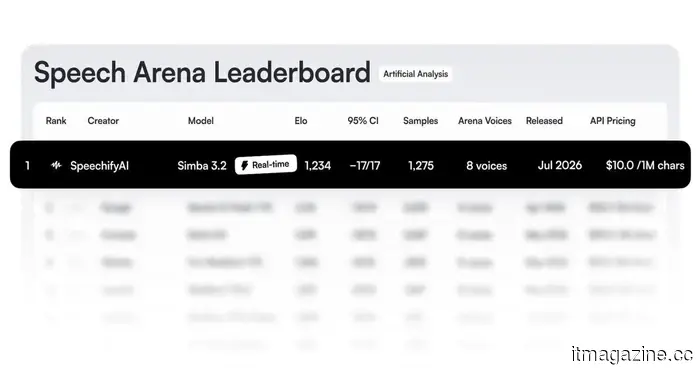 AI voice models are becoming increasingly cost-effective.
In recent years, text-to-speech has shifted from accessibility menus and now takes center stage as a key element of the contemporary software ecosystem. The category of voice-first applications continues to expand daily, and these specialized digital resources play a significant role in the text-to-speech movement. This technology also supports audiobooks, meeting assistants, and customer service...
AI voice models are becoming increasingly cost-effective.
In recent years, text-to-speech has shifted from accessibility menus and now takes center stage as a key element of the contemporary software ecosystem. The category of voice-first applications continues to expand daily, and these specialized digital resources play a significant role in the text-to-speech movement. This technology also supports audiobooks, meeting assistants, and customer service...
 Mark Zuckerberg believes that the United States should not prevent Chinese AI models from being utilized.
Mark Zuckerberg stated to the FT that the United States should refrain from banning Chinese AI models, describing it as “not an effective solution” and criticizing competitors who advocate for restrictions.
Mark Zuckerberg believes that the United States should not prevent Chinese AI models from being utilized.
Mark Zuckerberg stated to the FT that the United States should refrain from banning Chinese AI models, describing it as “not an effective solution” and criticizing competitors who advocate for restrictions.
 What is the cost of Apple’s Upgrade plan for leasing devices and is it beneficial?
From iPhones to MacBooks, here’s an overview of where Apple’s Upgrade Program is effective and where it has limitations.
What is the cost of Apple’s Upgrade plan for leasing devices and is it beneficial?
From iPhones to MacBooks, here’s an overview of where Apple’s Upgrade Program is effective and where it has limitations.
 Sony is introducing two new budget-friendly headphones that come in a variety of color options.
Import filings indicate that Sony is getting ready to launch the WH-CH730N and WH-CH530, the next generation of its well-liked budget wireless headphones.
Sony is introducing two new budget-friendly headphones that come in a variety of color options.
Import filings indicate that Sony is getting ready to launch the WH-CH730N and WH-CH530, the next generation of its well-liked budget wireless headphones.
 How AI Search Is Transforming Online Discovery Standards
Traditional searches involve entering a query, reviewing a ranked list of links, and clicking on a website. In contrast, AI is enhancing the search process by making it quicker. AI search provides AI-generated summaries, includes conversational follow-up questions, and delivers direct links without unnecessary steps. For businesses, publishers, and […]
How AI Search Is Transforming Online Discovery Standards
Traditional searches involve entering a query, reviewing a ranked list of links, and clicking on a website. In contrast, AI is enhancing the search process by making it quicker. AI search provides AI-generated summaries, includes conversational follow-up questions, and delivers direct links without unnecessary steps. For businesses, publishers, and […]
Netflix surpasses the BBC as the top choice for UK viewers.
According to Ofcom's Media Nations report, Netflix is the preferred option for 26% of viewers in the UK, slightly surpassing the BBC as traditional broadcasting falls behind streaming services and YouTube.