

Mark Zuckerberg aims to put AI superintelligence in the hands of everyone.
Meta claims it can provide advanced AI to billions, though this access will not grant users control over the underlying infrastructure, safeguards, or restrictions involved.
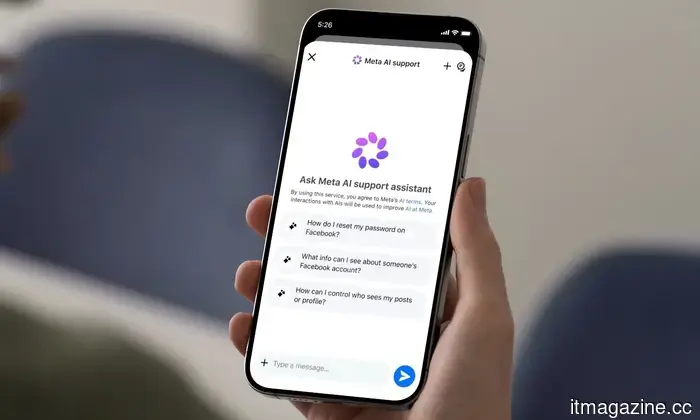
In a guest essay for The Wall Street Journal, Mark Zuckerberg outlines a modest goal for Meta’s AI. He aims to empower individuals with superintelligent technology that can enhance their health or assist them at work.
Zuckerberg portrays personal superintelligence as an alternative to sophisticated AI that is predominantly managed by a select few institutions. Meta certainly has the capacity to distribute this technology on a scale that few other companies can match. However, what users will receive is an assistant that is created and managed externally, with critical decisions being made on their behalf.
How Meta can connect with billions
As of March 2026, Meta’s platforms have an average of 3.56 billion daily active users, with over 1 billion already utilizing Meta AI each month.
This significant reach renders Zuckerberg’s distribution strategy particularly feasible. Meta wouldn’t need to market a new gadget or convince people to sign up for a new service. Instead, it could seamlessly integrate increasingly advanced AI into apps that billions already use, presenting superintelligence as just another update beside the typical new features.
Who continues to oversee the superintelligence
Widespread access does not alter who develops the technology. Stanford’s 2026 AI Index noted that the industry produced over 90% of significant frontier models in 2025. The development of these models necessitates considerable computing power and investment, concentrated within a small number of corporations.
Meta anticipates spending between $125 billion and $145 billion on infrastructure in 2026 alone. Users will not have a say in how these models are constructed or which safeguards are implemented. Those decisions remain with the company financing the data centers.
Personal superintelligence has the potential to provide many more individuals with powerful AI tools. Still, Meta will be the one to determine which tools are available to users and the limitations placed on them.
Do Americans genuinely desire it
The assumption of availability relies on a demand that is not guaranteed. A June 2026 survey by Pew found that 63% of Americans feel AI is progressing too quickly, while only 8% express high confidence that U.S. companies will develop it responsibly.
Meta already has the scale to introduce advanced AI to billions. The next aspect to monitor is whether users will achieve genuine oversight over its safeguards and limitations or if they will merely receive another Meta feature that they never requested.
Paulo Vargas is an English major turned reporter turned technical writer, with a career that has consistently returned to...
Gemini is integrating with Google Play and gaining insight into your spending behaviors.
Google Pay is providing Gemini with a glimpse into your financial activities.
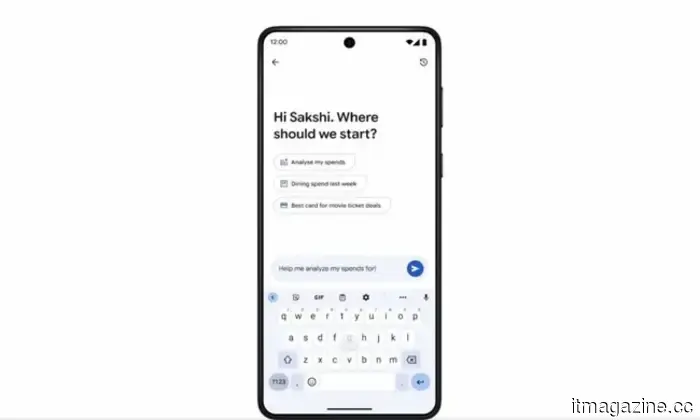
Reviewing transaction history on Google Pay can reveal your expenditures, but sifting through a lengthy list of merchant names and payments can be challenging. Google seems to recognize this, as it is incorporating Gemini into Google Pay. The company has introduced Ask Google Pay, an optional conversational AI feature embedded in its payment app in India. Users can inquire about their spending, seek savings advice, and learn about financial matters. The feature will also offer personalized deals based on their usage.
Following the rollout of Gemini Spark on macOS earlier this year, Google is enhancing the Gemini app for Mac with two valuable features that could transform how users accomplish tasks, whether by replacing their current AI dictation tool or allowing Gemini to act based on the content displayed on their screen.
A single key press converts spoken words into clear text anywhere.
Students are increasingly turning to AI chatbots instead of human advisors for college counseling.
China's college counseling sector, which has built a $160 million industry on anxiety, now faces competition from free AI services.
Every summer, around 10 million Chinese students encounter a high-stakes deadline. After enduring the challenging Gaokao college entrance examination, they have just a few weeks to select their universities and majors, decisions that can significantly influence their future careers. Families previously paid substantial fees for expert advice during this process, but free AI chatbots are quietly disrupting that model. How are AI chatbots replacing paid college consultants?





Other articles
 AI transformed a disgraced President, currently under house arrest, into a live avatar for a new election campaign.
An AI-generated version of Jair Bolsonaro supported his son's presidential campaign, even though the former Brazilian president is under house arrest, banned from elections, and faces limitations on public communication.
AI transformed a disgraced President, currently under house arrest, into a live avatar for a new election campaign.
An AI-generated version of Jair Bolsonaro supported his son's presidential campaign, even though the former Brazilian president is under house arrest, banned from elections, and faces limitations on public communication.
 Visa reduces its workforce by 2,600 positions to finance stablecoins and business-to-business initiatives.
Visa is laying off 7% of its workforce, primarily in technology and product sectors, while reallocating funds towards stablecoins and cross-border payments. The memorandum highlights AI as a driving force in this transition.
Visa reduces its workforce by 2,600 positions to finance stablecoins and business-to-business initiatives.
Visa is laying off 7% of its workforce, primarily in technology and product sectors, while reallocating funds towards stablecoins and cross-border payments. The memorandum highlights AI as a driving force in this transition.
 Traders are factoring in a significant movement in Microsoft shares as concerns regarding AI capital expenditures increase.
Options suggest a post-earnings fluctuation of around $190 billion for Microsoft, which is a notably significant shift, as investors seek evidence that the company's substantial AI investments are yielding results.
Traders are factoring in a significant movement in Microsoft shares as concerns regarding AI capital expenditures increase.
Options suggest a post-earnings fluctuation of around $190 billion for Microsoft, which is a notably significant shift, as investors seek evidence that the company's substantial AI investments are yielding results.
 Groundcover secures $100 million to develop observability solutions for the AI era.
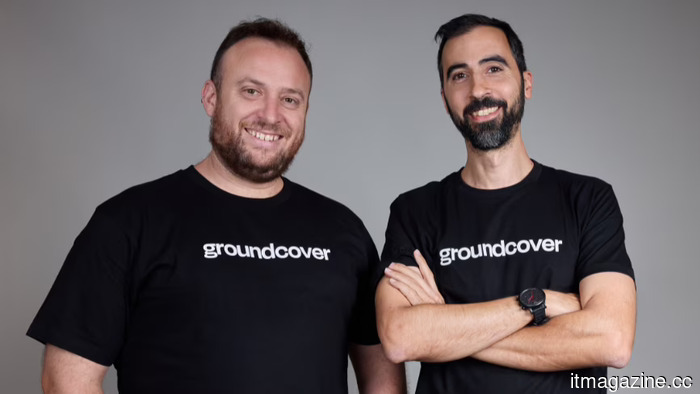
Groundcover has secured $100 million in a Series C funding round led by One Peak, bringing its total funding to $160 million to develop bring-your-own-cloud observability for the AI age.
Groundcover secures $100 million to develop observability solutions for the AI era.
Groundcover has secured $100 million in a Series C funding round led by One Peak, bringing its total funding to $160 million to develop bring-your-own-cloud observability for the AI age.
 HUAWEI Pura90s series smartphones and HUAWEI FreeClip 2 S clip-on headphones.
While Western brands are being cautious with supplies, Chinese manufacturers feel at home in the Russian market, and orders for new devices can confidently be placed in online stores.
HUAWEI Pura90s series smartphones and HUAWEI FreeClip 2 S clip-on headphones.
While Western brands are being cautious with supplies, Chinese manufacturers feel at home in the Russian market, and orders for new devices can confidently be placed in online stores.
 The Galaxy Z Fold 8 series has introduced a feature that every Android foldable should include.
The Galaxy Z Fold 8 has introduced a handy new feature that remembers your preferred screen rotation for each display, eliminating the need to adjust it each time.
The Galaxy Z Fold 8 series has introduced a feature that every Android foldable should include.
The Galaxy Z Fold 8 has introduced a handy new feature that remembers your preferred screen rotation for each display, eliminating the need to adjust it each time.
Mark Zuckerberg aims to put AI superintelligence in the hands of everyone.
Zuckerberg claims that Meta has the potential to place superintelligence in the hands of billions. While its extensive reach makes this feasible, users would still rely on Meta to develop the models, establish the safeguards, and determine their boundaries.