
Reasons for the failure of the Starbucks AI inventory tool at full scale.
On April 3, Starbucks informed NomadGo that it would discontinue the AI inventory tool developed by the Redmond startup. Within a short span of time, the 30-person company significantly reduced its workforce, as reported by GeekWire. This included the technical team responsible for the Starbucks account, while Starbucks did not notify its baristas for another six weeks.
David Greschler, the CEO of NomadGo, expressed that the decision was completely unexpected, stating, “There’s nothing you can do when leadership and strategy change.”
This account comes from a Fast Company investigation published on Monday, which is based on insights from numerous Starbucks employees and NomadGo itself. The cancellation was previously noted in May, although the vendor's perspective had not been revealed until now.
Baristas were informed on May 18, receiving a memo instructing them to remove the QR tracking codes from the backroom shelves and revert to manual counting.
The actual issues encountered were quite ordinary and physical. A shift supervisor near Seattle used an iPad to scan a steel fridge, inadvertently causing five cartons of oat milk to register as ten due to the reflection. Other errors included the app misidentifying milk types, swapping syrups, and incorrectly categorizing a bin as food.
In contrast, a store manager in Graham, Texas, faced the opposite issue. A weak Wi-Fi connection caused her count to be lost mid-process, and management had already deemed hand counting unacceptable, resulting in no usable numbers for the store.
The model itself wasn't faulty; NomadGo’s computer vision achieved 99% accuracy in controlled tests and promised counts up to eight times faster than manual methods. However, Greschler explained that computer vision struggles when the inventory is constantly changing, indicating that seasonal items and limited packaging could require up to six weeks of retraining. His developers occasionally learned of new items only after they were on the shelves.
Another significant limitation was the aging Starbucks backend system, operating on a legacy IBM AS/400 from the 1990s, complicating the transfer of real-time store data. Insiders estimated that the program may have cost over $10 million over several years.
This was not merely a trial run. The Starbucks AI inventory tool, referred to as Automated Counting, was implemented across all 11,300 company-operated cafés in North America by the end of September 2025, yet it was discontinued by May 18.
Typically, enterprise AI failures are described as pilots that never expand, but this one scaled first, making the mistakes particularly costly. The MIT NANDA initiative discovered that 95% of enterprise generative AI pilots showed no measurable profit impact, with much enterprise AI spending still remaining in the lab. Similarly, the UK’s Office for National Statistics observed that while AI usage was broadening, it was not deepening. Starbucks, however, took a different approach, opting for a comprehensive rollout across the board.
Before its cancellation, Starbucks publicly defended the tool, stating that adoption had increased product availability after miscounts were reported by Reuters in February, with CNBC also covering their claims. Roughly eight weeks later, they directed NomadGo to cease operations.
Greschler attributed the decision to changes in leadership and strategy but did not specify which leadership he was referring to. The timeline, however, is on record: Deb Hall Lefevre, then Starbucks’ chief technology officer, praised the deployment in NomadGo’s launch announcement on September 3, 2025. She stepped down on September 29, coinciding with the conclusion of the rollout, and Starbucks subsequently hired a permanent replacement from Amazon in December. The tool outlasted its executive sponsor by approximately six months.
In response to inquiries, a Starbucks spokesperson stated, “We use technology to support human connection, not to replace it,” highlighting the $500 million invested in increasing staff at its coffeehouses. They added, “When it fell short, we listened to feedback and changed course.”
This perspective deserves consideration; terminating a fully deployed tool across 11,300 locations is a more complex task than letting a pilot project quietly fade away, and many companies continue to fund software that their employees no longer trust.
Starbucks has maintained its other AI initiatives, including Green Dot Assist for baristas and a ChatGPT integration for customers. However, the statement did not address the supplier aspect. A tool designed to generate work instead of saving it is a familiar pitfall, and researchers have labeled it as such. Less frequently discussed is who bears the cost when a major client reverses its decision; in this case, the Starbucks AI inventory tool failed across 11,300 sites, leaving the financial burden on a 30-person firm.
Other articles
 Italy supports a €500 million investment for the company that owns AOL.
SACE, the export credit agency owned by the Italian treasury, provided a guarantee of €500 million for Bending Spoons. The acquirer based in Milan owns AOL, Evernote, Vimeo, and Eventbrite.
Italy supports a €500 million investment for the company that owns AOL.
SACE, the export credit agency owned by the Italian treasury, provided a guarantee of €500 million for Bending Spoons. The acquirer based in Milan owns AOL, Evernote, Vimeo, and Eventbrite.
 The handoff tax: The price of having your representative handle the call solo.
Each B2B handoff results in a loss of momentum, context, and trust. 1mind employs an AI sales engineer during live calls to bridge the gap where many deals tend to falter.
The handoff tax: The price of having your representative handle the call solo.
Each B2B handoff results in a loss of momentum, context, and trust. 1mind employs an AI sales engineer during live calls to bridge the gap where many deals tend to falter.
 How artificial intelligence is simplifying corporate travel logistics.
AI is transforming traditional travel procurement portals into predictive systems that apply policy at the time of purchase, reschedule disrupted travel plans, and automatically negotiate vendor pricing.
How artificial intelligence is simplifying corporate travel logistics.
AI is transforming traditional travel procurement portals into predictive systems that apply policy at the time of purchase, reschedule disrupted travel plans, and automatically negotiate vendor pricing.
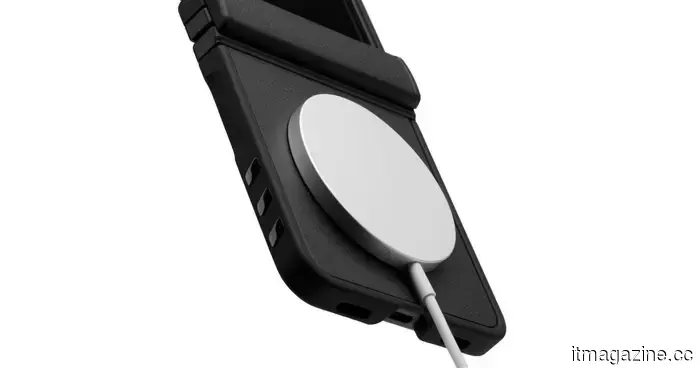 The most effective method to safeguard your Galaxy Z Flip 8 and Z Fold 8 begins with dbrand.
While most phone cases cover the essentials, they often leave some of the most susceptible areas of your new Galaxy foldable unprotected. From the hinge to the cameras, dbrand's Grip Cases are crafted to shield these parts while maintaining the streamlined design that makes Samsung's latest devices so attractive.
Claude discovered mathematical errors in two cryptographic algorithms that had been overlooked by years of expert evaluations.
Claude Mythos halved HAWK's key strength in 60 hours and enhanced attacks on the lowered AES by 200-800 times. There is no impact on production systems. Each discovery incurred a cost of approximately $100K.
The most effective method to safeguard your Galaxy Z Flip 8 and Z Fold 8 begins with dbrand.
While most phone cases cover the essentials, they often leave some of the most susceptible areas of your new Galaxy foldable unprotected. From the hinge to the cameras, dbrand's Grip Cases are crafted to shield these parts while maintaining the streamlined design that makes Samsung's latest devices so attractive.
Claude discovered mathematical errors in two cryptographic algorithms that had been overlooked by years of expert evaluations.
Claude Mythos halved HAWK's key strength in 60 hours and enhanced attacks on the lowered AES by 200-800 times. There is no impact on production systems. Each discovery incurred a cost of approximately $100K.
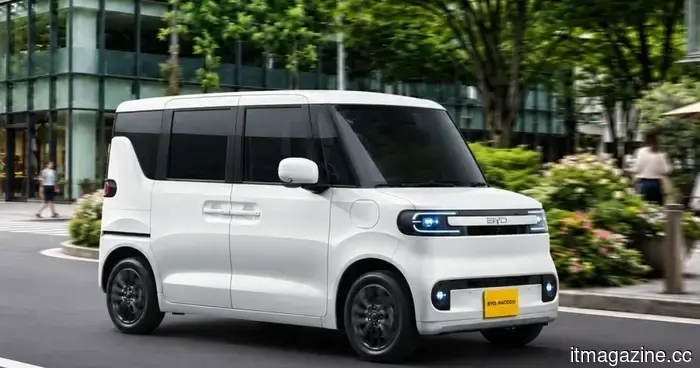 BYD's new Racco is the first electric kei car in Japan to offer a range exceeding 300 km.
BYD has introduced the Racco, its inaugural electric kei car for the Japanese market, which provides a range of up to 320 km and has a starting price lower than that of the Nissan Sakura.
BYD's new Racco is the first electric kei car in Japan to offer a range exceeding 300 km.
BYD has introduced the Racco, its inaugural electric kei car for the Japanese market, which provides a range of up to 320 km and has a starting price lower than that of the Nissan Sakura.
Reasons for the failure of the Starbucks AI inventory tool at full scale.
The AI inventory tool developed by Starbucks was discontinued following a complete national launch. NomadGo, the 30-member startup that created it, received the notification on April 3rd.