
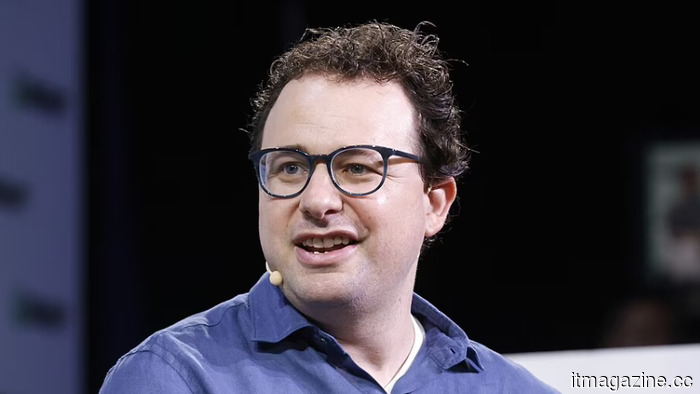
Dario Amodei from Anthropic stated that the company has never advocated for a ban on open-weight AI models.
Dario Amodei stated that Anthropic has never called for a ban on open-weights models. He expresses support for chip export controls, measures against distillation practices, and mandatory safety testing for all sufficiently capable models, whether open or closed. On Sunday, Amodei clarified Anthropic's official stance on open-weights models, addressing concerns that the company aimed to restrict them to safeguard its interests. He noted, “Anthropic has never advocated for a ban on open-weights models. Open-weights models that lack dangerous capabilities are beneficial to the public.” His remarks followed an open letter backing open weights signed by Nvidia's Jensen Huang and several tech companies, as well as discussions among US officials regarding a ban on Chinese open-weights models.
Amodei proposed three alternatives to a ban. First, he supports enforcing chip export controls and efforts to curb the "rampant smuggling" that enables advanced chips to reach China. He highlighted that without US chips, China's ability to train models that surpass American ones is hindered by scaling laws. Second, he advocates for ending large-scale distillation activities that allow Chinese labs to create capable models at a fraction of the cost compared to starting from scratch. Third, he calls for mandatory safety testing for all sufficiently capable models, regardless of their origin, while exempting less capable models from startups and academia.
Regarding the Nvidia-supported open letter, Amodei acknowledged that open weights promote accessibility and competition but disagreed with the notion that they benefit defenders more than attackers. He used biological weapons as a pertinent example: a sufficiently advanced model could rapidly weaponize a highly contagious virus using readily available materials, while developing defenses against such threats takes significant time. Last week, TNW reported that Anthropic's lack of response to the open-weights letter was becoming notable, particularly since the company faced direct commercial harm from distillation practices. This statement serves as Anthropic's reply.
The issue of distillation carries significant commercial implications. Anthropic accused Alibaba's Qwen lab of executing the largest distillation effort against its Claude model, utilizing 25,000 fake accounts for 29 million interactions. Amodei admitted that tackling distillation is "challenging" since accounts can typically be identified only after extensive distillation has taken place. He advocated for policy intervention rather than relying on a single company's enforcement mechanisms. The stance is carefully articulated: Anthropic is not opposed to open weights but objects to the practice of developing them by infringing on its proprietary models, which were trained using smuggled chips and released without safety evaluations. The key question is whether this nuanced position will resonate with Washington's preference for simpler narratives, which the post aims to address.
Other articles
 RAMmageddon is approaching for cameras, and your ideal setup is in jeopardy.
The ongoing DRAM shortage that is driving up prices for smartphones and laptops is now affecting cameras as well, leading Fujifilm to increase its list prices by as much as €500 beginning in September.
RAMmageddon is approaching for cameras, and your ideal setup is in jeopardy.
The ongoing DRAM shortage that is driving up prices for smartphones and laptops is now affecting cameras as well, leading Fujifilm to increase its list prices by as much as €500 beginning in September.
 Lenovo introduces Yoga headphones with Bose tuning in the US at an affordable price.
The Headphone Yoga PC Edition has been released in the US, featuring Bose-tuned sound, active noise cancellation, and a lightweight, foldable design.
Lenovo introduces Yoga headphones with Bose tuning in the US at an affordable price.
The Headphone Yoga PC Edition has been released in the US, featuring Bose-tuned sound, active noise cancellation, and a lightweight, foldable design.
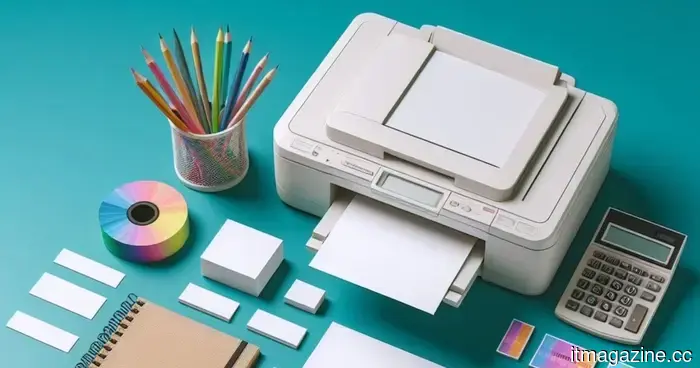 Here are the compact printers I would genuinely suggest for back-to-school.
Printing shouldn't require a late-night visit to the library's computer lab. Here are four compact printers that are great to have on your desk, ranging from reliable workhorses to instant photo printers.
Here are the compact printers I would genuinely suggest for back-to-school.
Printing shouldn't require a late-night visit to the library's computer lab. Here are four compact printers that are great to have on your desk, ranging from reliable workhorses to instant photo printers.
 Window AC vs. Mini Split: Which is the Better Cooling Upgrade for the Summer?
Summer doesn't have to result in increased electricity expenses and obstructed window views. Before opting for another short-term solution, discover why contemporary homeowners are turning to quieter, more intelligent mini splits for year-round comfort.
Window AC vs. Mini Split: Which is the Better Cooling Upgrade for the Summer?
Summer doesn't have to result in increased electricity expenses and obstructed window views. Before opting for another short-term solution, discover why contemporary homeowners are turning to quieter, more intelligent mini splits for year-round comfort.
 Nvidia is in negotiations to secure $250 billion in debt for OpenAI's data centers.
Nvidia is allegedly considering a $250 billion support package for OpenAI's 10GW campus in Ohio, along with $350 billion in funding for chips. Critics have labeled this arrangement as circular.
Nvidia is in negotiations to secure $250 billion in debt for OpenAI's data centers.
Nvidia is allegedly considering a $250 billion support package for OpenAI's 10GW campus in Ohio, along with $350 billion in funding for chips. Critics have labeled this arrangement as circular.
 RAMmageddon is approaching for cameras, and your ideal setup is in jeopardy.
The ongoing DRAM shortage that is causing smartphone and laptop prices to rise is now affecting cameras as well, with Fujifilm increasing its list prices by as much as €500 starting in September.
RAMmageddon is approaching for cameras, and your ideal setup is in jeopardy.
The ongoing DRAM shortage that is causing smartphone and laptop prices to rise is now affecting cameras as well, with Fujifilm increasing its list prices by as much as €500 starting in September.
Dario Amodei from Anthropic stated that the company has never advocated for a ban on open-weight AI models.
Amodei released Anthropic's official stance regarding open weights. He is against prohibitions but advocates for export controls on chips, stricter regulations on distillation, and required safety assessments.