

AI providers are shifting from subscription models to consumption-based pricing. AI PCs serve as a safeguard.
TL;DRAI vendors are transitioning from per-seat subscription models to token consumption pricing. AI PCs that operate local models provide enterprises with cost predictability as cloud AI expenses escalate.
The pricing model for AI is evolving. Leading software vendors are shifting from per-seat subscriptions to token consumption or outcome-based pricing for AI functionalities. The initial flat-rate subscriptions that attracted early users were essentially loss leaders. Now that companies have become reliant on these tools, vendors need to generate revenue from them. "We believe the value of software should be directly tied to customer success rather than headcount," stated Shashi Upadhyay, Zendesk's president for products, engineering, and AI. For businesses, this implies that AI will soon be considerably more costly and less predictable.
The countermeasure is local computing. AI PCs equipped with neural processing units can now execute small models locally, managing basic and mid-level generative tasks without sending any data to the cloud. Consumers and knowledge workers have been purchasing Mac Minis to run OpenClaw’s AI agent locally, completely bypassing per-query fees. For organizations conducting thousands of routine AI activities daily—such as summarization, drafting, code completion, and data extraction—a single hardware investment with no marginal costs per query is increasingly appealing compared to a cloud bill that increases with usage.
The financial implications are clear. Cloud AI incurs charges for each token processed, while local AI has no per-query costs once the hardware has been purchased. Although the DRAM crisis has raised memory prices, making AI PCs pricier, the cost advantage per query remains for high-volume, low-complexity tasks. The break-even point varies based on the number of queries a worker executes daily and the cloud vendor's token pricing. For heavy users, the return on investment for a $1,500 AI PC can be measured in months rather than years.
Cloud computing remains essential. Training cutting-edge models, operating complex multi-step agents, and processing enterprise-level data still necessitate cloud infrastructure. The trend is not about choosing between cloud and local computing; rather, it's about determining which tasks are suited for each environment. Alphabet has increased its capital expenditure guidance to $205 billion this year as Google Cloud revenue surged by 82%. The major cloud providers are preparing for a future where demand for cloud AI continues to rise. However, the shift from subscriptions to consumption pricing incentivizes enterprises to transfer any tasks feasible for local execution away from the cloud, reserving the costly infrastructure for truly essential tasks. The AI PC does not serve as a substitute for the cloud but acts as a safeguard against rising costs.
Other articles
 FDA selects Dexcom for the TEMPO pilot, bypassing premarket assessment.
The FDA designated Dexcom as its inaugural TEMPO participant, enabling digital health devices to access Medicare patients prior to approval in return for real-world data.
FDA selects Dexcom for the TEMPO pilot, bypassing premarket assessment.
The FDA designated Dexcom as its inaugural TEMPO participant, enabling digital health devices to access Medicare patients prior to approval in return for real-world data.
 Here are the compact printers I would genuinely suggest for back-to-school.
Printing shouldn't require a late-night visit to the library's computer lab. Here are four compact printers that are great to have on your desk, ranging from reliable workhorses to instant photo printers.
Here are the compact printers I would genuinely suggest for back-to-school.
Printing shouldn't require a late-night visit to the library's computer lab. Here are four compact printers that are great to have on your desk, ranging from reliable workhorses to instant photo printers.
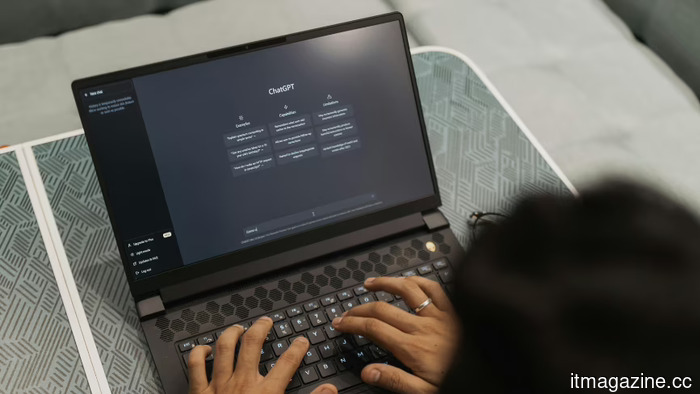 Young adults are utilizing ChatGPT to write scripts for their face-to-face interactions. Psychologists refer to this as an
An increasing number of young adults are utilizing AI chatbots to create dating messages, initiate conversations at parties, and provide immediate replies during face-to-face interactions. Experts caution that this practice undermines self-confidence.
Young adults are utilizing ChatGPT to write scripts for their face-to-face interactions. Psychologists refer to this as an
An increasing number of young adults are utilizing AI chatbots to create dating messages, initiate conversations at parties, and provide immediate replies during face-to-face interactions. Experts caution that this practice undermines self-confidence.
 Starting in early 2027, YouTube Premium will incorporate Peacock at no additional charge. This marks Peacock's most significant distribution agreement.
Starting in early 2027, Peacock Premium ($11/month) will be offered for free with YouTube Premium. This agreement will expand the distribution of YouTube TV and introduce live sports to YouTube.
Starting in early 2027, YouTube Premium will incorporate Peacock at no additional charge. This marks Peacock's most significant distribution agreement.
Starting in early 2027, Peacock Premium ($11/month) will be offered for free with YouTube Premium. This agreement will expand the distribution of YouTube TV and introduce live sports to YouTube.
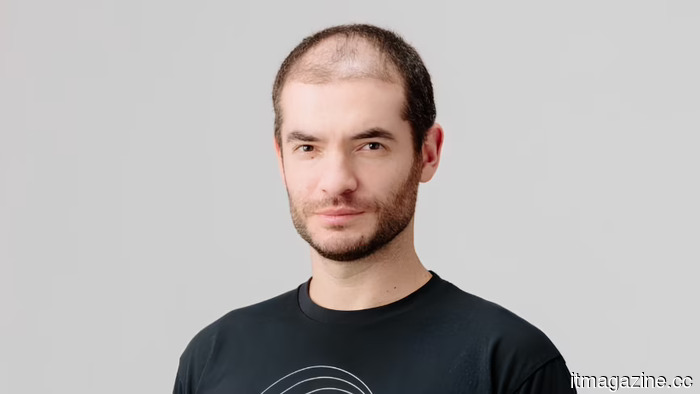 Nvidia invests in Sutskever's SSI to increase its computing power tenfold.
Nvidia has acquired a significant share in Safe Superintelligence, a lab that currently lacks a product. SSI claims that the funding will enable it to increase its computing power tenfold within the next year.
Nvidia invests in Sutskever's SSI to increase its computing power tenfold.
Nvidia has acquired a significant share in Safe Superintelligence, a lab that currently lacks a product. SSI claims that the funding will enable it to increase its computing power tenfold within the next year.
 Lenovo introduces Yoga headphones with Bose tuning in the US at an affordable price.
The Headphone Yoga PC Edition has been released in the US, featuring Bose-tuned sound, active noise cancellation, and a lightweight, foldable design.
Lenovo introduces Yoga headphones with Bose tuning in the US at an affordable price.
The Headphone Yoga PC Edition has been released in the US, featuring Bose-tuned sound, active noise cancellation, and a lightweight, foldable design.
AI providers are shifting from subscription models to consumption-based pricing. AI PCs serve as a safeguard.
Leading software companies are moving away from per-seat AI pricing in favor of token-based consumption. AI PCs that operate models locally provide businesses with an option to control expenses as cloud costs increase.