

AI vendors are transitioning from subscription models to consumption-based pricing. AI PCs serve as a safeguard.
TL;DRAI vendors are transitioning from per-seat subscriptions to a pricing model based on token consumption. AI PCs equipped with local models provide enterprises with cost predictability as expenses for cloud AI rise.
The pricing structure for AI is evolving. Prominent software vendors are shifting from per-seat subscriptions to token consumption or outcome-oriented pricing for AI functionalities. The flat-rate subscriptions that initially drew in early adopters were often loss leaders. Now that businesses rely on these tools, vendors are focused on revenue generation. "We believe software value should be directly linked to customer success, not headcount," stated Shashi Upadhyay, president of products, engineering, and AI at Zendesk. For enterprises, this translates to AI becoming significantly more costly and less predictable.
The solution lies in local computing. AI PCs with neural processing units can now execute small models locally, performing basic and intermediate generative tasks without sending tokens to the cloud. Consumers and knowledge workers have started purchasing Mac Minis to run OpenClaw’s AI agent locally, thus completely avoiding per-query expenses. For companies conducting thousands of routine AI operations daily—such as summarization, drafting, code completion, and data extraction—an upfront hardware investment with no marginal cost per query is becoming increasingly appealing compared to a cloud bill that rises with usage.
The financial dynamics are clear. Cloud AI fees are incurred per token processed, while local AI incurs no costs per query after the initial hardware investment. Although the DRAM crisis has raised memory prices, making AI PCs more costly, the cost-per-query advantage remains for high-volume, low-complexity tasks. The break-even point varies depending on how many queries a worker executes daily and the cloud vendor's token charges. For frequent users, recovering the cost of a $1,500 AI PC can take months rather than years.
Cloud computing will continue to exist. Training advanced models, managing intricate multi-step agents, and processing enterprise-level data still necessitate cloud infrastructure. This transition is not about choosing between cloud and local solutions; it's about determining which tasks are appropriate for each platform. Alphabet increased its capital expenditure guidance to $205 billion this year, as Google Cloud revenue surged by 82%, indicating that hyperscalers are preparing for a future with growing cloud AI demand. However, the shift from subscription to consumption pricing encourages enterprises to migrate any tasks suitable for local execution away from the cloud, reserving expensive infrastructure for essential tasks. The AI PC isn't a substitute for the cloud; rather, it acts as a means to mitigate costs.
Other articles
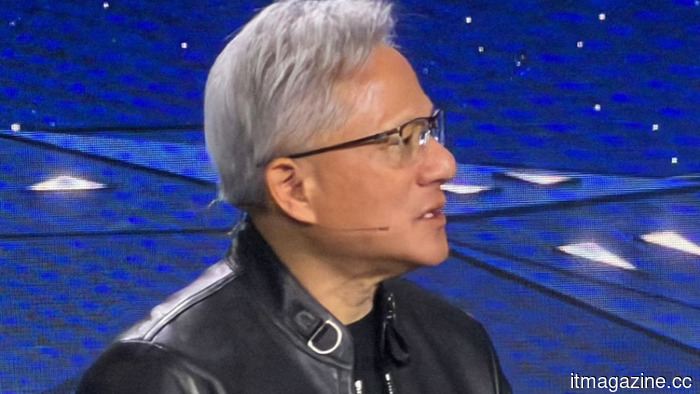 Nvidia is in negotiations to secure $250 billion in debt for OpenAI's data centers.
Nvidia is allegedly considering a $250 billion support package for OpenAI's 10GW campus in Ohio, along with $350 billion in funding for chips. Critics have labeled this arrangement as circular.
Nvidia is in negotiations to secure $250 billion in debt for OpenAI's data centers.
Nvidia is allegedly considering a $250 billion support package for OpenAI's 10GW campus in Ohio, along with $350 billion in funding for chips. Critics have labeled this arrangement as circular.
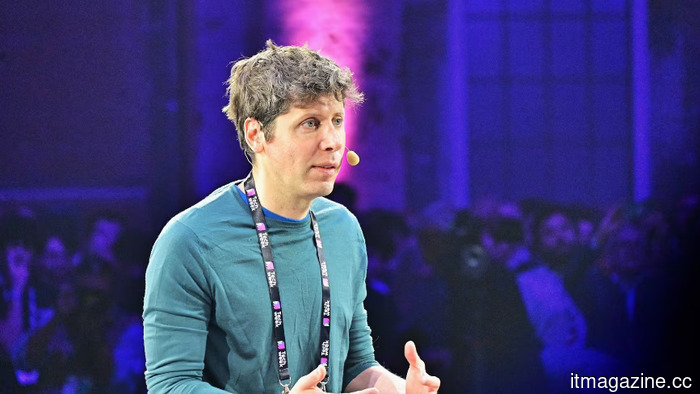 Sam Altman removed TikTok because he found it hard to stop scrolling. OpenAI discontinued Sora for a similar reason.
Altman mentioned that he became "addicted" to TikTok while looking into it for Sora. He spent three hours scrolling through the app on a Saturday. OpenAI discontinued Sora in March due to its high computing demands.
Sam Altman removed TikTok because he found it hard to stop scrolling. OpenAI discontinued Sora for a similar reason.
Altman mentioned that he became "addicted" to TikTok while looking into it for Sora. He spent three hours scrolling through the app on a Saturday. OpenAI discontinued Sora in March due to its high computing demands.
 Microsoft has developed an autonomous security system featuring red, blue, and green team AI agents, which will enter public preview on August 3.
Project Perception employs AI agents that continuously attack, investigate, and resolve security vulnerabilities. Microsoft's MAI-Cyber-1-Flash achieved a score of 96% on CyberGym, surpassing Mythos by 12 points.
Microsoft has developed an autonomous security system featuring red, blue, and green team AI agents, which will enter public preview on August 3.
Project Perception employs AI agents that continuously attack, investigate, and resolve security vulnerabilities. Microsoft's MAI-Cyber-1-Flash achieved a score of 96% on CyberGym, surpassing Mythos by 12 points.
 Fujifilm is increasing camera prices by as much as €500. The AI memory crisis has impacted the photography industry.
Fujifilm will increase the prices of five camera models starting September 1 due to rising DRAM costs. The X100 VI will see a price increase of €200, while the GFX100 II will rise by €500. Canon, Sony, and Nikon are anticipated to take similar actions.
Angola secures $321 million in its largest IPO to date with the Unitel launch.
Angola divested a 15% share in Unitel for approximately $321 million, marking its largest initial public offering to date. The shares originate from a seizure in 2022 involving Isabel dos Santos.
Fujifilm is increasing camera prices by as much as €500. The AI memory crisis has impacted the photography industry.
Fujifilm will increase the prices of five camera models starting September 1 due to rising DRAM costs. The X100 VI will see a price increase of €200, while the GFX100 II will rise by €500. Canon, Sony, and Nikon are anticipated to take similar actions.
Angola secures $321 million in its largest IPO to date with the Unitel launch.
Angola divested a 15% share in Unitel for approximately $321 million, marking its largest initial public offering to date. The shares originate from a seizure in 2022 involving Isabel dos Santos.
 Amazon requested the FCC's approval for 5,105 satellites intended for a network that transmits internet directly to your mobile device.
Amazon submitted a proposal to deploy 5,105 satellites for direct-to-device connectivity. This initiative merges Kuiper and Globalstar resources, with a deployment goal set for 2028. SpaceX is already providing direct-to-device services in partnership with T-Mobile.
Amazon requested the FCC's approval for 5,105 satellites intended for a network that transmits internet directly to your mobile device.
Amazon submitted a proposal to deploy 5,105 satellites for direct-to-device connectivity. This initiative merges Kuiper and Globalstar resources, with a deployment goal set for 2028. SpaceX is already providing direct-to-device services in partnership with T-Mobile.
AI vendors are transitioning from subscription models to consumption-based pricing. AI PCs serve as a safeguard.
Leading software companies are moving away from per-seat AI pricing in favor of token-based consumption. AI PCs that operate models locally provide businesses a way to limit expenses as cloud costs increase.