
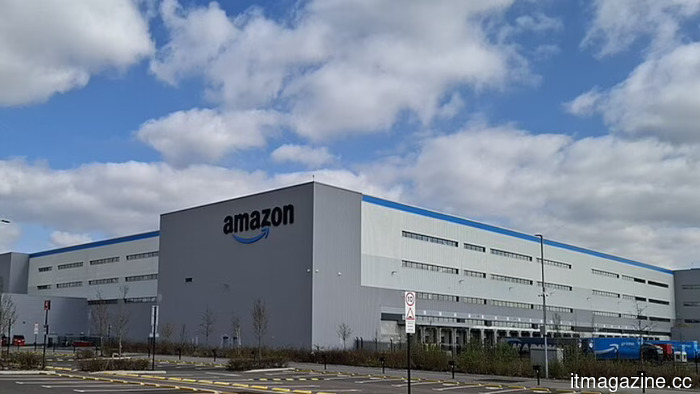
Amazon requested the FCC's approval for a network of 5,105 satellites that would provide internet directly to your phone.
Amazon has submitted a request to the FCC to launch 5,105 satellites aimed at establishing a direct-to-device connectivity network, which will provide internet access directly to smartphones without needing cell towers. The filing made on Saturday outlines a satellite constellation that merges Amazon’s Kuiper network with the assets acquired from Globalstar, a satellite operator that Amazon plans to buy for $11.6 billion. Initial deployment is slated to start in 2028.
The direct-to-device market is becoming increasingly competitive in the satellite internet sector. SpaceX currently provides this service through Starlink Mobile in collaboration with T-Mobile in the US, utilizing spectrum obtained from EchoStar. Amazon’s proposal aims to serve users who are "unserved or underserved" by current wireless providers, as well as support emergency operations, remote workplaces, fleet management, and supply chain connectivity. Amazon already has over 390 Kuiper satellites in orbit, which will facilitate the initial launch of Low Earth Orbit (LEO) internet service by the end of this year, with a requirement to deploy all 3,232 first-generation satellites by July 2029.
The planned 5,105-satellite direct-to-device constellation will operate independently of the existing Kuiper fleet. Amazon’s LEO satellite internet service entered enterprise beta in April, with plans for commercial launch anticipated in mid-2026. The acquisition of Globalstar, expected to finalize in 2027, will provide Amazon with the necessary terrestrial spectrum and direct-to-device technology that Kuiper lacks. Without Globalstar’s spectrum licenses, Amazon would be unable to legally transmit signals to mobile devices.
If fully realized, the combined fleet would total over 8,300 satellites, positioning Amazon as the second-largest satellite operator after SpaceX, which has over 10,000 Starlink satellites in orbit. As the market for fixed satellite internet contracts, Starlink's expansion becomes more challenging, with both companies viewing direct-to-device connectivity as the future revenue growth area. The distinction here is that SpaceX is already operational, while Amazon is seeking authorization to commence construction in 2028. In the realm of satellite deployment, two years can feel like a long time, but the $11.6 billion investment in Globalstar signifies that Amazon is serious about competing in this field.
Other articles
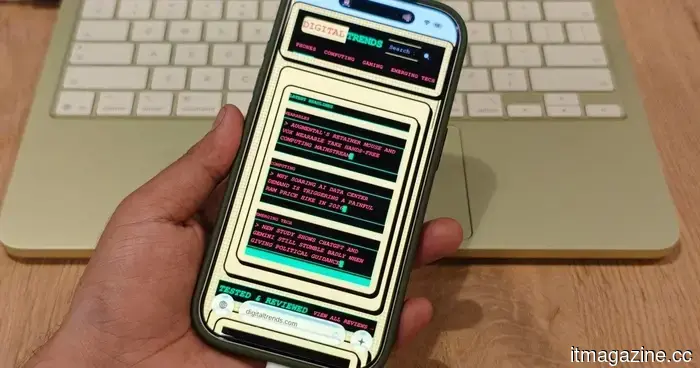 Gem Browser envisions a web where every website can be reimagined by you.
Gem Browser leverages Gemini to reconstruct actual web pages based on reader prompts, providing enhanced control over the interface but also prompting challenging inquiries regarding the fate of a publisher's original layout.
Gem Browser envisions a web where every website can be reimagined by you.
Gem Browser leverages Gemini to reconstruct actual web pages based on reader prompts, providing enhanced control over the interface but also prompting challenging inquiries regarding the fate of a publisher's original layout.
 Experts have found that it's simple to manipulate AI chatbots into revealing recipes for bioweapons.
Researchers discovered that ongoing conversations might lead significant AI chatbots to exceed their biological safety limits, as models that become more advanced gain knowledge that concerns biosecurity specialists.
Angola secures $321 million in its largest initial public offering to date with the Unitel listing.
Angola sold a 15% interest in Unitel for approximately $321 million, marking its largest initial public offering to date. The shares originate from a 2022 confiscation involving Isabel dos Santos.
Experts have found that it's simple to manipulate AI chatbots into revealing recipes for bioweapons.
Researchers discovered that ongoing conversations might lead significant AI chatbots to exceed their biological safety limits, as models that become more advanced gain knowledge that concerns biosecurity specialists.
Angola secures $321 million in its largest initial public offering to date with the Unitel listing.
Angola sold a 15% interest in Unitel for approximately $321 million, marking its largest initial public offering to date. The shares originate from a 2022 confiscation involving Isabel dos Santos.
 Nvidia is negotiating to secure $250 billion in debt for OpenAI's data centers.
Nvidia is said to be considering a $250 billion support package for OpenAI's 10GW campus in Ohio, along with $350 billion in chip financing. Detractors have described the arrangement as circular.
Nvidia is negotiating to secure $250 billion in debt for OpenAI's data centers.
Nvidia is said to be considering a $250 billion support package for OpenAI's 10GW campus in Ohio, along with $350 billion in chip financing. Detractors have described the arrangement as circular.
 AI vendors are transitioning from subscription models to consumption-based pricing. AI PCs serve as a safeguard.
Leading software companies are moving away from per-seat AI pricing in favor of token-based consumption. AI PCs that operate models locally provide businesses a way to limit expenses as cloud costs increase.
AI vendors are transitioning from subscription models to consumption-based pricing. AI PCs serve as a safeguard.
Leading software companies are moving away from per-seat AI pricing in favor of token-based consumption. AI PCs that operate models locally provide businesses a way to limit expenses as cloud costs increase.
Amazon requested the FCC's approval for a network of 5,105 satellites that would provide internet directly to your phone.
Amazon has submitted plans to deploy 5,105 satellites for direct-to-device connectivity, integrating resources from Kuiper and Globalstar. The launch is planned for 2028. Meanwhile, SpaceX is already providing direct-to-device service through T-Mobile.