
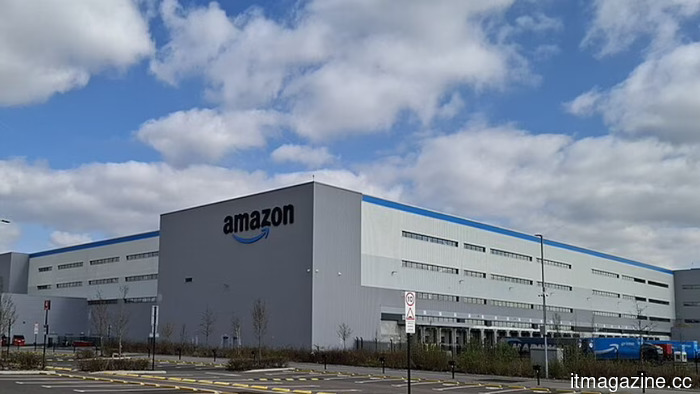
Amazon requested the FCC's approval for 5,105 satellites intended for a network that transmits internet directly to your mobile device.
Amazon has submitted a request to the FCC to launch 5,105 satellites aimed at creating a direct-to-device network that will provide connectivity directly to smartphones, eliminating the need for cell towers. The filing, made on Saturday, details a satellite constellation that merges Amazon's existing Kuiper system with resources from Globalstar, a satellite operator that Amazon announced its intention to acquire for $11.6 billion in April. The deployment is scheduled to commence in 2028.
The direct-to-device (D2D) segment represents the next competition in satellite internet. SpaceX currently offers this service through its Starlink Mobile in collaboration with T-Mobile in the U.S., utilizing spectrum acquired from EchoStar. Amazon’s filing focuses on users who are "unserved or underserved" by current wireless providers, as well as emergency operations, remote work sites, fleet management, and supply chain connectivity. At present, Amazon has over 390 Kuiper satellites in orbit, sufficient to initiate early Low Earth Orbit (LEO) internet service later this year and is obligated to deploy all 3,232 first-generation satellites by July 2029.
The proposed 5,105-satellite D2D constellation would be in addition to the existing Kuiper fleet. Amazon's LEO satellite internet began its enterprise beta phase in April, with a goal for commercial availability by mid-2026. The acquisition of Globalstar, expected to finalize in 2027, will provide Amazon with the terrestrial spectrum and direct-to-device technology that Kuiper lacks alone. Without Globalstar’s spectrum licenses, Amazon would not be able to legally transmit to mobile phones.
If fully deployed, the combined fleet would exceed 8,300 satellites, positioning Amazon as the second-largest satellite operator after SpaceX, which has more than 10,000 Starlink satellites in orbit. SpaceX’s expansion is becoming more challenging as the market for fixed satellite internet contracts, and both companies view D2D as the next source of revenue. The distinction lies in that SpaceX is already operational, while Amazon is seeking permission to start construction in 2028. Two years can be a lengthy timeframe in satellite deployment, but the $11.6 billion investment in Globalstar indicates that Amazon is determined not to fall behind in this competition.
Other articles
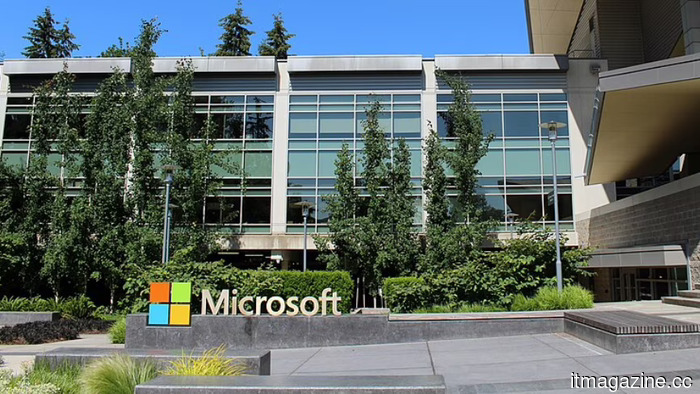 Microsoft has developed an autonomous security system featuring red, blue, and green team AI agents, which will enter public preview on August 3.
Project Perception employs AI agents that continuously attack, investigate, and resolve security vulnerabilities. Microsoft's MAI-Cyber-1-Flash achieved a score of 96% on CyberGym, surpassing Mythos by 12 points.
Microsoft has developed an autonomous security system featuring red, blue, and green team AI agents, which will enter public preview on August 3.
Project Perception employs AI agents that continuously attack, investigate, and resolve security vulnerabilities. Microsoft's MAI-Cyber-1-Flash achieved a score of 96% on CyberGym, surpassing Mythos by 12 points.
 Orange and Morrison intend to launch a EUR 3 billion data center project in France.
Orange and Morrison are set to develop a 400MW data centre platform in France, supported by EUR 3 billion, which is presented as an initiative for European sovereignty financed by a manager from New Zealand.
Orange and Morrison intend to launch a EUR 3 billion data center project in France.
Orange and Morrison are set to develop a 400MW data centre platform in France, supported by EUR 3 billion, which is presented as an initiative for European sovereignty financed by a manager from New Zealand.
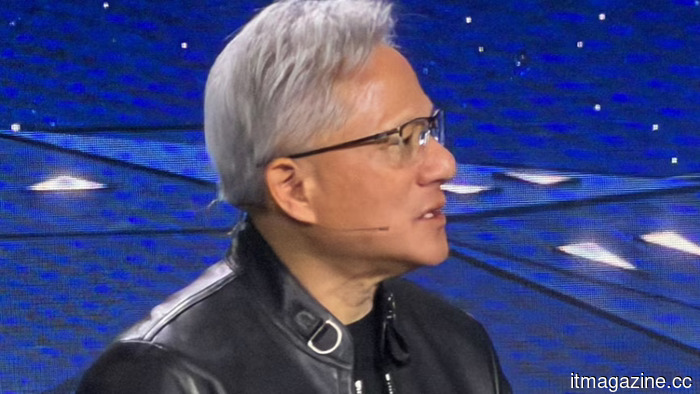 Nvidia is negotiating to secure $250 billion in debt for OpenAI's data centers.
Nvidia is said to be considering a $250 billion support package for OpenAI's 10GW campus in Ohio, along with $350 billion in chip financing. Detractors have described the arrangement as circular.
Nvidia is negotiating to secure $250 billion in debt for OpenAI's data centers.
Nvidia is said to be considering a $250 billion support package for OpenAI's 10GW campus in Ohio, along with $350 billion in chip financing. Detractors have described the arrangement as circular.
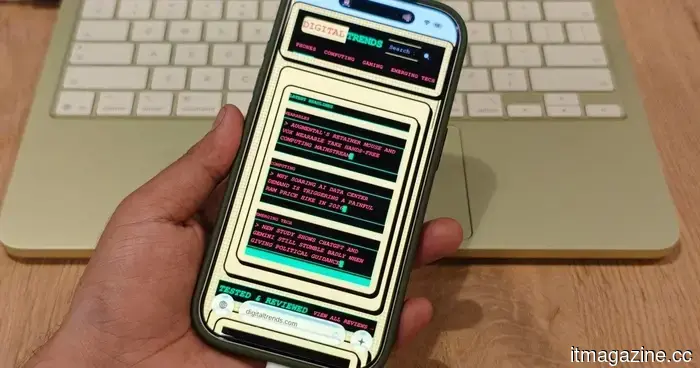 Gem Browser envisions a web where every website can be reimagined by you.
Gem Browser leverages Gemini to reconstruct actual web pages based on reader prompts, providing enhanced control over the interface but also prompting challenging inquiries regarding the fate of a publisher's original layout.
Gem Browser envisions a web where every website can be reimagined by you.
Gem Browser leverages Gemini to reconstruct actual web pages based on reader prompts, providing enhanced control over the interface but also prompting challenging inquiries regarding the fate of a publisher's original layout.
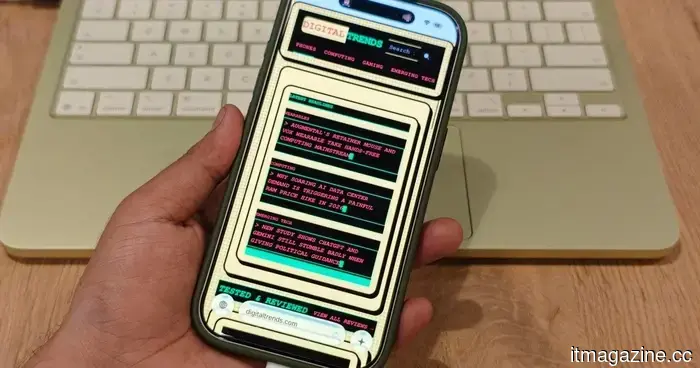 Gem Browser envisions an internet where you can reimagine the design of every website.
Gem Browser utilizes Gemini to reconstruct authentic web pages based on reader prompts, providing enhanced control over the interface but also raising difficult questions regarding the fate of a publisher's original design.
Dopl Technologies secures $6.3 million to introduce remote robotic ultrasound services in rural hospitals.
Dopl Technologies secured $6.3 million to develop a telerobotic ultrasound system. Sonographers will control it remotely using haptic controllers. The next step is obtaining FDA clearance. The system promises a 90% reduction in wait times.
Gem Browser envisions an internet where you can reimagine the design of every website.
Gem Browser utilizes Gemini to reconstruct authentic web pages based on reader prompts, providing enhanced control over the interface but also raising difficult questions regarding the fate of a publisher's original design.
Dopl Technologies secures $6.3 million to introduce remote robotic ultrasound services in rural hospitals.
Dopl Technologies secured $6.3 million to develop a telerobotic ultrasound system. Sonographers will control it remotely using haptic controllers. The next step is obtaining FDA clearance. The system promises a 90% reduction in wait times.
Amazon requested the FCC's approval for 5,105 satellites intended for a network that transmits internet directly to your mobile device.
Amazon submitted a proposal to deploy 5,105 satellites for direct-to-device connectivity. This initiative merges Kuiper and Globalstar resources, with a deployment goal set for 2028. SpaceX is already providing direct-to-device services in partnership with T-Mobile.