

US computer science enrollment declines for the first time in two decades.
Computer science had long been a reliable choice. For two decades, enrollment in the US consistently increased. However, during the 2025-26 academic year, it experienced a decline.
The Change
This observation comes from Jacob Light, an economist at Stanford’s Hoover Institution, whose research was reported by Business Insider. His extensive dataset encompasses over 50 million course sections from more than 1,019 US colleges since 1996. For the first time in nearly twenty years, there was a decrease in the proportion of enrollments in computer science.
On average, enrollment in computer science classes decreased by around 4.6% year over year at most schools. Nationally, the decline is evident as well, with the National Student Clearinghouse reporting an 8.1% drop in undergraduate computer-science enrollment at four-year institutions in autumn 2025, equating to a fall from approximately 659,700 students to 606,100.
From Growth to Decline
The backdrop of this decline is the significant growth in previous years. According to National Science Foundation data, the number of computer science bachelor's degrees more than doubled over a decade, rising from about 56,000 in 2014 to 122,000 in 2024. This marks the first notable interruption in that trend.
The timing is pertinent as the drop coincides with AI assistants becoming widespread, capable of writing, debugging, and completing coding tasks. Additionally, the entry-level software job market has softened.
Caution
However, this aspect may be overlooked in headlines. Light does not attribute the decline directly to AI. He views the data as descriptive rather than causal and suggests five potential factors. These include a sluggish job market for junior developers, skepticism about the worth of a CS degree, lower math proficiency, demographic shifts tied to immigration, and the growth of data science.
The data does not clarify the individual impacts of these factors. Furthermore, computer science has historically experienced cycles of growth and decline, so a drop isn't unprecedented, and enrollment remains above its 2022 levels.
What It Means
Despite these disclaimers, the trend is significant. Students are interpreting the same signals as the job market. Companies like Verizon are downsizing, and JPMorgan's CEO has indicated that AI has already reduced a third of certain jobs. Some demand is shifting to skilled trades, raising concerns that the field developing AI may lose talent essential for future advancements.
Conversely, there is an opposing viewpoint. The head of Google DeepMind asserts that a STEM degree still greatly enhances effectiveness when working with AI. Light concurs that many graduates will find substantial value in holding such a degree. Whether this is merely a temporary setback or the beginning of a broader reassessment remains to be seen, as students evaluate a degree against the prevailing culture of programming. Future enrollment figures will provide further insight.
Other articles
 More than 50% of the music uploaded to Deezer is now created by AI.
Deezer reports that AI-generated music has reached over 90,000 daily uploads, accounting for more than half of its overall content, with a significant portion being streaming fraud. The platform is working to remove these fraudulent entries.
More than 50% of the music uploaded to Deezer is now created by AI.
Deezer reports that AI-generated music has reached over 90,000 daily uploads, accounting for more than half of its overall content, with a significant portion being streaming fraud. The platform is working to remove these fraudulent entries.
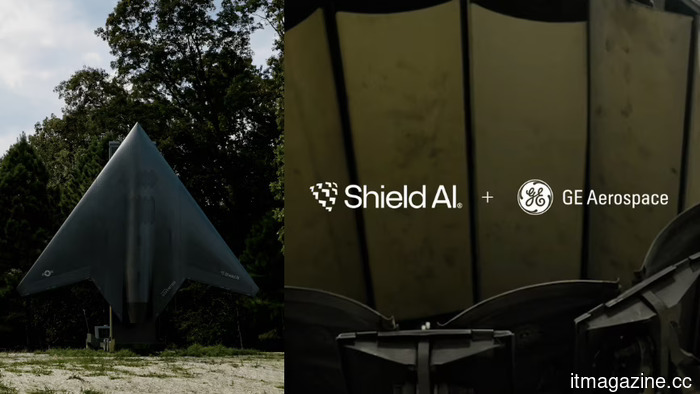 Shield AI's X-BAT: the AI fighter jet that doesn't require a runway.
Shield AI and GE Aerospace have activated the engine of the X-BAT, an AI-operated jet that can take off vertically without the need for a runway. Flight tests are scheduled to occur later this year.
Shield AI's X-BAT: the AI fighter jet that doesn't require a runway.
Shield AI and GE Aerospace have activated the engine of the X-BAT, an AI-operated jet that can take off vertically without the need for a runway. Flight tests are scheduled to occur later this year.
 Samsung's promotion of doubling storage for preorders has ended in Austria, and the new offer is not as appealing.
Samsung has eliminated its traditional pre-order benefit of double storage at no extra cost for Austria, substituting it with discounted upgrade options for the Galaxy Z Fold 8 and Z Flip 8.
Samsung's promotion of doubling storage for preorders has ended in Austria, and the new offer is not as appealing.
Samsung has eliminated its traditional pre-order benefit of double storage at no extra cost for Austria, substituting it with discounted upgrade options for the Galaxy Z Fold 8 and Z Flip 8.
 The United States warns of potential sanctions on Chinese AI, while Huang responds defiantly.
Scott Bessent from Treasury has stated that the United States might impose sanctions on Chinese AI models due to "IP theft." In response, Nvidia's Jensen Huang describes the alarm as misguided, asserting there is "zero possibility."
The United States warns of potential sanctions on Chinese AI, while Huang responds defiantly.
Scott Bessent from Treasury has stated that the United States might impose sanctions on Chinese AI models due to "IP theft." In response, Nvidia's Jensen Huang describes the alarm as misguided, asserting there is "zero possibility."
 Google and Ford are investing in trading as artificial intelligence takes over office roles.
Google, Ford, Carhartt, and BlackRock have formed a partnership aimed at filling 2.1 million skilled-trade positions by 2030, focusing on jobs that cannot be automated by AI.
Google and Ford are investing in trading as artificial intelligence takes over office roles.
Google, Ford, Carhartt, and BlackRock have formed a partnership aimed at filling 2.1 million skilled-trade positions by 2030, focusing on jobs that cannot be automated by AI.
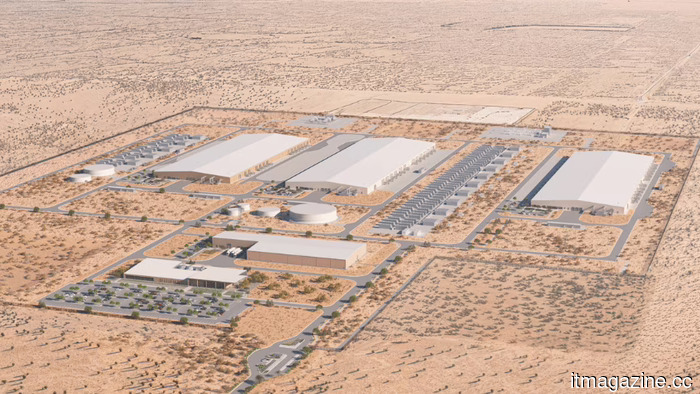 BlackRock secures $12 billion for Meta's data center in El Paso.
BlackRock is spearheading a $12 billion debt issuance to construct Meta's data center in El Paso, holding 80% of the stake and ensuring that the majority of the expenses are not reflected on Meta's balance sheet.
BlackRock secures $12 billion for Meta's data center in El Paso.
BlackRock is spearheading a $12 billion debt issuance to construct Meta's data center in El Paso, holding 80% of the stake and ensuring that the majority of the expenses are not reflected on Meta's balance sheet.
US computer science enrollment declines for the first time in two decades.
A Stanford study reveals that enrolment in computer science programs in the US has declined for the first time in 20 years, attributed to AI's capability to write code, although economists are not yet placing blame on AI.