
SkyPilot secures $20 million to position itself as the neutral hub for AI computing.
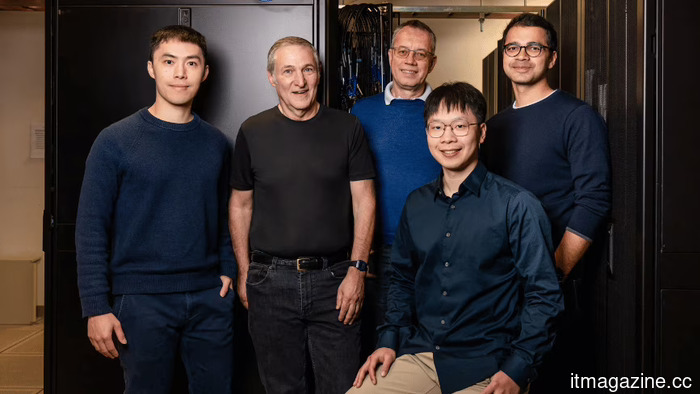
The company revealed itself from stealth mode on Tuesday. The founders developed it at UC Berkeley, in the same lab that gave rise to Spark, Databricks, and Anyscale. The team features Zongheng Yang alongside Databricks co-founders Ion Stoica and Scott Shenker.
The high-profile investment
Lux Capital spearheaded the $20 million seed funding round, as first reported by Fortune. Coatue, Amplify, Foundation, Race, and The House Fund also contributed. The list of angel investors is impressive, including Databricks’ Ali Ghodsi and Google’s Jeff Dean, along with the leaders of Vercel, Replit, and Hugging Face.
They are wagering on a layer that Nvidia had previously sought. The company acquired Run:ai for around $700 million in 2024 to address a similar challenge. Analysts anticipate the AI orchestration market will expand from approximately $14 billion this year to over $60 billion by 2034.
A fragmented computing landscape
The issue that SkyPilot addresses is fragmentation. The demand for GPUs significantly exceeds the supply. Consequently, every AI team ends up contacting five to ten providers from the outset just to gather enough chips, as noted by SiliconAngle. They then face difficulties in utilizing them collectively.
The heart of EU tech
The latest updates from the EU tech sector, an insightful piece from our experienced founder Boris, and some dubious AI-generated art. It's free, delivered weekly to your inbox. Sign up now! SkyPilot functions as a control plane that consolidates everything into a single interface, spanning over 20 clouds, neoclouds, Kubernetes, and Slurm. It selects the most accessible hardware, allocates workloads to idle chips, and shifts jobs without requiring code changes. The open-source version has been downloaded over 14 million times, with leading deployments operating more than 10,000 GPUs.
The advantage of neutrality
SkyPilot is not beholden to any single cloud provider or chip manufacturer. They view Nebius and CoreWeave as partners rather than competitors. Their advantage is straightforward: it directs your workload to wherever it can be run most economically.
This alters the pressing question facing the industry: can AI companies turn a profit? Yang highlights Cursor, which had negative margins until it ceased renting a competitor’s models and began training its own. He refers to that transformation as “custom intelligence,” which is now more economical due to open-weight models that are comparable to GPT and Claude.
The drawback
There is a noticeable gap. The code has been available for free on GitHub for years, raising the question of what prevents customers from using it without payment. Lux’s Brandon Reeves responds that the free version is, in his words, “probably only 1% complete.”
The deeper investment lies with Stoica himself. His Berkeley lab has already produced two multibillion-dollar enterprises, making it a hub for students aiming to create the next one. SkyPilot offers not just a product but a promise. The entity that controls the computing layer, rather than any singular chip, may dominate the upcoming phase of AI.
Other articles
 Samsung's promotion of doubling storage for preorders has ended in Austria, and the new offer is not as appealing.
Samsung has eliminated its traditional pre-order benefit of double storage at no extra cost for Austria, substituting it with discounted upgrade options for the Galaxy Z Fold 8 and Z Flip 8.
Samsung's promotion of doubling storage for preorders has ended in Austria, and the new offer is not as appealing.
Samsung has eliminated its traditional pre-order benefit of double storage at no extra cost for Austria, substituting it with discounted upgrade options for the Galaxy Z Fold 8 and Z Flip 8.
 US computer science enrollment declines for the first time in two decades.
A Stanford study reveals that enrolment in computer science programs in the US has declined for the first time in 20 years, attributed to AI's capability to write code, although economists are not yet placing blame on AI.
US computer science enrollment declines for the first time in two decades.
A Stanford study reveals that enrolment in computer science programs in the US has declined for the first time in 20 years, attributed to AI's capability to write code, although economists are not yet placing blame on AI.
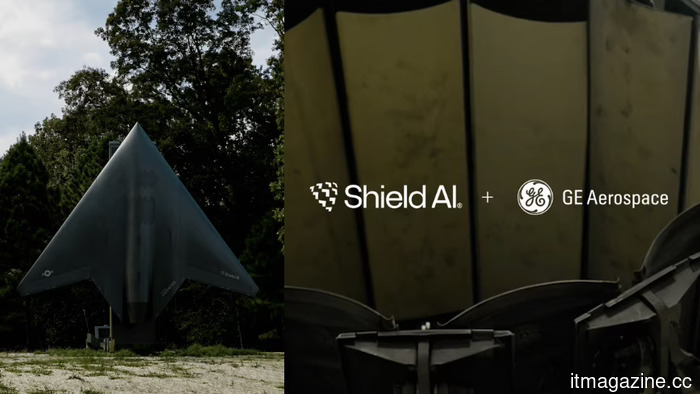 Shield AI's X-BAT: the AI fighter jet that doesn't require a runway.
Shield AI and GE Aerospace activated the engine of the X-BAT, an AI-controlled jet capable of vertical takeoff without the need for a runway. Flight tests are scheduled for later this year.
Shield AI's X-BAT: the AI fighter jet that doesn't require a runway.
Shield AI and GE Aerospace activated the engine of the X-BAT, an AI-controlled jet capable of vertical takeoff without the need for a runway. Flight tests are scheduled for later this year.
 More than 50% of the music uploaded to Deezer is now created by AI.
Deezer reports that AI-generated music has reached over 90,000 daily uploads, accounting for more than half of its overall content, with a significant portion being streaming fraud. The platform is working to remove these fraudulent entries.
Estée Lauder affected by Oracle E-Business data breach.
Estée Lauder reported that hackers took employees' Social Security numbers, banking, and health information through a vulnerability in Oracle E-Business in 2025, revealing the breach almost a year later.
More than 50% of the music uploaded to Deezer is now created by AI.
Deezer reports that AI-generated music has reached over 90,000 daily uploads, accounting for more than half of its overall content, with a significant portion being streaming fraud. The platform is working to remove these fraudulent entries.
Estée Lauder affected by Oracle E-Business data breach.
Estée Lauder reported that hackers took employees' Social Security numbers, banking, and health information through a vulnerability in Oracle E-Business in 2025, revealing the breach almost a year later.
 A gas-rich outback station may accommodate a $28 billion off-grid AI data center.
Energy North plans to construct a 1GW off-grid AI data center at Murranji Station in Australia’s gas-abundant Barkly region, with the total project estimated to cost approximately $28 billion.
A gas-rich outback station may accommodate a $28 billion off-grid AI data center.
Energy North plans to construct a 1GW off-grid AI data center at Murranji Station in Australia’s gas-abundant Barkly region, with the total project estimated to cost approximately $28 billion.
SkyPilot secures $20 million to position itself as the neutral hub for AI computing.
Ion Stoica's team at Berkeley has secured $20 million for SkyPilot, a provider-agnostic control plane that consolidates dispersed AI computing resources from over 20 cloud platforms into a single entity.