

The Snapseed Camera now enables Android users to save original images and include geotags.
Google seems to be subtly transforming Snapseed into more than merely a photo editing application. In recent weeks, the company has been gradually enhancing Snapseed Camera, its independent camera app for Android. The latest update adds two useful features that many smartphone users now anticipate from contemporary camera applications: the option to save an untouched version of each image for future editing and the ability to embed location data directly into photos.
While neither feature is particularly flashy, they collectively enhance Snapseed Camera's functionality, especially for users who enjoy experimenting with filters without making permanent changes to their original photos. As reported by 9to5Google, these features are being introduced with Snapseed Camera version 4.1.1.x on Android.
This update also represents Google’s ongoing effort to broaden Snapseed Camera’s feature set after years of relatively slow enhancements, indicating that the company may have larger plans for the app.
Two minor additions addressing common photography issues
The most significant addition is Location Metadata, a new option that enables photos taken with Snapseed Camera to include geotags. This option is turned off by default and requires users to permit Android’s location access before the camera starts recording where the image was captured.
For many users, geotagging might seem like a slight convenience. However, it considerably simplifies the organization of extensive photo libraries. Applications like Google Photos can categorize images by location, making it easier to revisit vacations, road trips, or significant events years later.
The second feature is arguably even more beneficial for photography enthusiasts. The new “Capture original for re-editing” feature allows Snapseed Camera to save an unedited version of each photo alongside the edited one. Users applying Film Styles or Looks can now access the original unmodified version instead of being confined to a single edit. The update also introduces options to select different storage locations for edited and original images, offering users greater flexibility in file management.
Google appears to be committed to revitalizing Snapseed
On their own, these upgrades are not revolutionary. What’s noteworthy is the speed at which they are being implemented. Earlier this month, Google enhanced RAW editing support within Snapseed and introduced features like grid lines, level indicators, and better editing controls to the camera app. The latest update builds on these enhancements rather than presenting isolated features, suggesting a more extensive initiative to modernize an app that many believed had fallen off the radar.
This is significant because smartphone photography increasingly relies on software. While manufacturers continue to advance camera hardware, many users now evaluate a camera's performance based on the flexibility it provides post-capture. Features such as non-destructive editing, RAW workflows, and organized photo management have become standard expectations, especially among enthusiasts.
Snapseed already enjoys a dedicated user base due to its robust editing capabilities, but its companion camera app has struggled to attract similar interest. These incremental updates indicate that Google is working to bridge that gap by making the shooting experience as proficient as the editing process.
If Google maintains this release pace, Snapseed Camera may develop into a compelling alternative to default camera applications for users seeking greater control over the way their photos are captured, stored, and edited without depending on third-party photography software.


Other articles
 Kanishka Narayan is appointed as the UK’s inaugural cabinet-level minister for AI.
Kanishka Narayan is appointed as the inaugural AI minister in the UK, participating in the cabinet following the decision of new Prime Minister Andy Burnham to dissolve the DSIT and restructure Whitehall to focus on technology.
Kanishka Narayan is appointed as the UK’s inaugural cabinet-level minister for AI.
Kanishka Narayan is appointed as the inaugural AI minister in the UK, participating in the cabinet following the decision of new Prime Minister Andy Burnham to dissolve the DSIT and restructure Whitehall to focus on technology.
 According to the Financial Times, China is considering implementing export restrictions on its artificial intelligence models and chips.
According to the Financial Times, China is reportedly considering imposing export restrictions on its AI models and the chips that power them, although no decisions have been made yet.
According to the Financial Times, China is considering implementing export restrictions on its artificial intelligence models and chips.
According to the Financial Times, China is reportedly considering imposing export restrictions on its AI models and the chips that power them, although no decisions have been made yet.
 After months of anticipation, WhatsApp’s Liquid Glass redesign is finally set to arrive on Mac.
WhatsApp has started implementing its redesign for Mac, inspired by Liquid Glass, which features an updated interface, enhanced navigation, and specific sections for Locked Chats and Communities.
After months of anticipation, WhatsApp’s Liquid Glass redesign is finally set to arrive on Mac.
WhatsApp has started implementing its redesign for Mac, inspired by Liquid Glass, which features an updated interface, enhanced navigation, and specific sections for Locked Chats and Communities.
 Tennessee puts Instagram's compelling design under scrutiny as Meta engages in a jury trial lasting seven weeks.
The seven-week trial in Tennessee regarding allegations that Instagram was designed to be addictive for teenagers has now reached a jury in Nashville, marking a new challenge for Meta.
Tennessee puts Instagram's compelling design under scrutiny as Meta engages in a jury trial lasting seven weeks.
The seven-week trial in Tennessee regarding allegations that Instagram was designed to be addictive for teenagers has now reached a jury in Nashville, marking a new challenge for Meta.
 Tennessee puts Instagram's compelling design under scrutiny as Meta prepares for a seven-week jury battle.
The seven-week trial in Tennessee concerning allegations that Instagram was designed to be addictive for teenagers has been presented to a jury in Nashville, marking a new challenge for Meta.
Tennessee puts Instagram's compelling design under scrutiny as Meta prepares for a seven-week jury battle.
The seven-week trial in Tennessee concerning allegations that Instagram was designed to be addictive for teenagers has been presented to a jury in Nashville, marking a new challenge for Meta.
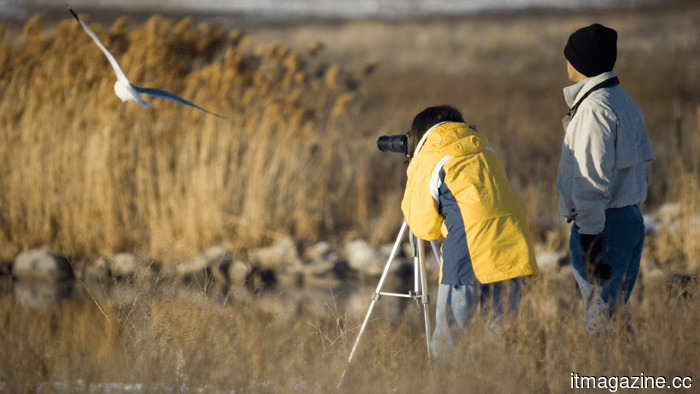 AI-generated misinformation is fabricating rare bird sightings and negatively impacting scientific research.
AI-altered images are creating false reports of rare bird sightings on iNaturalist, and scientists caution that this AI-generated content could compromise biodiversity records.
AI-generated misinformation is fabricating rare bird sightings and negatively impacting scientific research.
AI-altered images are creating false reports of rare bird sightings on iNaturalist, and scientists caution that this AI-generated content could compromise biodiversity records.
The Snapseed Camera now enables Android users to save original images and include geotags.
Google has enhanced the Snapseed Camera for Android by introducing geotag support, saving original photos, and improving file management for photographers.