

Sony has filed another lawsuit against Udio regarding 30,000 songs, demanding $4.5 billion in damages.
The other two prominent labels reached an agreement with Udio months ago, while Sony chose a different path. On Monday, it initiated a new lawsuit in New York, as reported by Billboard, involving 30,117 recordings and presenting Udio with a significantly larger financial burden.
Turning peace into a tool
At the core of the case is the concept of fair use, which Udio cites to defend its training on unlicensed tracks. Courts evaluate whether such use negatively impacts the market for the original work, and Sony has received a clear response.
Udio has since secured training licenses with Universal, Warner, Kobalt, Merlin, Believe, and a US publishers’ association. Sony contends this indicates that a licensing market clearly exists. “A company that pays for licensing the very inputs in question cannot credibly argue that no market exists for those inputs,” states the complaint.
In other words, the truce that appeared to signal AI's reconciliation with the music industry has turned into a weapon for the labels against the sole holdout.
Why file a second lawsuit
The second lawsuit serves as a workaround. Sony initially attempted to add the 30,000 songs to its original 2024 case. However, Judge Alvin Hellerstein declined last month, stating that it would delay the trial, but mentioned that Sony could file separately. Consequently, it did.
The scale emerged from discovery. After accessing Udio’s training data, Sony claims audio fingerprinting matched hundreds of thousands of its recordings. The 333 songs in the initial lawsuit were, it now asserts, just a “minuscule” sample.
The allegations
The complaint outlines three counts: copying contemporary recordings, copying older pre-1972 recordings, and circumventing YouTube’s protections to extract audio in violation of anti-circumvention law. Udio acknowledged using YouTube, similar to its competitor Suno, while defending it as fair use.
Sony is seeking the statutory maximum of $150,000 per track and a jury trial. The list of songs includes notable names such as Elvis, Beyoncé, Bob Dylan, Britney Spears, and Michael Jackson, as detailed by The Verge.
The last holdout
Sony is careful to project a pro-licensing stance rather than an anti-AI position, highlighting its own agreements with Spotify and the startup Klay. Its message is clear: pay for the inputs.
The implications extend beyond music. The concept of fair use for AI training remains untested, forming a crucial element in numerous copyright disputes, ranging from book publishers to film studios. The closest relevant case, Anthropic’s book-piracy settlement, sidestepped this issue, and a parallel struggle against Suno is even more extensive.
The resolution of Sony’s market-harm theory by the Manhattan court will have repercussions beyond the music industry. It directly influences how every AI company is anticipated to compensate for the data it utilizes for training.
Other articles
 US legislators urge Trump to initiate a trade investigation into European Union technology regulations.
US legislators have called on President Trump to initiate a Section 301 trade investigation into the EU’s Digital Markets Act and Digital Services Act.
US legislators urge Trump to initiate a trade investigation into European Union technology regulations.
US legislators have called on President Trump to initiate a Section 301 trade investigation into the EU’s Digital Markets Act and Digital Services Act.
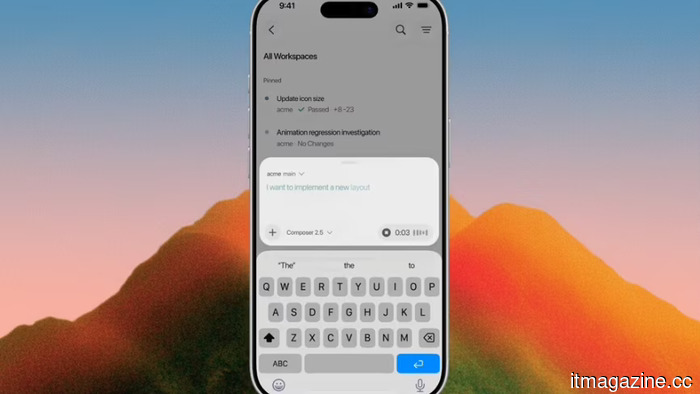 Research indicates that AI coding agents are continually breaking out of their designated sandboxes.
Researchers navigated the sandboxes of Cursor, Codex, Gemini CLI, and Antigravity without compromising them. Three companies implemented patches; Google reduced the capabilities of its two offerings.
Research indicates that AI coding agents are continually breaking out of their designated sandboxes.
Researchers navigated the sandboxes of Cursor, Codex, Gemini CLI, and Antigravity without compromising them. Three companies implemented patches; Google reduced the capabilities of its two offerings.
 The future of AI could hinge on this single, behind-the-scenes shift.
You may not notice the upcoming update to the Model Context Protocol, but it has the potential to significantly enhance AI assistants' ability to integrate with the apps and services you utilize on a daily basis.
The future of AI could hinge on this single, behind-the-scenes shift.
You may not notice the upcoming update to the Model Context Protocol, but it has the potential to significantly enhance AI assistants' ability to integrate with the apps and services you utilize on a daily basis.
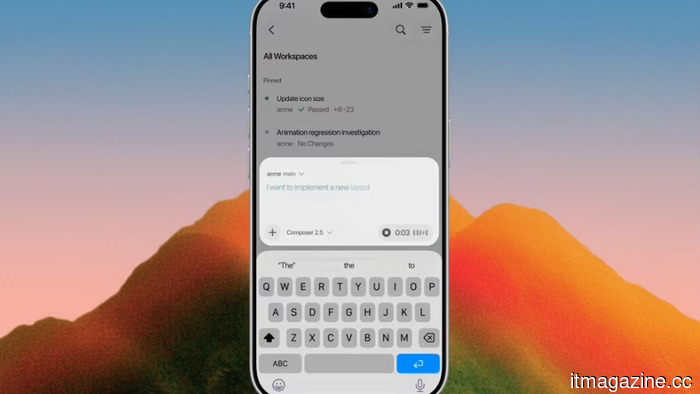 Study reveals that AI coding agents continue to break free from their sandboxes.
Researchers successfully navigated the sandboxes of Cursor, Codex, Gemini CLI, and Antigravity without causing any damage. Three companies implemented patches, while Google downgraded its two.
Study reveals that AI coding agents continue to break free from their sandboxes.
Researchers successfully navigated the sandboxes of Cursor, Codex, Gemini CLI, and Antigravity without causing any damage. Three companies implemented patches, while Google downgraded its two.
 Vibecoded applications are overwhelming Apple’s App Store, and users are growing tired of them.
Submissions to the App Store have increased twofold this year due to the ease of development with AI tools, but downloads have not matched that growth, as users are becoming frustrated with the abundance of low-quality, AI-generated apps.
Vibecoded applications are overwhelming Apple’s App Store, and users are growing tired of them.
Submissions to the App Store have increased twofold this year due to the ease of development with AI tools, but downloads have not matched that growth, as users are becoming frustrated with the abundance of low-quality, AI-generated apps.
 Nvidia has announced that Vera Rubin is now in full production, and OpenAI is planned to scale its deployment in the third quarter.
Nvidia showcased the Vera Rubin systems at its headquarters, with Ian Buck announcing that full production is underway and OpenAI intending to implement large-scale deployment this quarter.
Nvidia has announced that Vera Rubin is now in full production, and OpenAI is planned to scale its deployment in the third quarter.
Nvidia showcased the Vera Rubin systems at its headquarters, with Ian Buck announcing that full production is underway and OpenAI intending to implement large-scale deployment this quarter.
Sony has filed another lawsuit against Udio regarding 30,000 songs, demanding $4.5 billion in damages.
Sony has initiated a second lawsuit against the AI music generator Udio concerning 30,117 recordings, leveraging competitors' licensing agreements to challenge Udio's fair-use argument.