

The future of AI could hinge on this single, behind-the-scenes shift.
How it all started. / (Nadeem Sarwar / Digital Trends)
When a new AI model is released, it’s easy to get swept away by the exciting features. We discuss its enhanced intelligence, rapid response times, or the lifelike quality of its generated images. However, all these aspects become irrelevant if the AI struggles to interact effectively with the everyday applications and services people utilize.
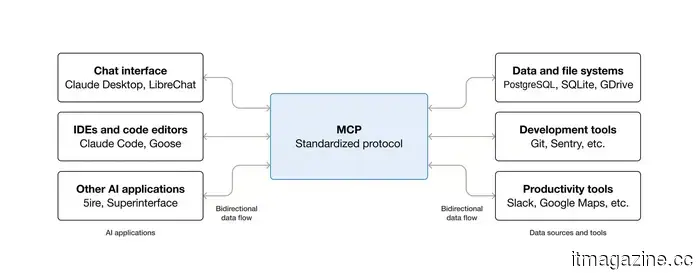
This is why a forthcoming update to the Model Context Protocol (MCP) has piqued my interest. It's not a novel chatbot or an impressive AI model, and in fact, most people might not even be aware of this change. However, it has the potential to significantly improve the AI ecosystem. If you’re unfamiliar with MCP, think of it as a shared communication framework that enables AI assistants to safely interact with applications such as Gmail, Slack, calendars, databases, and many other services. Rather than each company creating its own method of establishing these connections, MCP provides a unified guide.
The issue wasn’t the AI itself — it was the surrounding framework
A common misconception is that AI improves solely with the launch of more advanced models. In truth, many of the challenges faced today stem from infrastructure rather than intelligence.
Model Context Protocol (MCP)
Imagine having to reintroduce yourself to a friend every few minutes during a conversation. This is akin to how many AI services currently operate. Servers expend unnecessary resources trying to identify who is communicating with them, especially with thousands of users simultaneously accessing the service. The updated version of MCP alters this methodology by simplifying the process of transferring requests between different servers rather than having one server manage all conversations. It might seem like a minor technical adjustment, but it alleviates a significant amount of complexity for companies managing AI services at scale.
Sometimes, a lack of excitement is just what AI requires
This update won’t instantly make platforms like ChatGPT, Claude, or Gemini appear significantly more intelligent. However, it could facilitate the development, maintenance, and integration of future AI products with the tools people already use. This is essential as AI expands beyond chatbots to encompass a broader role in our digital experiences.
Rachit Agarwal / Digital Trends
I appreciate updates like this because they highlight that genuine advancement isn’t always apparent. Sometimes, it’s not about teaching AI a new skill; it’s about improving the underlying infrastructure so that everything else functions smoothly, paving the way for bigger benefits. While this may not seem thrilling right now, it is precisely the kind of enhancement that will make future AI seem seamless and considerably more beneficial.
Shimul is a contributor at Digital Trends, bringing over five years of experience in the technology sector.
Yet another study indicates that AI poses risks to elections, and the situation is becoming more concerning
AI may be a ticking time bomb for elections
In yet another study, it has been determined that seeking political advice from an AI chatbot is a remarkably poor choice. Research conducted during Hungary’s 2026 parliamentary elections revealed that ChatGPT and Google Gemini not only provided inaccurate but also inconsistent and unreliable voting recommendations. The chatbots misrepresented voter profiles, failed to acknowledge relevant parties, suggested parties not even listed on the ballot, and sometimes delivered vastly different responses when the same information was provided repeatedly.
AI continues to struggle with voter guidance
Read more
Samsung's humanoid robot aspirations are serious, but factory automation takes precedence
Samsung's emerging robotics division is focused on humanoids, although its immediate objectives revolve around practical factory automation
Samsung aims to be a player in the humanoid sector, but its robotics initiative will initially target factory-based machines rather than home-based ones. The CEO-led RX robotics division will start with manufacturing robots. Samsung has recognized humanoids as a priority area, though it has yet to unveil a commercial model or clarify how one will fit into its immediate strategy.
Read more
The AI-driven game development surge has a downside: diminishing opportunities for newcomers
Individual creators are thriving with tools like Claude Code and Copilot, yet entry-level game positions are dwindling.
AI is making it simpler than ever for an individual to create a game. This appears to be a positive development for creativity, which it certainly is in numerous ways. However, there’s a drawback. As generative AI tools empower solo developers and small studios to accomplish more with fewer personnel, this same trend is complicating matters for writers, artists, concept creators, and junior programmers trying to enter the gaming field.
AI is providing solo developers with extraordinary capabilities
Read more





Другие статьи
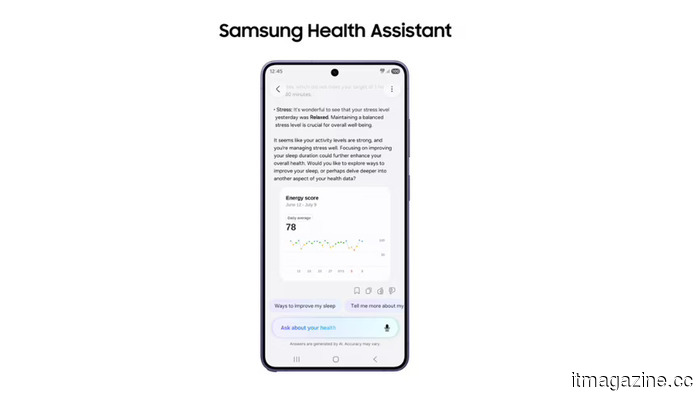 Samsung Health Assistant is now available in beta for users in the US.
Samsung Health Assistant, an AI feature the company describes as a first of its kind, is currently in beta for select users in the US, analyzing data related to sleep, activity, and vital signs.
Samsung Health Assistant is now available in beta for users in the US.
Samsung Health Assistant, an AI feature the company describes as a first of its kind, is currently in beta for select users in the US, analyzing data related to sleep, activity, and vital signs.
 Fig broadens its platform throughout the entire SecOps engineering lifecycle, establishing resilience as the standard.
Fig implements a CI/CD-style engineering lifecycle for security operations, enabling SecOps teams to design, simulate, deploy, and continuously monitor detection modifications, complete with full context and rollback options.
Fig broadens its platform throughout the entire SecOps engineering lifecycle, establishing resilience as the standard.
Fig implements a CI/CD-style engineering lifecycle for security operations, enabling SecOps teams to design, simulate, deploy, and continuously monitor detection modifications, complete with full context and rollback options.
 Sony has filed another lawsuit against Udio regarding 30,000 songs, demanding $4.5 billion in damages.
Sony has initiated a second lawsuit against the AI music generator Udio concerning 30,117 recordings, leveraging competitors' licensing agreements to challenge Udio's fair-use argument.
Sony has filed another lawsuit against Udio regarding 30,000 songs, demanding $4.5 billion in damages.
Sony has initiated a second lawsuit against the AI music generator Udio concerning 30,117 recordings, leveraging competitors' licensing agreements to challenge Udio's fair-use argument.
 Apple will introduce a Klarna-supported device leasing program named Apple Upgrade on July 28.
Apple Upgrade will allow customers to lease iPhones, Macs, iPads, and Apple Watches via Klarna, substituting the existing iPhone Upgrade Program and financing options.
Apple will introduce a Klarna-supported device leasing program named Apple Upgrade on July 28.
Apple Upgrade will allow customers to lease iPhones, Macs, iPads, and Apple Watches via Klarna, substituting the existing iPhone Upgrade Program and financing options.
 Electra is planning a factory in Ohio with an investment of $850 million for its ultra-short hybrid aircraft.
Electra, an aircraft startup, is expected to invest approximately $850 million in a factory located in Ohio to manufacture its nine-seat EL9 hybrid-electric ultra-short takeoff aircraft.
Electra is planning a factory in Ohio with an investment of $850 million for its ultra-short hybrid aircraft.
Electra, an aircraft startup, is expected to invest approximately $850 million in a factory located in Ohio to manufacture its nine-seat EL9 hybrid-electric ultra-short takeoff aircraft.
 Hackers are widely exploiting two vulnerabilities in WordPress.
Two fixed vulnerabilities in WordPress, known as wp2shell, are currently facing widespread attacks. AI played a role in identifying the issue and exploiting it. Millions of websites could be at risk.
Hackers are widely exploiting two vulnerabilities in WordPress.
Two fixed vulnerabilities in WordPress, known as wp2shell, are currently facing widespread attacks. AI played a role in identifying the issue and exploiting it. Millions of websites could be at risk.
The future of AI could hinge on this single, behind-the-scenes shift.
You may not notice the upcoming update to the Model Context Protocol, but it has the potential to significantly enhance AI assistants' ability to integrate with the apps and services you utilize on a daily basis.