
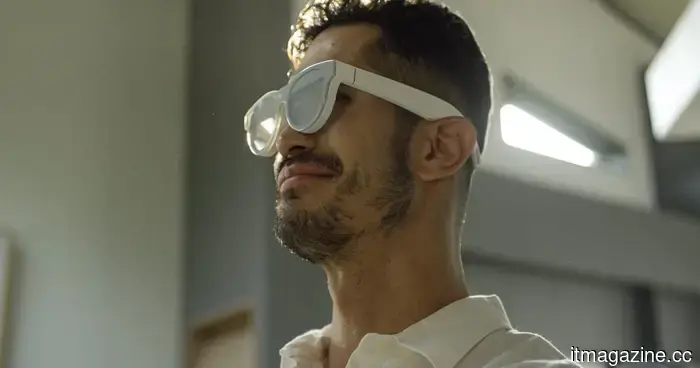
Your future AR glasses may finally eliminate the strange appearance of the real world.
Researchers have introduced a novel display technique that maintains the realism of virtual objects without diminishing the visibility of the real world.
The promise of augmented reality lies in its ability to integrate digital objects seamlessly with the physical environment. However, ironically, today’s AR glasses often make it more difficult to see the real world. A team at the Shibaura Institute of Technology (SIT) in Japan, led by Assistant Professor Xiaodan Hu, along with Dr. Yan Zhang and Professor Xubo Yang from Shanghai Jiao Tong University in China, and Professor Kiyoshi Kiyokawa from Nara Institute of Science and Technology in Japan, have created a new AR display method aimed at making virtual objects appear realistic without hindering the clarity of the surrounding environment. This research was published in IEEE Transactions on Visualization and Computer Graphics.
The primary challenge in augmented reality is not the virtual objects themselves, but rather the visibility of everything else around them.
Instead of just enhancing hardware, the researchers have devised a perception-driven display system that intelligently balances the visibility of real and virtual objects based on human vision. The objective is to render digital content realistically without darkening or complicating the user's environment.
Modern optical see-through AR glasses function by projecting digital objects into a user's view. To make these virtual objects appear solid and lifelike, the display often needs to block or dim some parts of the real world, a method known as occlusion. While this enhances immersion, it can diminish visibility, especially in bright settings or outdoor scenarios.
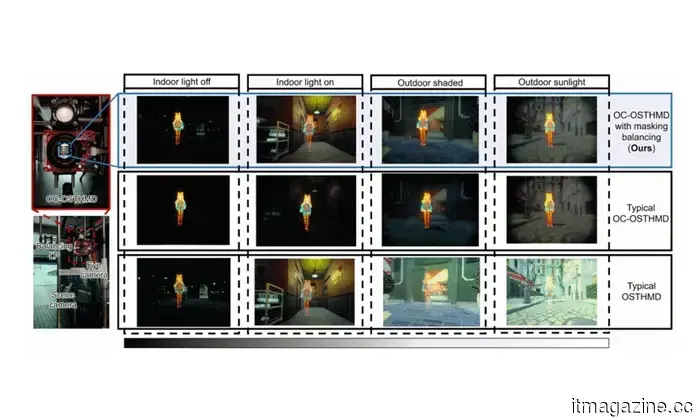
This new research proposes an alternative approach. Rather than merely obstructing more light, the team introduced a mask-balancing technique. Essentially, this display continuously adjusts the visibility of real-world and virtual elements, ensuring that neither overshadows the other. It operates like a sophisticated balancing act that keeps both the physical environment and digital overlays clearly visible.
The technology operates through a combination of polarized optical components such as a polarizing beam splitter and a linear polarizer, which together manage how much light from both the real world and the virtual display reaches the user’s eyes. By dynamically adjusting the angle between these components in real-time, the system consistently optimizes visibility according to lighting conditions.
The researchers also incorporated eye tracking and scene analysis to determine what the user is focusing on and how bright the surrounding area is. Using this data, it adjusts the balance of real and virtual images on the fly, ensuring that digital objects remain convincing while the real world remains bright and visible. Although the underlying optics may be intricate, the concept itself is straightforward: the display changes according to the environment instead of applying a one-size-fits-all approach.
The researchers conducted several user studies to assess how individuals perceive virtual objects in different lighting scenarios, using these insights to refine their display algorithm before testing it on a functional prototype. The final user study indicated that the system enhanced real-world visibility while keeping virtual objects looking realistic across various environments.
This technology has broader implications beyond gaming. As AR glasses such as the XREAL xbx a01+ and Snap SPECS AR make strides towards mainstream use, advancements like this could significantly enhance their practicality for navigation, medical assistance, industrial applications, education, and remote collaboration—contexts where users must simultaneously see both the real world and digital content clearly.



Other articles
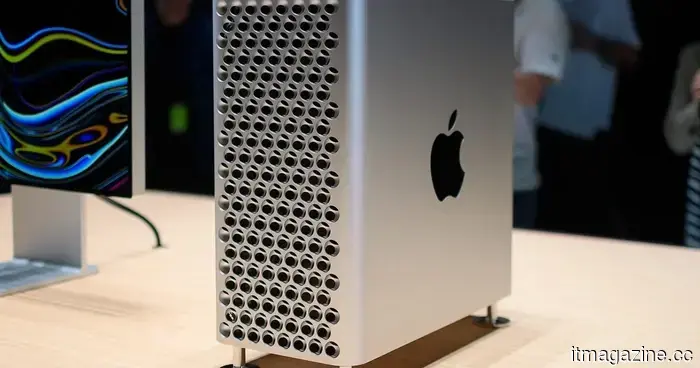 The Mac Pro almost featured an M3 Extreme chip, which is double the power of the M3 Ultra.
According to reports, Apple created an M3 Extreme chip that featured double the number of CPU and GPU cores compared to the M3 Ultra, but the project was ultimately canceled.
The Mac Pro almost featured an M3 Extreme chip, which is double the power of the M3 Ultra.
According to reports, Apple created an M3 Extreme chip that featured double the number of CPU and GPU cores compared to the M3 Ultra, but the project was ultimately canceled.
 A new phishing scam on X is utilizing false login notifications to capture your account information.
A phishing email that imitates X's genuine login notifications is circulating, aimed at stealing your password rather than safeguarding your account. Here’s how to identify the counterfeit and what steps to take if you inadvertently clicked on it.
A new phishing scam on X is utilizing false login notifications to capture your account information.
A phishing email that imitates X's genuine login notifications is circulating, aimed at stealing your password rather than safeguarding your account. Here’s how to identify the counterfeit and what steps to take if you inadvertently clicked on it.
 7 Tips for Apple Notes to Enhance Your Note-Taking Experience
From highlighted text to password-protected notes, here are seven Apple Notes tips hidden in menus you may have overlooked numerous times.
7 Tips for Apple Notes to Enhance Your Note-Taking Experience
From highlighted text to password-protected notes, here are seven Apple Notes tips hidden in menus you may have overlooked numerous times.
 Decart's Lucy 2.5 introduces fresh live video effects, yet the true victor is physical AI.
Decart's Lucy 2.5 introduces real-time visual effects to live video, featuring everything from explosions to virtual try-ons. However, the more significant development is how its enhanced physics engine bolsters the Oasis 3 world model simulations for robotics and autonomous vehicles.
Decart's Lucy 2.5 introduces fresh live video effects, yet the true victor is physical AI.
Decart's Lucy 2.5 introduces real-time visual effects to live video, featuring everything from explosions to virtual try-ons. However, the more significant development is how its enhanced physics engine bolsters the Oasis 3 world model simulations for robotics and autonomous vehicles.
 Covert prompts can unintentionally alter an AI's memory, and researchers indicate that this poses a significant issue.
Researchers have showcased GhostWriter, a novel attack method that covertly instills false memories into AI agents, affecting their future responses and independent actions.
Covert prompts can unintentionally alter an AI's memory, and researchers indicate that this poses a significant issue.
Researchers have showcased GhostWriter, a novel attack method that covertly instills false memories into AI agents, affecting their future responses and independent actions.
 The 'synthetic insider': AI deepfakes posing as fraudulent employees
AI deepfakes enable hackers to impersonate employees, creating the "synthetic insider" threat. However, the majority of insider leaks remain unintentional, and AI agents represent the next potential danger.
The 'synthetic insider': AI deepfakes posing as fraudulent employees
AI deepfakes enable hackers to impersonate employees, creating the "synthetic insider" threat. However, the majority of insider leaks remain unintentional, and AI agents represent the next potential danger.
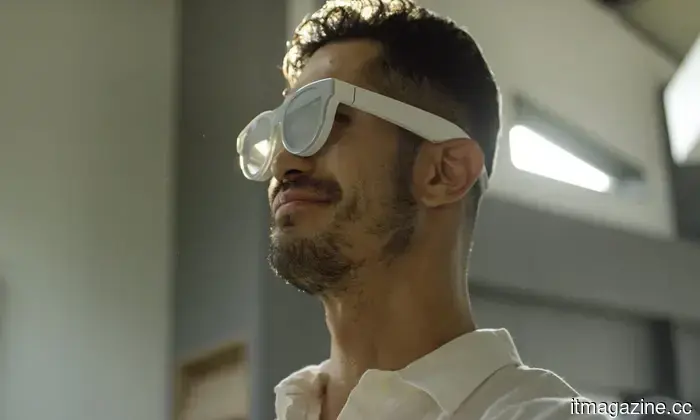
Your future AR glasses may finally eliminate the strange appearance of the real world.
Researchers have created a new augmented reality display technology that enhances visibility in the real world while ensuring that virtual objects appear realistic, thereby making future smart glasses safer and more functional.