

AI in Hollywood: The Dispute over Payments Involving Netflix, Nolan, and Others
The dispute surrounding AI in Hollywood has shifted from concerns about the future to those about the present. Recently, a studio, a director, and a union each established their position, which do not align with one another. Together, these positions reflect an industry that has already incorporated the technology, now merely arguing over the conditions.
The director’s caution
Christopher Nolan is known for not indulging in hype. His latest adaptation of “The Odyssey” is performing well at the box office and is notable for being the first feature filmed entirely in Imax. Therefore, when he comments on technology, Hollywood pays attention. In response to interviewer Hugo Travers’ question about whether AI could be seen as a modern Trojan horse, Nolan laughed, stating, “I think AI is a Trojan horse that everybody knows the Greeks are inside,” as reported by TechCrunch. He described it as "a transparent horse, made of glass." Nolan noted the prevailing public sentiment, saying he had never witnessed a technology advancing so quickly while facing outright rejection from the public. He highlighted the youthful skepticism towards AI and expressed that it is a healthy attitude. As the president of the Directors Guild of America, which secured AI protections in its last agreement, he has reasons to appreciate this public mood.
The studio’s revelation
Nolan's cautious remarks coincided with a more straightforward acknowledgment. In its second-quarter earnings report, Netflix disclosed a surprising statistic: generative AI was involved in approximately 300 of its films and shows this year. The company presented these tools as beneficial to creators, expediting effects and pre-production tasks. According to Variety, this figure pertains to titles in its 2026 lineup, indicating it isn’t just a handful of experiments. For many viewers, the sheer number was startling. The subtle integration of AI is noteworthy; it did not emerge with a single blockbuster but infiltrated countless productions without altering the credits. Netflix has been developing this capability for a while, having acquired an AI filmmaking startup earlier this year.
The non-existent actress
Following this, the performer emerged. In early July, the UK studio Particle6 announced its plan to feature an AI-generated "actress," Tilly Norwood, in a film titled “Misaligned,” in which her character is also depicted as an AI. The US performers' union, SAG-AFTRA, was unswayed, stating that Norwood "is not an actor" but rather a character created by a program trained on numerous performers “without permission or compensation.” The union emphasized that creativity should remain centered on humans. The theme of consent is recurring; the same union has encouraged its members to opt out of Meta’s Muse image tool, which could transform public photos into AI-generated images. This mirrors the situation in the music industry, which is now grappling with AI models trained on artists who never consented to such use.
The payment debate
At the core of this cultural conflict lies a financial issue: if a studio employs a synthetic performer instead of a human, should it be required to compensate for it? SAG-AFTRA believes it should. They have proposed what negotiators call a “Tilly Tax,” where studios would pay a royalty into a union fund whenever they utilize an AI actor instead of a real one. Studios are resisting this proposition, arguing that a fully created character does not equate to a digital replica of a real person.
This issue has the greatest implications in animation. A CVL Economics study estimated that generative AI could eliminate or absorb approximately 118,500 film, television, and animation jobs in the U.S. by 2026, which represents over a fifth of the workforce. DreamWorks co-founder Jeffrey Katzenberg has gone even further, predicting that AI could potentially erase 90% of animation artist jobs. The unions are standing firm, with the Animation Guild securing contract terms that mandate studios to negotiate over AI's effects. SAG-AFTRA’s 2026 agreement includes twelve provisions regarding AI. The broader concern regarding AI and job security carries significant weight in animation, where artistry and compensation are intertwined.
The true conflict
When considering this week’s events, a clearer picture emerges: the technology is already entrenched. The debate is no longer about whether to adopt it, but rather who gives consent and who profits from it. This is why Nolan's metaphor is so fitting; a Trojan horse is effective only if it is brought in voluntarily, and Hollywood has already embraced it, evident in 300 Netflix productions and one AI character with a glass-like gaze.
The next stage will be determined through contracts rather than scripts. Will human performers retain their place at the table and a portion of the earnings? This is a question that the industry can no longer ignore. As Nolan cautioned, the situation must be approached with skepticism, as everyone can see what lies within.
Other articles
 A mini lab the size of AirPods could assist in detecting disease markers within minutes.
The VPodDuo, which is roughly the size of an AirPods case, links to a smartphone and can analyze molecular tests for viruses, bacteria, and cancer-related biomarkers in approximately 10 minutes.
A mini lab the size of AirPods could assist in detecting disease markers within minutes.
The VPodDuo, which is roughly the size of an AirPods case, links to a smartphone and can analyze molecular tests for viruses, bacteria, and cancer-related biomarkers in approximately 10 minutes.
 AMD's Helios incorporates 72 GPUs and 31 terabytes of HBM4 within a single rack. This is AMD's response to Nvidia's NVL72.
The AMD Helios contains 72 MI455X GPUs, 31TB of HBM4, and delivers 2.9 exaflops of inference computing capabilities within a single rack. Engineering samples are expected to ship in the second half of 2026, with mass production set to begin in the second quarter of 2027.
AMD's Helios incorporates 72 GPUs and 31 terabytes of HBM4 within a single rack. This is AMD's response to Nvidia's NVL72.
The AMD Helios contains 72 MI455X GPUs, 31TB of HBM4, and delivers 2.9 exaflops of inference computing capabilities within a single rack. Engineering samples are expected to ship in the second half of 2026, with mass production set to begin in the second quarter of 2027.
 A temporary restraining order has halted the merger between Paramount and Warner Bros. just one day prior to its completion.
A judge in California has issued a temporary restraining order on the Paramount-WBD agreement following state attorneys general presenting "compelling evidence" of market concentration. A ticking fee of $650 million per quarter is approaching.
A temporary restraining order has halted the merger between Paramount and Warner Bros. just one day prior to its completion.
A judge in California has issued a temporary restraining order on the Paramount-WBD agreement following state attorneys general presenting "compelling evidence" of market concentration. A ticking fee of $650 million per quarter is approaching.
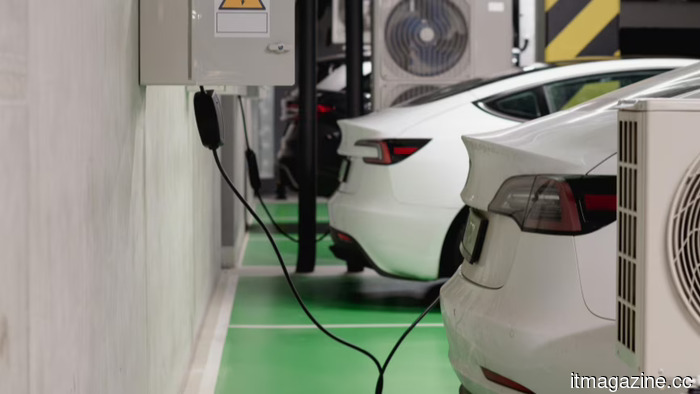 For the first time, electric vehicles have surpassed the sales of petrol and diesel cars in Germany. The home of the automobile has officially switched its fuel source.
In June, Germany recorded 84,057 electric vehicles (EVs), surpassing hybrids (83,315), petrol cars (60,796), and diesel vehicles (33,862). EVs now represent 28.4% of the market, with the Tesla Model Y taking the lead.
For the first time, electric vehicles have surpassed the sales of petrol and diesel cars in Germany. The home of the automobile has officially switched its fuel source.
In June, Germany recorded 84,057 electric vehicles (EVs), surpassing hybrids (83,315), petrol cars (60,796), and diesel vehicles (33,862). EVs now represent 28.4% of the market, with the Tesla Model Y taking the lead.
 A mini lab the size of AirPods could assist in detecting disease markers within minutes.
The VPodDuo, which is about the size of an AirPods case, pairs with a smartphone to analyze molecular tests for viruses, bacteria, and cancer-related biomarkers in approximately 10 minutes.
A mini lab the size of AirPods could assist in detecting disease markers within minutes.
The VPodDuo, which is about the size of an AirPods case, pairs with a smartphone to analyze molecular tests for viruses, bacteria, and cancer-related biomarkers in approximately 10 minutes.
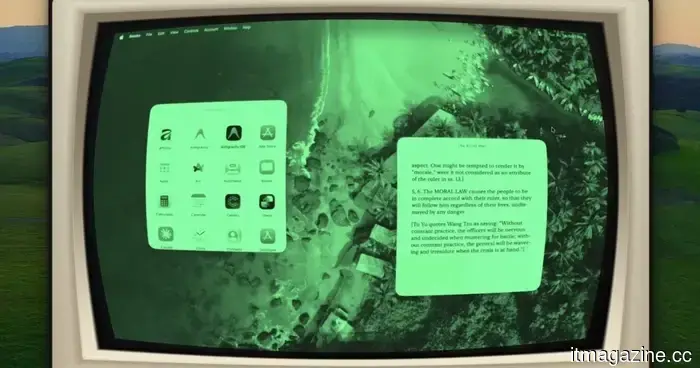 This Mac application can transform any window into a CRT-inspired surreal experience or evoke the nostalgia of a Game Boy.
Glaze 1.9 employs real-time GPU shaders to enhance every Mac window, video, and game, offering more than 50 different appearances for a one-time cost of $9.99.
This Mac application can transform any window into a CRT-inspired surreal experience or evoke the nostalgia of a Game Boy.
Glaze 1.9 employs real-time GPU shaders to enhance every Mac window, video, and game, offering more than 50 different appearances for a one-time cost of $9.99.
AI in Hollywood: The Dispute over Payments Involving Netflix, Nolan, and Others
Netflix has utilized AI across 300 titles, an AI-generated actress has secured a leading role, and Nolan referred to it as a Trojan horse. Here’s a look at the battle over AI in Hollywood.