

Every application on my phone seems to have concluded that I require AI, and none of them thought to consult me first.
My wife rarely uses AI. She’s not philosophically against it, nor does she fear that machines will take over civilization. She just opens Google Photos to view her pictures.
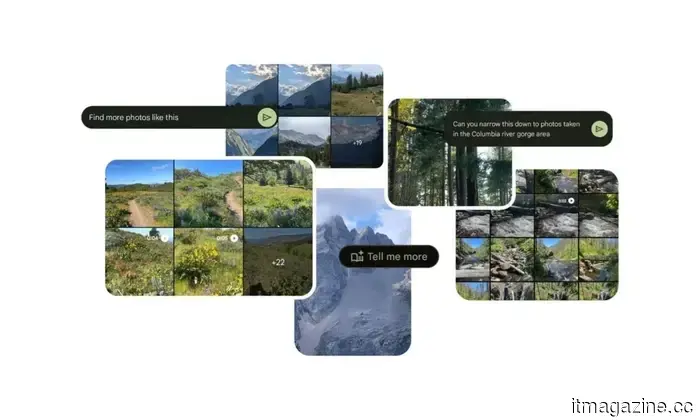
Recently, the app has started prompting her to try its AI features. Google encourages her to search her library conversationally, create something new, or request Gemini to edit a photo. She ignores the prompt, continues with her life, and eventually encounters it again.
This minor annoyance led me to check the apps on my own phone. It seems nearly all of them have come to the same conclusion. I don’t just need AI occasionally; I need it integrated into every search bar, messaging app, music player, and document reader that I already use.
My apps are all embracing AI.
Google Photos now offers Ask Photos, which utilizes Gemini to search your library, respond to questions about it, and make edits based on written instructions. Google states that this feature is still experimental and may yield inaccurate results. You can deactivate it, but doing so requires navigating through Photos settings, Preferences, and finally to Gemini features in Photos.
At least the option exists, which is better than nothing. Still, someone who repeatedly rejects an invitation has already expressed a preference. The app interprets “not now” as “please remind me later when I’ve forgotten why I was annoyed.”
Meta has taken a different route, integrating its assistant across WhatsApp, Instagram, Facebook, and Messenger. One blue circle has managed to accompany users across four different apps, resembling a helpful shop assistant present in every aisle.
Spotify features an AI DJ, AI-generated playlists, and conversational music search. Adobe Reader now includes an AI assistant alongside the standard PDF. Microsoft has gone further, renaming its Office hub the Microsoft 365 Copilot app, presumably because “Microsoft 365, Now With AI Whether You Asked or Not” didn’t test well.
Now you can communicate with Spotify: 🎧 It plays what you desire 🎧 It adds what you want 🎧 It even answers your questions What’s the first thing you’d say? pic.twitter.com/uKajUFpA1G— Spotify (@Spotify) July 14, 2026
Microsoft allows desktop users to disable Copilot in Word, Excel, and PowerPoint. However, its documentation states that this option isn’t available in the iOS, Android, or web versions. Mobile users can adjust broader privacy settings instead, which may affect other connected features as a result.
This is less of an off switch and more like a circuit breaker.
Some of these functions are genuinely beneficial.
I’m not suggesting that every AI feature is useless. Being able to find a specific photo by describing vaguely remembered circumstances is helpful. Asking a particular question of a 70-page PDF can save time. Conversational music search might perform better where Spotify’s standard search can feel puzzling.
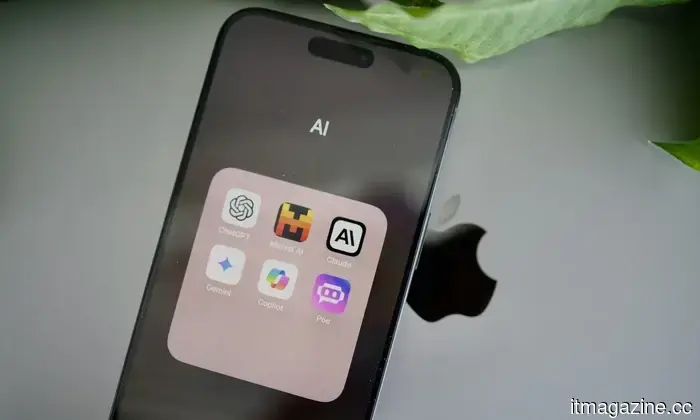
I also pay for ChatGPT and Claude. Clearly, my issue isn’t the existence of artificial intelligence.
The distinction lies in intent. When I launch an AI app, I am opting for an AI interaction. When I open Photos, I want to see my pictures. When I open WhatsApp, I want to message someone. When I open Spotify, I likely already know what I want to listen to.
These apps functioned well before AI became their most prominent new feature. Now, the assistant is increasingly placed at the forefront, while the original tasks of the app are pushed slightly aside.
The industry seems fearful that AI might fade into the background. Every assistant needs a button, each button ought to glow, and every glow must occupy the precise spot on the screen where your thumb naturally rests.
A truly useful feature doesn’t need to keep reintroducing itself. It seamlessly integrates into your routine because it addresses a problem more effectively than older methods. The current strategy feels more like software companies frantically trying to prove that they also have an AI strategy.
“No” should persist beyond the next update.
These companies continually promise software that understands us. Google Photos can recognize faces, places, objects, and half-remembered vacations from years past. Spotify tracks what we listen to, when we listen, and which song we skip after 12 seconds. Meta has spent years developing systems designed to predict what will keep us engaged on screens.
Yet remembering that someone has declined an AI feature apparently remains beyond the reach of modern computing. Sure, we can find a way in their documentation to opt-out, but why should opt-in be the default?
A dismissed prompt resurfaces. A concealed button becomes more noticeable. An app update quietly gives the assistant another chance to reintroduce itself. The software retains everything except the preference that contradicts the company’s current strategy.
Perhaps these apps do understand what “no” means. They’ve simply decided that remembering it would harm engagement.
Other articles
 China is redesigning smartphones to focus on AI agents. ZTE's NaviX sold out within hours.
ZTE revealed the NaviX Ultra at WAIC, branding it as the first agentic AI phone in the world. It operates on ByteDance's Doubao. Additionally, StepFun and Honor presented comparable devices.
China is redesigning smartphones to focus on AI agents. ZTE's NaviX sold out within hours.
ZTE revealed the NaviX Ultra at WAIC, branding it as the first agentic AI phone in the world. It operates on ByteDance's Doubao. Additionally, StepFun and Honor presented comparable devices.
 Apple increases iPhone prices by as much as 11% in Japan.
Apple has increased iPhone prices in Japan by as much as 11.3%, probably due to the significant drop of the yen in comparison to the US dollar.
Apple increases iPhone prices by as much as 11% in Japan.
Apple has increased iPhone prices in Japan by as much as 11.3%, probably due to the significant drop of the yen in comparison to the US dollar.
 A leak regarding the Pixel 11a has unveiled a flagship processor and an essential modem enhancement.
The specifications of the leaked Pixel 11a suggest flagship-level performance, enhanced connectivity, and a slightly reduced battery size.
France and Germany have committed to developing a European competitor to Palantir's military artificial intelligence software.
Macron and Merz have signed a joint declaration to create a "European sovereign digital backbone" for defense, with France's Arcadia identified as the initial point of reference.
A leak regarding the Pixel 11a has unveiled a flagship processor and an essential modem enhancement.
The specifications of the leaked Pixel 11a suggest flagship-level performance, enhanced connectivity, and a slightly reduced battery size.
France and Germany have committed to developing a European competitor to Palantir's military artificial intelligence software.
Macron and Merz have signed a joint declaration to create a "European sovereign digital backbone" for defense, with France's Arcadia identified as the initial point of reference.
.jpg) This gripping true story thriller is among the three underrated Netflix series you ought to check out this weekend (July 17-19).
This weekend's Netflix lineup includes a humorous animated film set in an apocalypse, a chilling mystery from Iceland, and a true crime thriller, all of which are both critically recognized and overlooked.
This gripping true story thriller is among the three underrated Netflix series you ought to check out this weekend (July 17-19).
This weekend's Netflix lineup includes a humorous animated film set in an apocalypse, a chilling mystery from Iceland, and a true crime thriller, all of which are both critically recognized and overlooked.
 What Features are Most Important in a Printer for a Small Business or Home Office?
Features such as print speed, wireless reliability, AI-driven scanning, and integrated security are what significantly impact a bustling home office or small business.
What Features are Most Important in a Printer for a Small Business or Home Office?
Features such as print speed, wireless reliability, AI-driven scanning, and integrated security are what significantly impact a bustling home office or small business.
Every application on my phone seems to have concluded that I require AI, and none of them thought to consult me first.
Every application aspires to be an AI app, even as users continue to reject the offer. Somehow, programs that claim to comprehend us still fail to recall when we decline.