
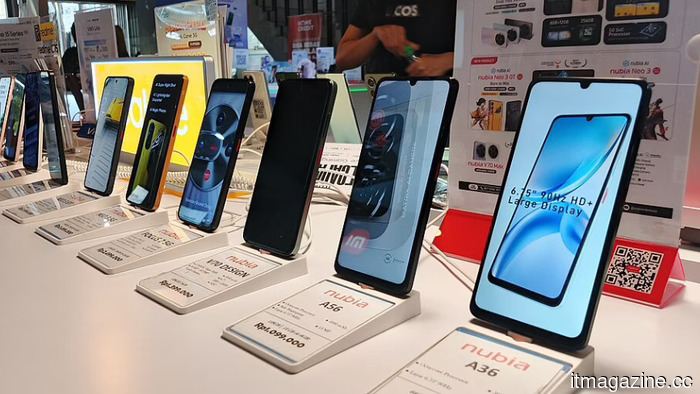
China is redesigning smartphones to focus on AI agents. ZTE's NaviX sold out within hours.
ZTE introduced the NaviX Ultra at the World AI Conference, branding it as the first agentic AI smartphone. The device, part of ZTE’s Nubia line, operates on ByteDance’s Doubao AI agent and can be activated via voice or a specific button. It is available in four colors and was initially priced at 3,499 yuan ($516) when it was prototyped in December. The first batch of 30,000 units sold out rapidly and has seen a price increase in the second-hand market.
ZTE is not the only company making strides in this area. StepFun announced a device featuring a proprietary operating system with an integrated agent called Amoo. Honor, a smartphone brand separated from Huawei, showcased an AI agent developed in collaboration with Alibaba, which will be featured in new devices launching later this year. The common approach among these brands is to incorporate an agentic layer into the operating system that allows AI to perform tasks autonomously across different applications, rather than merely adding standalone AI features to an existing interface. Nubia's chief, Ni Fei, remarked that many so-called AI phones on the market simply layer AI functionalities onto current systems, which can complicate user experience.
The timing of these announcements aligns with a significant downturn in China's smartphone shipments, which have declined for five consecutive quarters due to rising component costs and waning consumer demand. IDC predicts that the global smartphone market will experience its most significant annual decline to date in 2026. Chinese manufacturers, particularly those offering budget devices with low profit margins, are feeling the pressure most acutely. AI smartphones are seen as their potential solution, with IDC's Arthur Guo suggesting that over half of China's smartphone market could be comprised of AI devices this year.
Moreover, these launches intensify competition with Apple, which recently got approval from Beijing to launch Apple Intelligence in China through collaborations with Alibaba and Baidu. Ni stated on Weibo in June that in terms of AI smart devices, they are ahead of Apple. The current AI boom that threatens low-cost smartphones is also fostering demand for a new type of device. Whether an AI assistant capable of booking flights and editing photos will convince consumers to upgrade from their existing smartphones remains to be seen as the year progresses.
Other articles
 What Features are Most Important in a Printer for a Small Business or Home Office?
Features such as print speed, wireless reliability, AI-driven scanning, and integrated security are what significantly impact a bustling home office or small business.
What Features are Most Important in a Printer for a Small Business or Home Office?
Features such as print speed, wireless reliability, AI-driven scanning, and integrated security are what significantly impact a bustling home office or small business.
 Google's AI has just reimagined the greatest goal ever scored by Pele, which was never captured on film.
Google utilized live stadium capture and merged it with archival content to recreate Pele's iconic goal. The Veo video engine, Gemini Omni, and Nano Banana Pro AI tools were also involved in the process of resurrecting this forgotten masterpiece.
Google's AI has just reimagined the greatest goal ever scored by Pele, which was never captured on film.
Google utilized live stadium capture and merged it with archival content to recreate Pele's iconic goal. The Veo video engine, Gemini Omni, and Nano Banana Pro AI tools were also involved in the process of resurrecting this forgotten masterpiece.
 The White House is now determining who has access to advanced AI models, rather than the laboratories.
The Trump administration is controlling which companies have access to new AI models from Anthropic and OpenAI, transferring authority from technology corporations to the government.
The White House is now determining who has access to advanced AI models, rather than the laboratories.
The Trump administration is controlling which companies have access to new AI models from Anthropic and OpenAI, transferring authority from technology corporations to the government.
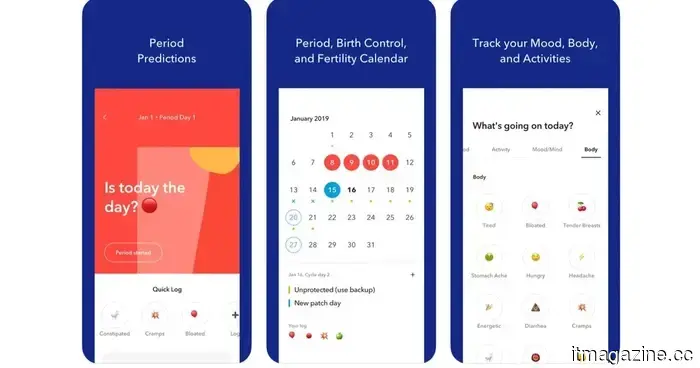 Stardust, Flo, and several other well-known period trackers failed the latest privacy evaluation conducted by Mozilla.
Mozilla assessed six well-known period tracker apps based on their privacy features, highlighting a significant disparity between Euki's flawless score and Stardust's poor rating of just 2 out of 10.
Stardust, Flo, and several other well-known period trackers failed the latest privacy evaluation conducted by Mozilla.
Mozilla assessed six well-known period tracker apps based on their privacy features, highlighting a significant disparity between Euki's flawless score and Stardust's poor rating of just 2 out of 10.
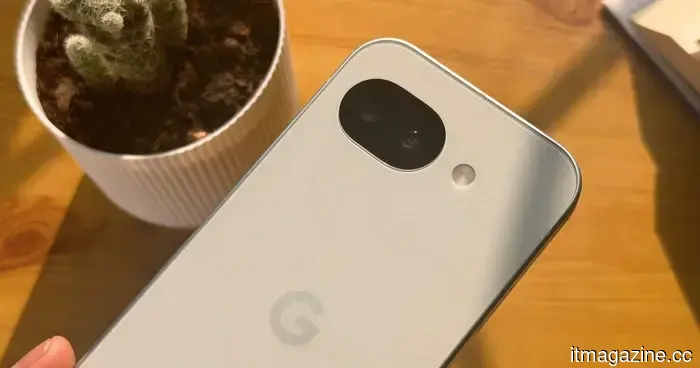 A leak regarding the Pixel 11a has unveiled a flagship processor and an essential modem enhancement.
The specifications of the leaked Pixel 11a suggest flagship-level performance, enhanced connectivity, and a slightly reduced battery size.
A leak regarding the Pixel 11a has unveiled a flagship processor and an essential modem enhancement.
The specifications of the leaked Pixel 11a suggest flagship-level performance, enhanced connectivity, and a slightly reduced battery size.
 Every application on my phone seems to have concluded that I require AI, and none of them thought to consult me first.
Every application aspires to be an AI app, even as users continue to reject the offer. Somehow, programs that claim to comprehend us still fail to recall when we decline.
Every application on my phone seems to have concluded that I require AI, and none of them thought to consult me first.
Every application aspires to be an AI app, even as users continue to reject the offer. Somehow, programs that claim to comprehend us still fail to recall when we decline.
China is redesigning smartphones to focus on AI agents. ZTE's NaviX sold out within hours.
ZTE revealed the NaviX Ultra at WAIC, branding it as the first agentic AI phone in the world. It operates on ByteDance's Doubao. Additionally, StepFun and Honor presented comparable devices.